
A tenant comes home after work, the key has gone missing, and there is no certainty over who may have found it. Or perhaps a previous occupier still has a key. In that situation, asking “can tenants change door locks?” is not just a legal question. It is about feeling safe in the place you pay to call home.
The short answer is that tenants can often change a lock or, more commonly, replace the lock cylinder during a tenancy. But the tenancy agreement, the type of property and the need to give the property back in its original condition all matter. A sensible conversation with the landlord or letting agent before work starts can prevent an avoidable dispute later on.
Can tenants change door locks during a tenancy?
In England, tenants have a right to live in their rented home without unnecessary interference. This is usually referred to as quiet enjoyment. A landlord cannot simply let themselves in whenever they choose, even if they retain a set of keys. Except in a genuine emergency, they normally need to give at least 24 hours’ notice and arrange access at a reasonable time.
That does not automatically mean a tenant can make any alteration they like. Most tenancy agreements contain clauses about changing locks, making alterations and supplying keys. Some agreements require written permission first. Others allow a change provided the tenant gives the landlord a replacement key, while some state that no key needs to be provided until the tenancy ends.
Read the wording rather than relying on what a neighbour’s tenancy agreement says. If the agreement is unclear, ask the agent or landlord for their position in writing. It is far easier to agree the arrangement before a lock is changed than to argue over deductions from a deposit afterwards.
Changing a cylinder is usually the practical option
On many uPVC, composite and modern timber doors, a locksmith does not need to replace the whole lock case or door furniture. The euro cylinder – the part where the key goes – can often be changed on its own. This is usually quicker, less disruptive and easier to reverse when moving out.
The original cylinder should be kept somewhere safe, labelled and stored with the original keys. At the end of the tenancy, the tenant can refit it if required, provided it is still working properly. Alternatively, the landlord may agree to keep the new lock in place if it is a suitable quality and all keys are handed over.
Do not assume every door has a simple cylinder. Older mortice locks, rim cylinders, communal entrance doors and multi-point locking systems need the correct parts and fitting. A poorly fitted lock can leave a door insecure, cause a uPVC mechanism to fail, or result in keys that catch and snap. If the key is stiff or the handle has to be lifted with force, get the door and mechanism checked rather than forcing it.
When should a tenant speak to the landlord first?
Permission is especially worth getting before changing a lock where the tenancy agreement says it is required, the property is managed by an agent, or the change involves drilling, replacing handles or altering a fire door. Flats with shared entrances can have additional security and fire-safety arrangements, so a tenant should not alter communal access locks themselves.
It is also sensible to contact the landlord immediately after a burglary, attempted break-in or serious lock failure. The landlord is generally responsible for keeping the structure and exterior of the property in repair, which can include external doors and their locks. If a lock has worn out, the mechanism has failed through normal use, or the door will no longer secure, this is not something a tenant should automatically be expected to pay for.
A lost key is different. If the lock is sound but a tenant loses the only key, the tenant may reasonably be responsible for the cost of gaining entry and replacing keys or a cylinder. The exact position depends on the agreement and circumstances, but acting promptly protects both the tenant and the property.
Spare keys and landlord access
Whether a landlord should have a key is often the point that causes most concern. There is no single answer that works for every tenancy. A landlord may want a key for emergencies or planned repairs, while a tenant may have a clear safety reason for not wanting another key in circulation.
If a new key is supplied, put the arrangement in writing. Confirm that the key is for emergency use or pre-arranged access only, and that notice will still be given for routine visits. If no key is supplied, make sure the landlord has a reliable way to contact the tenant in an emergency and understands that urgent situations, such as a fire, major leak or suspected gas danger, are treated differently.
Tenants should not use a changed lock to prevent legitimate repairs, safety checks or access that has been properly arranged. Equally, a landlord should not use an old key to enter without consent simply because they own the property. Clear communication keeps a security concern from turning into a tenancy problem.
Choosing the right replacement lock
A replacement needs to be compatible with the door and provide appropriate security. The cheapest cylinder is not always good value if it is easily damaged or does not meet the standard requested by the landlord or insurer. For an external door, a recognised quality lock from a manufacturer such as Yale, Chubb or Union is usually a better starting point.
If keys have been lost or stolen, it can be worth considering a cylinder with key control or protection against common forced-entry methods. The right choice depends on the door, existing hardware and budget. There is little benefit in fitting a high-security cylinder if the door frame, handles or multi-point mechanism are badly worn.
Keep every receipt, the details of the lock fitted and the number of keys supplied. Take a dated photograph of the door before and after the work. These small records can be useful if there is a later question about the condition of the property or the return of the deposit.
Avoid these common mistakes
Do not change locks quietly when the tenancy agreement clearly requires permission. Do not throw away the original cylinder or keys. And do not give a new key to a friend, former partner or contractor without thinking carefully about who may still have access later.
Another common mistake is trying to fit the wrong cylinder length. A cylinder that sits too far out from the door can be more vulnerable to attack, while one that is too short may be difficult to operate. Measuring and fitting it correctly matters as much as the lock itself.
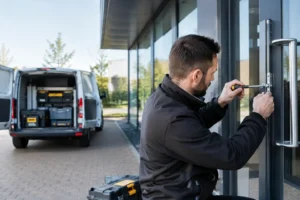
If you are locked out, avoid forcing the door or trying improvised methods that damage the frame, handles or glazing. A damaged door can cost much more to put right than a professional, non-destructive entry. For tenants in Reading, Berkshire and the surrounding area, Lock Solutions can assess the door, explain the available options plainly and fit an appropriate replacement where needed, with no callout charge.
A straightforward way to handle a lock change
Start by checking the tenancy agreement. Then send a short written message to the landlord or agent explaining why you want to change the lock, whether it is because of lost keys, a security concern or a fault, and whether you will retain the original cylinder. Ask them to confirm their preferred arrangement for spare keys.
Where the lock is faulty, report it as a repair first and include photos or a brief description of the problem. If there is an immediate security risk, such as a key stolen with identifying information or a door that will not lock, take reasonable action to secure the property and notify the landlord as soon as possible.
A good lock change should leave you safer, not leave a trail of uncertainty for moving day. Keep the communication clear, choose a properly fitted lock, and make sure both tenant and landlord know exactly who has keys and why.