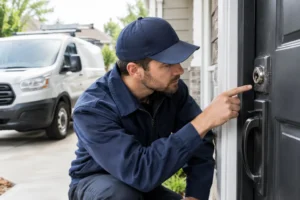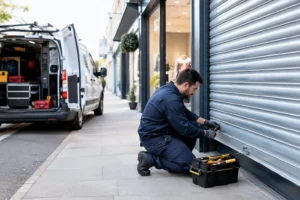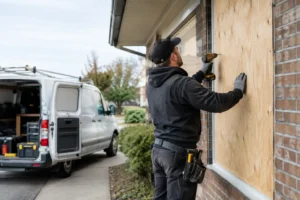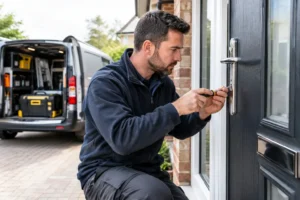
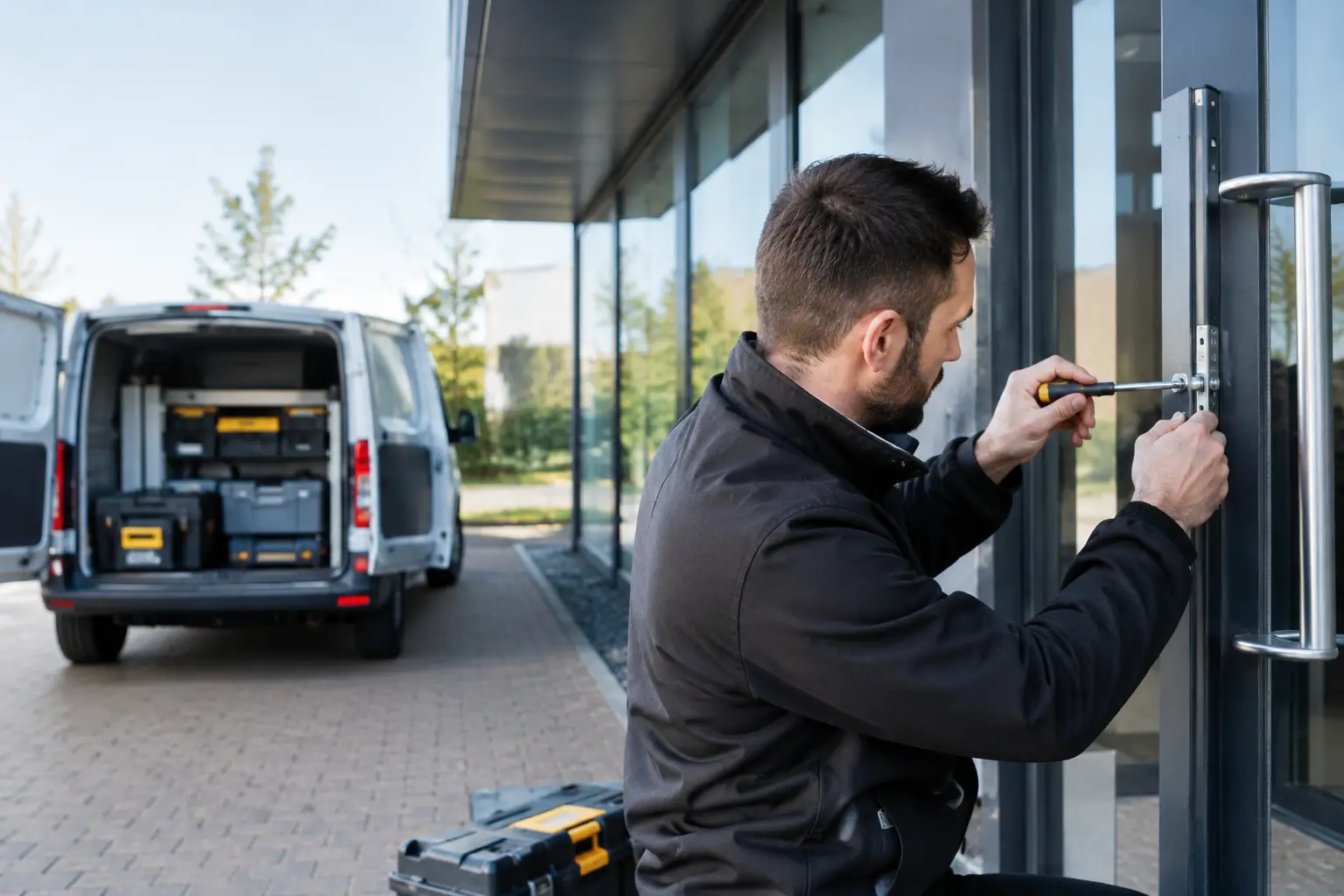
A rear staff door that only catches if it is pulled hard, a shop entrance with three copies of the same key in circulation, or an office door propped open for deliveries can all become costly weak points. Commercial door security Bracknell businesses need is rarely about fitting the most expensive lock and hoping for the best. It is about making every entrance work properly, controlling who can use it and dealing with faults before they leave your premises exposed.
For shops, offices, units, surgeries and managed properties, the right approach depends on the building, the hours it is occupied and what is behind the door. A small independent retailer has different risks from a warehouse or a multi-let office. The basics, however, are the same: strong physical security, sensible access arrangements and a prompt repair when something starts to fail.
Start with the doors people actually use
The front entrance gets most of the attention, but it is not always the door an opportunist will test. Rear exits, side gates, internal stockroom doors and communal entrances deserve the same inspection. Look at the whole door set, rather than the lock alone. A good lock fitted to a loose frame, damaged hinge or misaligned door will not offer the protection it should.
Close each door from outside and check whether it latches cleanly without lifting, pushing or pulling it into position. If the key needs force, the handle is loose, the door scrapes the floor, or there is visible movement around the keep, arrange a repair. These are not minor irritations. They put extra strain on the mechanism and can lead to a complete lock failure at the worst time.
For aluminium, timber, steel and uPVC commercial doors, the type of repair can vary. A uPVC multipoint mechanism may need adjustment or replacement parts rather than a new cylinder. On a timber door, the condition of the mortice lock, strike plate and frame may be the deciding factors. A proper assessment avoids replacing hardware that was not the underlying problem.
Choose locks for the risk, not the label
A lock should suit the door and its purpose. On a final exit door, a high-quality mortice lock or security cylinder may be appropriate, while a busy communal office entrance may benefit from controlled access rather than a large number of keys. Fire doors add another consideration: any locking arrangement must allow safe escape and must not compromise the door’s fire performance.
Recognised hardware from manufacturers such as Yale, Chubb and Union is often a sensible starting point, but the product name alone is not a security plan. Correct fitting matters just as much. The lock needs to engage fully, the door must sit squarely in the frame and any external cylinder should be properly protected where applicable.
It can be tempting to fit the highest security lock to every door. That is not always the best use of budget. A low-risk internal office may need simple key control, while the rear door next to an unobserved service lane may justify stronger hardware, hinge bolts or a security escutcheon. Spend where an attempted forced entry is most likely and where a breach would cause the greatest disruption.
Do not overlook hinges, frames and glazing
Outward-opening doors can be vulnerable if hinge pins are accessible from outside. Security hinges or hinge bolts can help prevent a door being lifted away after an attack on the hinges. For doors with glazed panels, consider whether the glass gives direct access to handles, keys or internal thumbturns.
The frame is equally important. Loose keeps, split timber and poorly fixed strike plates can give way before a good lock does. If a door has previously been forced, do not settle for a quick cosmetic repair. The frame and fixings should be inspected so the repaired entrance is not weaker than before.
Control keys before they control you
Many commercial security problems begin with a simple question nobody can answer: who has a key? Staff move on, contractors borrow keys and spare sets sit in drawers with no record of where they came from. That is manageable until there is a dispute, a lost key or an out-of-hours incident.
Keep a straightforward key register showing who holds keys, what they open and when they are returned. Limit master keys to the people who genuinely need them. If a key holder leaves without returning their set, or keys are lost with anything identifying the premises, changing or rekeying the relevant locks is usually the sensible precaution.
For businesses with frequent staff changes, a restricted key system or access control can reduce this headache. Restricted systems are designed to make unauthorised copying more difficult. Electronic access can provide a clearer record and lets you remove a former employee’s access without collecting physical keys. It does come with installation, management and maintenance costs, so it is best suited to premises where the benefit is clear.
Make closing routines part of your security
The best commercial door security in Bracknell can be undone by a rushed lock-up at the end of a busy day. Staff should know which doors must be locked, who checks them and what to do if a key or mechanism is not working. That does not need a lengthy policy. A short, consistent routine is more likely to be followed.
Before the last person leaves, check external doors are shut and locked, keys are not left in view or in cylinders, and delivery or fire exits have not been left unsecured. Any door that cannot be locked properly should be reported immediately, not added to a list for next week. If stock, customer data or equipment is at risk, temporary precautions may be needed until a locksmith can attend.
It is worth considering the morning routine as well. If staff arrive alone, can they enter safely? Is the entrance visible and well lit? Does the lock operate reliably in cold or wet weather? Small operational details often determine whether security measures are practical enough to be used correctly.
Respond quickly to warning signs
A snapped key, stiff cylinder or faulty handle is not only an access problem. It can leave a business unable to secure its premises that evening. Similarly, after an attempted break-in, a door may still appear closed while the frame, lock case or cylinder has been damaged beyond safe use.
Call a locksmith promptly if a commercial door will not lock, the key turns without operating the lock, a cylinder is loose, the handle drops, or there are signs of forced entry. Explain what has happened, the type of door if known and whether the building can currently be secured. This helps the locksmith arrive prepared to repair, replace or make the entrance safe.
Lock Solutions provides 24-hour locksmith support across Bracknell and surrounding Berkshire areas, with direct local contact, no callout charge and a stated one-hour attendance target for emergencies. For a business owner or property manager, dealing directly with the locksmith carrying out the work makes it easier to understand what has failed, what needs replacing and what can wait.
Review security after a change, not just after a break-in
Businesses often review locks only after something has gone wrong. A better time is when there is a change in how the premises are used: new tenants, a refurbishment, a change of manager, extended opening hours or a rise in valuable stock. These moments can create extra keys, unfamiliar staff and new access points.
Walk the site with fresh eyes. Ask which doors are used daily, which are rarely checked and whether old keys may still be in circulation. Check that the security on each entrance matches its role. You may find that a simple lock repair, closer adjustment or key-control change solves a risk that has been overlooked for months.
A secure commercial door should not be difficult for authorised people to use. It should close properly, lock reliably and support the way your team works. If it does not, deal with the fault early. A quick, professional repair can be far less disruptive than arriving one morning to find your business cannot open or cannot be secured.