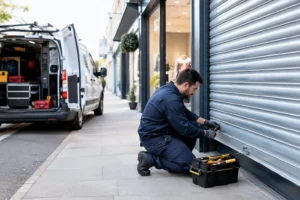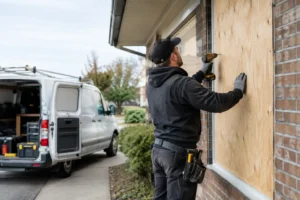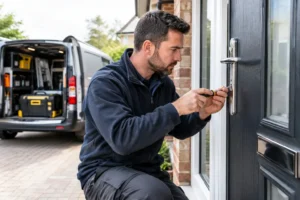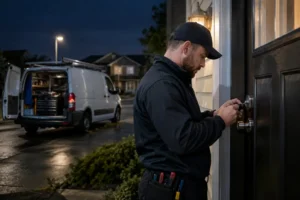
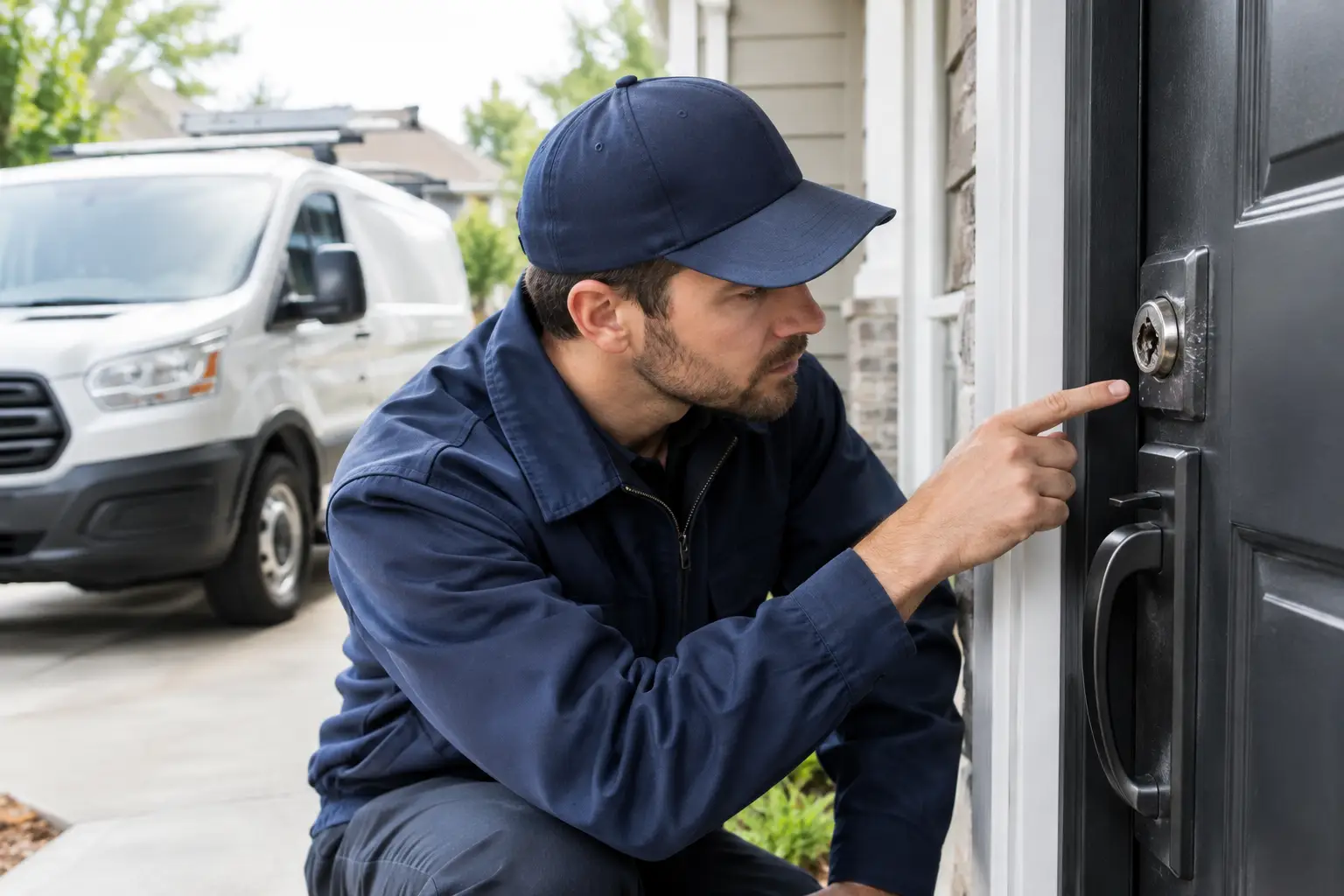
A key that suddenly feels rough, fresh scratches around the keyhole, or a door that no longer closes as it did yesterday can be unsettling. Knowing how to identify lock tampering helps you act sensibly: protect the property, avoid destroying useful evidence, and get the lock checked before a small concern becomes an easy point of entry.
Not every mark means somebody has tried to get in. Locks and doors wear with age, particularly on exposed front doors and busy rental or commercial premises. The difference is usually in the timing, the position of the damage, and whether there are several signs together.
How to identify lock tampering: the first checks
Start by looking closely at the outside of the door in daylight, without forcing the key or repeatedly operating the lock. Compare what you see with the condition of other doors, windows and neighbouring fixtures. Fresh damage is often brighter than aged metal, with sharp edges or paint flakes that have not yet collected dirt.
Look for new scratches around the keyway, the metal slot where the key enters. Random light marks can come from a keyring or everyday use. Deep, concentrated gouges around the keyhole, especially alongside bent metal or damage to the protective plate, deserve closer attention. They may indicate someone has tried to manipulate the cylinder or force a tool into it.
Also check whether the lock cylinder sits straight and securely in the handle or door furniture. A cylinder that turns loosely, protrudes further than before, or looks cracked may have been gripped or pulled. On a euro-cylinder lock, common on uPVC and composite doors, damage around the cylinder and handle should be dealt with promptly.
The door frame matters just as much as the lock. Examine the strike plate, keep and the timber or uPVC around them. Splintering, fresh dents, loosened screws, cracks, or a plate pulled away from the frame can suggest an attempt to force the door. On a wooden frame, damage may be hidden beneath the paint, so look for new cracking or an area that feels soft or loose.
Signs on different types of doors
The likely signs depend on how your door locks. A standard front door with a night latch and rim cylinder may show damage around the outer cylinder, the letterbox, or the door edge. A mortice deadlock may show scratching around the keyhole, damage to the escutcheon, or force marks close to the bolt position.
With uPVC, composite and many patio doors, do not judge the cylinder alone. Lift the handle carefully and see whether it feels noticeably different. A floppy handle, grinding sound, stiffness when lifting, or a key that will not turn after the handle is raised can be a faulty multipoint mechanism rather than tampering. It can also be either, which is why forcing it is a bad idea.
Sliding doors and windows may show scuffs around catches, damaged restrictors, bent tracks, or marks near accessible locks. Business premises should also inspect roller shutters, rear fire doors, side entrances and communal access doors. Would-be intruders often choose the less visible entrance rather than the main door.
What genuine tampering can look like
A single scratch is rarely enough to draw a firm conclusion. More concerning are several fresh signs that do not fit normal use. These include:
- Metal filings, small fragments, or fresh drill marks around a cylinder or handle.
- A snapped, cracked or visibly distorted lock cylinder.
- Pry marks between the door and frame, or around the hinge side.
- Missing, loose or newly damaged screws on handles, plates and keeps.
- A lock that was working normally but now jams, spins, or will not accept the key properly.
- New tool marks close to a letterbox, glazing bead, window catch or secondary lock.
Take particular care if you find a cylinder has been deliberately snapped or pulled. Even if the door is still locked, the internal parts may be compromised and the lock may fail without warning. Do not rely on it overnight.
Tampering, wear and failed locks are not always the same
A locksmith will often find a more ordinary explanation. Cold weather, swelling timber, a misaligned door, a tired gearbox, and years of use can all make a lock difficult to operate. A key can also become worn or slightly bent, causing scratches and poor engagement in the cylinder.
There are useful clues. Wear tends to develop gradually, often affects the key and lock in a predictable way, and is not usually accompanied by marks on the frame or handle. Tampering is more likely to appear suddenly and leave damage in unusual places, particularly where a tool would have been used.
If you manage a rental property or commercial site, ask whether anyone has recently had keys, moved furniture through the doorway, changed a handle, or reported an issue. This context can prevent unnecessary alarm, but it should not be used to dismiss obvious signs of forced entry.
What to do if you suspect somebody has interfered with a lock
Your first priority is safety. If you believe someone may still be on the property, there has been a break-in, or you feel at immediate risk, move to a safe place and call 999. Do not confront anyone outside the property.
If the incident is not an emergency, avoid cleaning the area, removing broken pieces, or trying to repair the lock yourself. Take clear photographs of the door, lock, frame and any marks from a few distances. Make a note of when you last used the door normally and when you noticed the change. If there are cameras, preserve the relevant footage before it is overwritten.
Report suspected criminal damage through the appropriate police channel and obtain a crime reference number if one is issued. Your insurer may need this, particularly where there is evidence of attempted entry or damage. Check your policy before authorising extensive work, although securing an unsafe door should not be delayed.
Then arrange for a qualified local locksmith to inspect the lock and door. The right repair depends on what has happened. Sometimes a replacement cylinder and security handle are enough. In other cases, the frame reinforcement, keep, hinges, multipoint mechanism or the entire lock case need attention. Replacing only the visibly damaged part can leave the weak point untouched.
Do not make the lock harder to assess
It is tempting to spray lubricant into a sticking keyhole or use extra pressure to get the key turning. That can push debris deeper into the mechanism, break the key, or alter evidence of damage. Household oils can attract grit and are not a reliable fix for a security problem.
Avoid leaving the door on the latch if the deadlock or multipoint lock will not engage properly. If you cannot secure the property, use another safe entrance only if appropriate and get urgent help. For a shop, office or managed building, make sure staff know not to use a compromised door until it has been checked.
Improving security after an attempted entry
An attempted break-in is worth treating as a prompt to review the whole entrance, not simply replace one component. The best improvement depends on the door type, its condition and the lock already fitted. A higher-security cylinder may be sensible for a euro-cylinder door, while a worn timber frame may benefit more from a strengthened keep and longer fixings.
Good lighting, working cameras, a visible alarm system and secure side gates can all reduce opportunity, but physical security remains the foundation. Make sure keys are accounted for, especially after a tenant change, staff departure or lost set. If keys have gone missing with an address or identifying information, changing the lock is usually the safer choice.
For homeowners and businesses in Reading, Berkshire and the Thames Valley, Lock Solutions can assess suspected lock damage, explain what has failed and secure the door without a callout charge. If the lock feels wrong or the door will not lock properly, do not wait for a clearer sign. A prompt inspection can give you reassurance, or restore the security you need before the day is over.