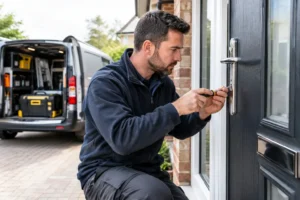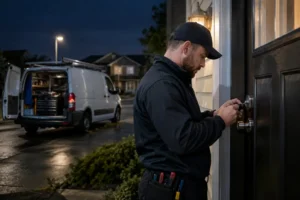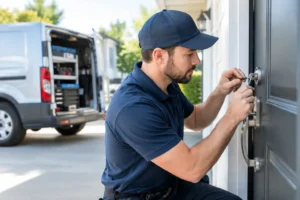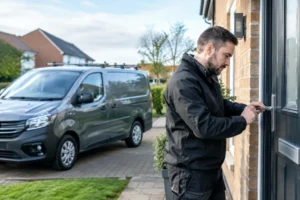
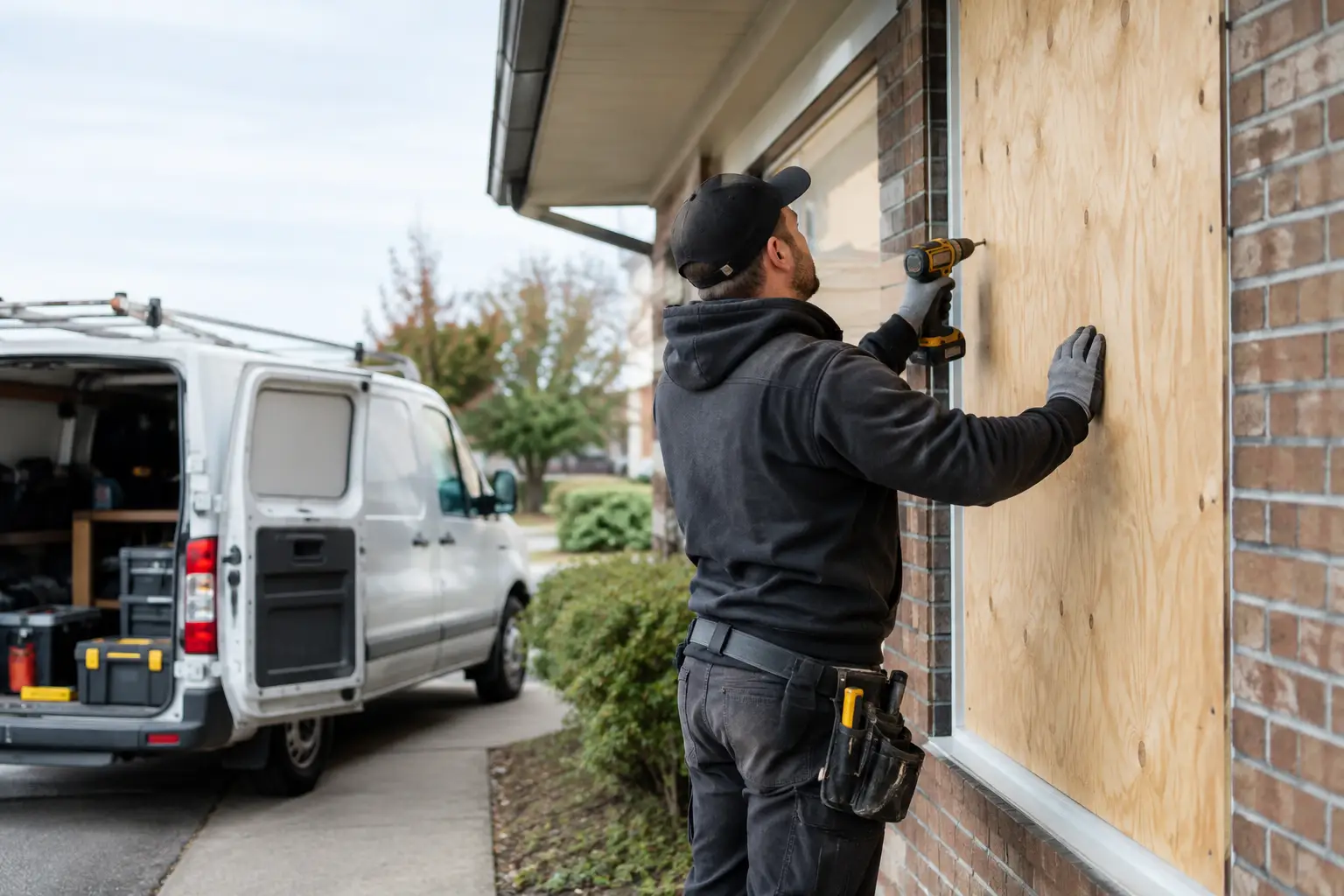
A smashed shopfront, broken window or forced door leaves more than a draught behind. It can expose your home or business to rain, further damage and unwanted access. This emergency boarding up guide explains what to do in the first few hours, when a temporary board is the right answer, and how to make sure the property is properly secure afterwards.
The first priority is always people, not property. Keep children, customers and pets away from broken glass or damaged frames. If there has been a break-in, do not touch or move anything unnecessarily until the police have advised you that it is safe to do so. Once the immediate risk is under control, act quickly to protect the opening.
Start with safety and evidence
If somebody may still be inside the property, if there is a threat to life, or if the damage has followed a crime in progress, call 999. For a break-in that has already happened, report it through the appropriate police channel and ask for a crime reference number. Your insurer is likely to need it.
Take clear photographs from a safe distance before any temporary work begins. Photograph the outside of the damaged door or window, the surrounding frame, and any signs of forced entry. This can help with an insurance claim and gives the repair professional a clearer picture of what has failed.
Do not try to clear large pieces of glass with bare hands. Put on sturdy gloves and closed shoes if you need to remove loose fragments from a walkway, but leave glass embedded in a frame alone where possible. A damaged uPVC door, aluminium shopfront or timber frame can also have sharp edges, even when there is no visible glass.
Decide whether boarding up is needed
Boarding up is a temporary security measure, not a substitute for a proper repair. It is usually the right choice when a window, glazed door panel, shopfront or side entrance can no longer be locked or safely closed. It can also be sensible after a vehicle has struck a property, after storm damage, or while replacement glass or a new door mechanism is being sourced.
A board may not be necessary if the glass is cracked but intact, the frame is sound and the lock still works properly. In that case, restricting use of the opening and arranging a prompt repair may be safer than disturbing the panel.
If the frame has split, the hinges are loose, the door will not shut, or you can see straight into the property through the damaged area, it needs securing without delay. For a business, this matters even more outside trading hours, when stock, equipment and customer data may be at risk.
Emergency boarding up guide: the right first actions
Once it is safe to approach the damage, protect the area around it. Move valuables away from the opening, close internal doors where possible and keep rain from spreading through the building. If water is entering, place towels or containers inside to limit damage to flooring and furnishings, but do not block an escape route.
For a small ground-floor window, a solid temporary board fitted securely over the opening can discourage opportunistic entry and keep out most weather. The board needs to cover the whole damaged area with enough overlap to sit against sound frame or wall material. Simply leaning a sheet of wood against a broken pane is not secure and can cause further injury if it falls.
Where the opening is on an upper floor, above a conservatory, near electrical cables, or part of a large commercial frontage, do not attempt a DIY fix. Working at height around broken glass is a poor trade-off, particularly late at night or in poor weather. Arrange professional help instead.
A temporary board should be fixed into a solid surrounding structure, rather than through fragile glass, a weakened sash or a damaged locking point. Incorrect fixings can split a timber frame, crack uPVC, damage brickwork or make the eventual repair more expensive. A professional will assess the condition of the frame before deciding whether a board, temporary glazing, lock repair or a replacement door component is the best solution.
Do not forget the lock and frame
A boarded window is only one part of securing the property. A forced entry often damages more than the glass. Check whether the handle, cylinder, multipoint lock, hinges and keeps still operate as they should. A door that appears shut but will not fully engage its locking points is not secure.
With uPVC and composite doors, forcing the handle or repeatedly turning a key can make a failed mechanism worse. If the handle is floppy, the key will not turn, or the door is jammed in an open position, stop using force. The fault could be in the gearbox, cylinder, alignment or locking strip, and the right repair depends on the cause.
For commercial premises, check secondary access points too. A burglar may have damaged a rear door, fire exit, roller shutter or internal office lock while trying to enter. Keep a note of every issue you find and give it to your insurer and locksmith.
Speak to your insurer, but do not wait to secure the property
Most insurers expect you to take reasonable steps to prevent further loss after an incident. That normally means securing the opening promptly, keeping receipts and using a competent tradesperson where the work needs specialist skill.
Call your insurer when you can, especially after a burglary, impact damage or significant storm damage. Ask whether they have any requirements for claims, but do not leave a home or shop exposed overnight simply because you are waiting for an answer. Record the date, time and reason for the emergency work, then retain photographs, invoices and the crime reference number if there is one.
It is worth checking the wording of your policy later. Some policies cover emergency boarding and glazing but may set limits or require you to use an approved supplier. The immediate job is security. The paperwork can follow once the building is safe.
Choosing someone for an urgent callout
When you are stressed, a vague advert or a low headline price can look tempting. Before agreeing to work, ask who will attend, whether there is a callout charge, what the likely attendance time is and what temporary work is being proposed. A local professional should explain the situation in plain English rather than pressure you into a full replacement before the damage has been assessed.
Lock Solutions provides 24-hour emergency locksmith support across Reading, Berkshire and surrounding areas, with direct contact and no callout charge. Where a damaged door or window has left a property insecure, the aim is to make it safe, explain the available repair options and avoid replacing good parts unnecessarily.
For landlords and property managers, make sure the person attending has authority to approve temporary security work. If tenants are present, keep them informed about who is coming and when. A simple written record avoids confusion when the permanent repair is arranged.
Plan the permanent repair
A board is there to buy time, not to become a long-term fixture. Arrange a follow-up as soon as possible for replacement glazing, a repaired frame, new locks or a replacement door panel. Leaving a board in place for weeks can affect ventilation, natural light, fire safety and the appearance of a business.
The permanent solution should address why the opening failed. After a break-in, that may mean upgrading an exposed cylinder or fitting additional protection to a vulnerable door. After storm damage, it may mean repairing rotten timber, replacing tired hinges or correcting a door that has been catching and straining the lock for months.
If the damage affects a fire door, emergency exit or communal entrance, tell the contractor immediately. These doors have specific safety requirements and should not be altered with unsuitable boards, locks or fixings.
A quick, calm response can make a difficult night far more manageable. Keep everyone away from the damage, document what has happened, secure the opening properly and arrange the repair that puts your property back to normal. If you are unsure whether an opening is safe, treat it as insecure and get professional advice rather than taking a chance.