A window that will not close properly is more than an annoyance on a cold or wet day. Window handle failures can leave a room draughty, make a ground-floor window less secure, or trap you with a window stuck in the locked position. The good news is that the handle is not always the part at fault – and forcing it can turn a straightforward repair into a larger job.
Most modern uPVC casement windows use a handle, spindle and internal locking mechanism that must all move together. When one part starts to wear, the first warning is often a handle that feels stiff, loose, floppy or difficult to turn. Acting early usually gives you more repair options and helps keep the property secure.
Common window handle failures and their causes
A handle that turns but does not open the window is one of the most common problems. In many cases, the square metal spindle behind the handle has worn down, snapped or become too short to engage properly with the gearbox inside the frame. The handle moves in your hand, but the locking points do not retract.
A loose handle may be simpler. The fixing screws can work loose over time, particularly on windows that are opened frequently. If the handle is otherwise operating normally, tightening the screws may resolve it. Take care not to overtighten them, though, as this can strip the screw holes or crack an older handle.
Sometimes the handle is sound but very hard to turn. This can happen when the window sash has dropped slightly and is no longer lining up with the keeps on the frame. The locking points are then under pressure, so the handle has to work harder to move them. Cold weather, dirt in the mechanism and lack of lubrication can make the issue more noticeable, but they are not always the underlying cause.
If a handle will not turn at all, the internal gearbox may have failed. This mechanism sits within the edge of the opening sash and operates the locking rods or mushroom cams around it. A failed gearbox is not a job to solve by forcing the handle. Excess pressure can bend the spindle, damage the lock further or crack the double-glazed unit if the sash twists.
Is it the handle, hinge or locking mechanism?
The symptom can point you in the right direction, but windows are made up of connected parts, so a proper diagnosis matters. A handle that feels loose or spins freely often suggests a spindle or handle fault. A handle that is solid but will not move may indicate a seized gearbox, misalignment or a problem with the locking points.
Look at the gap around the opening sash when the window is shut. If the gap is uneven, or the sash catches the frame at one corner, worn hinges or poor alignment could be putting strain on the lock. Handles commonly get blamed because they are the visible part, but replacing a handle alone will not cure a window that is dropping on its hinges.
On older timber or aluminium windows, the issue may be different again. The handle could be a simple latch or espagnolette fitting, while swelling timber, paint build-up or corrosion is stopping the window from moving. The right repair depends on the window type, age and mechanism – there is no one-size-fits-all replacement handle.
Safe checks before you call for help
Start by checking whether the window is fully pushed into the frame before you turn the handle. From inside, apply gentle, even pressure to the sash near the handle while attempting to move it. If the handle turns more easily, misalignment may be involved. Do not lean heavily on the glass or use tools for extra leverage.
If the handle is locked, try the correct key once or twice without forcing it. A stiff key cylinder can sometimes benefit from a proper lock lubricant, but avoid spraying household oil or WD-40 into the lock. These products can attract dirt and may leave the mechanism worse over time.
Where the handle is visibly loose, you can carefully remove the small screw cover, if fitted, and check the screws. Only do this with the window closed and supported. If the screws are tight yet the handle still wobbles or turns without operating the lock, stop there. The fault is likely inside the handle or locking mechanism.
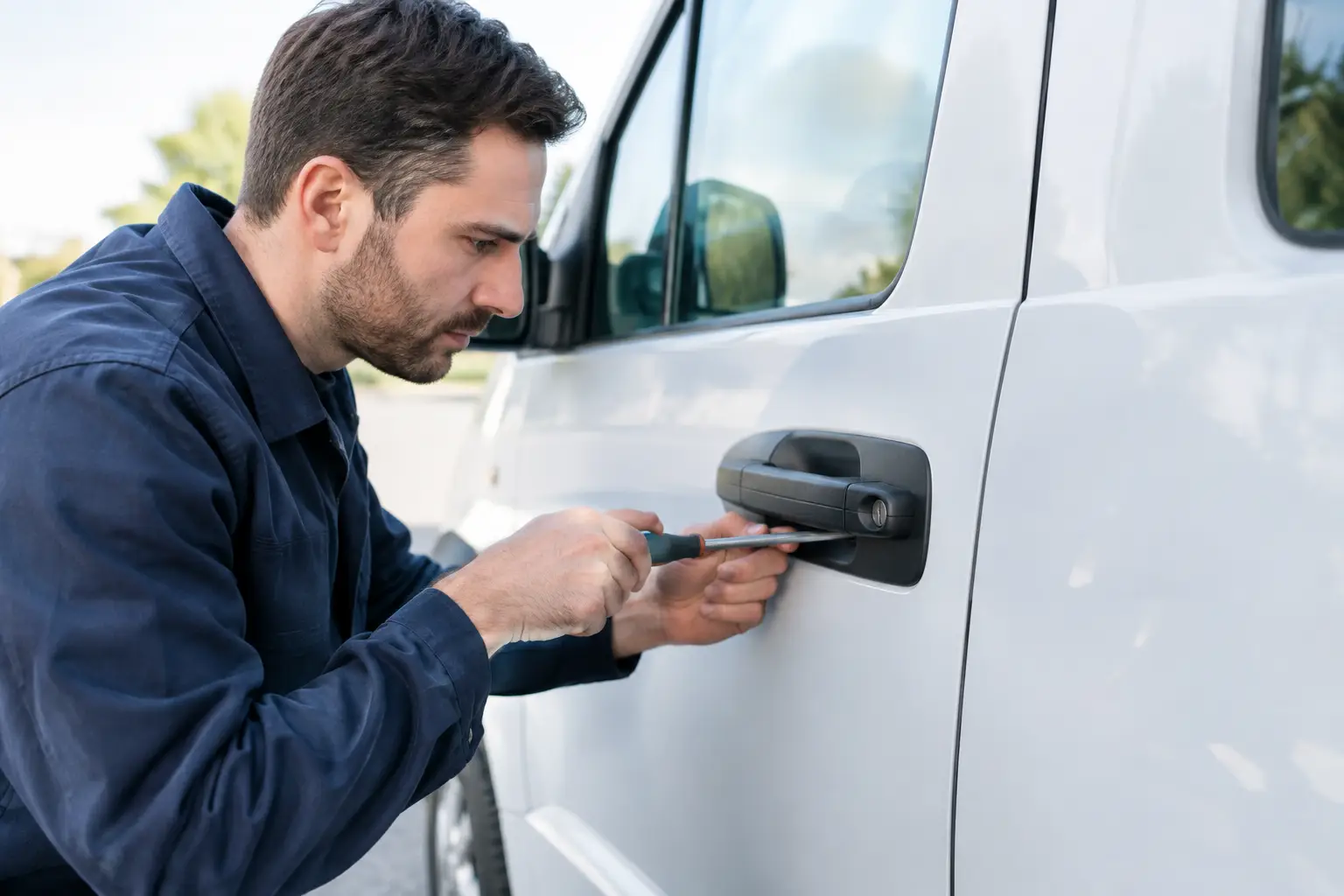
Never try to prise a stuck window open with a screwdriver, crowbar or similar tool. Apart from the risk of broken glass and injury, this can damage the frame and compromise the locking points. It may also leave a ground-floor window impossible to secure overnight.
When a window handle problem needs urgent attention
A failed handle needs prompt attention if the window cannot be locked, will not close, or is accessible from outside. This is particularly relevant for ground-floor rooms, flats with shared access areas, rental properties between tenancies and business premises. A partly open window can also allow rain into the property, leading to damage that soon costs more than the original repair.
If the window is stuck shut, urgency depends on where it is and how it is used. A bedroom window that forms part of a fire escape route should not be ignored. Equally, do not attempt a destructive repair in an emergency. A locksmith experienced in uPVC window mechanisms can assess whether the handle, spindle, gearbox, hinges or keeps need attention and aim to retain the existing window wherever practical.
For landlords and managing agents, it is worth treating reports of stiff handles seriously before they become a lockout, security or ventilation issue. A tenant may continue forcing a difficult handle until the gearbox fails completely. A quick repair at the first sign of trouble is generally less disruptive for everyone.
Repair or replacement: what is usually involved?
A straightforward handle replacement can be a modest repair when the mechanism behind it is working correctly. The replacement needs to match the fixing centres, spindle length, handing and style of the existing fitting. Choosing a handle simply because it looks similar can lead to a poor fit or a lock that still does not operate.
When the gearbox has failed, the repair is more involved because the window may need to be opened without damaging the sash or glazing. Once access is gained, the locksmith can identify the mechanism and replace the failed component where suitable parts are available. On some older systems, an exact match may be harder to source, and it may make more sense to replace compatible parts as a set.
Hinge and alignment work can be the better answer where the locking mechanism is still serviceable but under constant pressure. This is why an honest assessment matters. Replacing parts that are not causing the fault wastes money and does not restore reliable operation.
Preventing future window handle failures
A little routine care helps, especially on windows exposed to driving rain, dust or regular use. Keep the frame channels and locking points clean, and use a suitable lubricant sparingly on moving metal parts. Open and close windows gently rather than pulling the handle when the sash is not fully seated in the frame.
If a window starts catching, becoming stiff or requiring a lift to close, arrange a check before the handle breaks. The same applies when keys become difficult to turn in locking handles. These small changes are usually the window telling you that alignment or the mechanism needs attention.
For homeowners and businesses across Reading, Berkshire and the Thames Valley, Lock Solutions can help with failed uPVC window handles and mechanisms, with clear advice on whether a repair or replacement is the sensible option. If a window cannot be secured, do not leave it to chance – get in touch for practical help and a proper fix.