
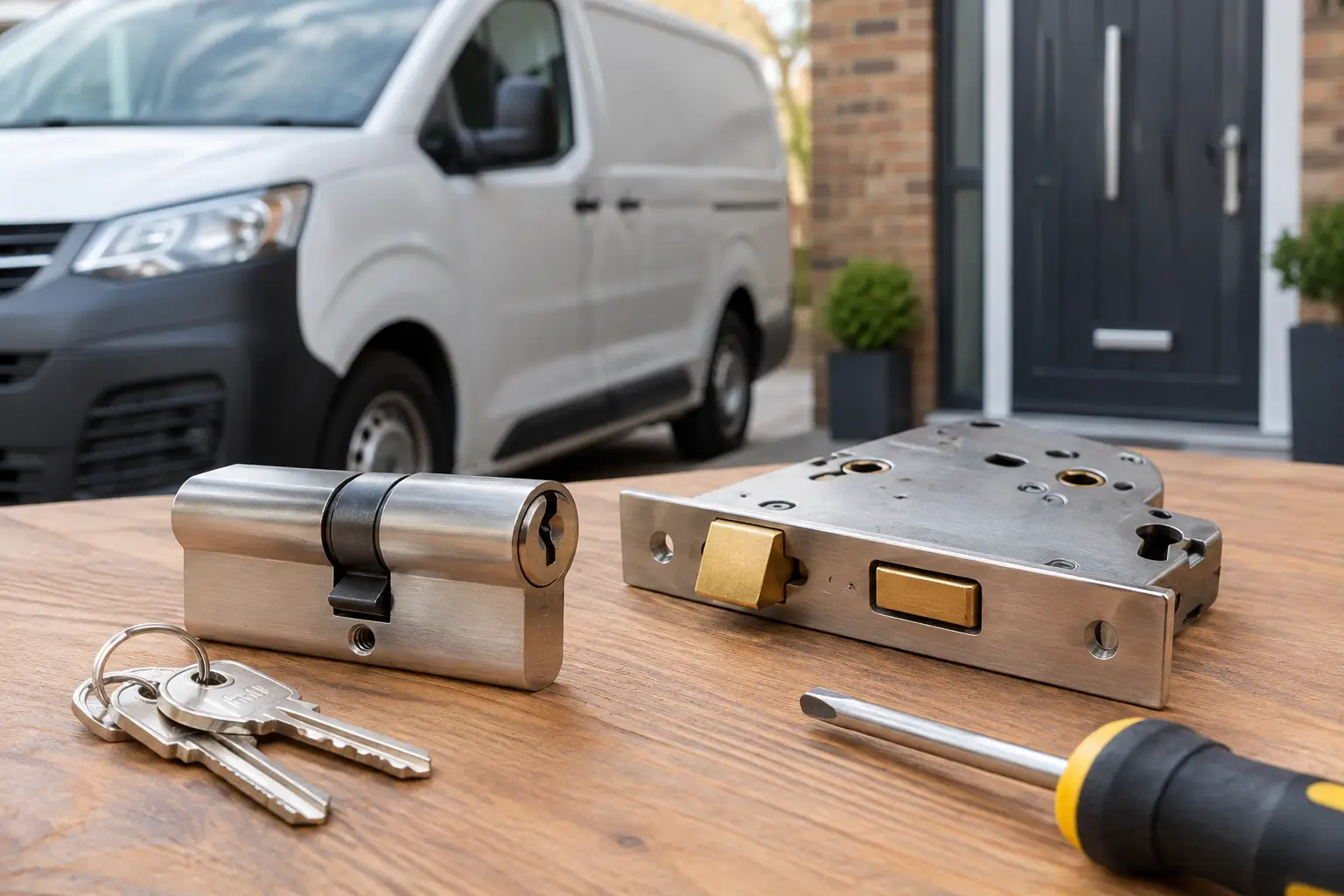
A euro cylinder versus mortice lock decision usually comes down to the door you already have, not simply which lock sounds more secure. A uPVC front door with a multi-point mechanism needs a different solution from a traditional timber door, and fitting the wrong type is neither practical nor good value. The right lock should suit the door, meet any insurance requirements and make everyday access straightforward for the people using the property.
For homeowners, landlords and business owners, the key is understanding what each lock does and where its weak points can be. Here is the plain-English difference.
Euro cylinder versus mortice lock: the main difference
A euro cylinder is the removable barrel that takes the key. It is commonly fitted to uPVC and composite doors, as well as many aluminium and some timber doors. Turning the key operates a multi-point locking mechanism inside the edge of the door. That mechanism throws several hooks, rollers, bolts or mushroom cams into the frame when the handle is lifted and the key is turned.
A mortice lock sits in a pocket, or mortice, cut into the edge of a timber door. The lock case is largely hidden within the door, with a keyhole and handles visible on the outside. Mortice locks are particularly common on older wooden front doors, back doors and commercial timber doors.
They are not always direct alternatives. The type of door, its existing preparation and the locking mechanism determine what can be fitted. In some properties, a timber door may even have both a mortice deadlock and a rim nightlatch. One provides key-operated security, while the other latches the door shut when it closes.
Where euro cylinders are used
Euro cylinders are the standard arrangement on most modern uPVC and composite doors. They come in several forms, including key/key cylinders, thumbturn cylinders and cylinders with an emergency function.
A key/key cylinder requires a key on both sides. This can offer control over access, but it also means a key must be available inside if someone needs to leave quickly. A thumbturn cylinder has a turn knob indoors, allowing the door to be opened without a key from inside. That is convenient for families, older residents and rental properties, although the suitability depends on the door design and whether a nearby glazed panel could give an intruder reach to the thumbturn.
The cylinder itself does not do all the work. On a multi-point door, the keeps in the frame, the alignment of the door and the condition of the gearbox are just as relevant. If a handle is stiff, the key is difficult to turn or the door only locks when pushed or lifted hard, the problem may be adjustment or mechanism wear rather than the cylinder.
Security quality matters more than the cylinder shape
A basic euro cylinder can be vulnerable to common forced-entry methods, especially lock snapping on poorly protected doors. This is why a quality anti-snap cylinder is normally the sensible choice for a front or back door.
Look for cylinders tested to recognised standards such as TS 007, often identified by a star rating. A 3-star cylinder offers strong attack resistance in its own right. Alternatively, a 1-star cylinder can work alongside 2-star security door furniture to provide the same combined level of protection. The correct option depends on the handles and door already in place.
Length matters as well. A cylinder that protrudes too far beyond the handle can be easier to grip and attack. One that sits too far in may be awkward to use. A locksmith measures both sides of the door carefully, because the internal and external dimensions are often different.
Where mortice locks are used
Mortice locks are normally found in solid timber doors. The two main types are a mortice deadlock and a mortice sashlock. A deadlock is operated only by a key and has a bolt. A sashlock combines a latch, operated by the handle, with a deadbolt for locking.
For external timber doors, a five-lever mortice deadlock or sashlock that meets BS 3621 is often the benchmark customers will hear about. This standard is commonly accepted by insurers for final exit doors, but no one should assume it applies automatically. Policy terms vary, particularly for rented properties, shared houses, shops and vacant premises.
A mortice lock can be a very secure choice when it is correctly fitted to a strong, well-maintained door and frame. The lock needs suitable fixings, a solid strike plate and enough sound timber around it. A high-quality lock cannot compensate for a rotten frame, loose hinges or a door that has dropped out of alignment.
Which lock is more secure?
Neither answer is automatically right. A properly installed, anti-snap euro cylinder on a well-adjusted multi-point door can provide excellent security. A correctly fitted, British Standard five-lever mortice lock on a solid timber door can do the same.
The more useful question is where the whole door assembly is weakest. On a uPVC door, that may be an old cylinder, worn handles or a failing mechanism. On a wooden door, it could be the frame, the striking plate, glazing or a lock that no longer throws fully into the keep.
Security also needs to be balanced with safe escape. Do not replace an internal thumbturn with a key-operated cylinder, or vice versa, without thinking about who uses the property and how they would leave during an emergency. Businesses and multi-occupancy properties can have further fire safety obligations, so it is worth taking specific advice before changing the locking arrangement.
Cost, keys and day-to-day use
Changing a euro cylinder is often a relatively quick job when the multi-point lock is working properly. It can be a practical option after moving home, losing keys or ending a tenancy because the cylinder can usually be changed without replacing the entire door mechanism.
Mortice lock replacement can take longer, particularly where the new lock body differs in size from the old one. The door may need careful cutting or repair so that the lock, handles and keep line up accurately. It is still a worthwhile repair on a good timber door, but the work is more involved than simply swapping a cylinder.
Key control is another consideration. Standard cylinders are easy to have keyed alike, meaning one key can operate the front door, back door and side gate where compatible hardware is fitted. Some higher-security cylinders use restricted key systems, giving landlords and businesses more control over unauthorised copies. Mortice keys can also be controlled, but their format and the availability of blanks depend on the particular lock.
When a repair is better than replacement
If your uPVC door has become hard to lock, avoid forcing the key. Repeatedly forcing a stiff mechanism can snap the key or damage the cylinder and gearbox. Often, the door simply needs adjustment or the mechanism needs repairing before a new cylinder is fitted.
With a mortice lock, warning signs include a loose handle, a key that catches, a bolt that will not extend smoothly or a door that needs lifting before it locks. A locksmith can assess whether the lock can be serviced, whether the keep needs adjusting or whether the case has worn beyond sensible repair.
Replacement is usually the right call after a burglary, lost or stolen keys, a tenant change, visible damage, or when an older lock no longer meets the level of security you need. If you are unsure of the standard fitted now, ask for the lock to be checked rather than guessing from the key alone.
A practical choice for your property
Choose a euro cylinder where your uPVC, composite or aluminium door uses a multi-point mechanism, then invest in the right security rating and a correct fit. Choose a mortice lock where a timber door is designed for one, particularly where your insurer specifies a British Standard five-lever lock.
If you are locked out, your key has snapped, or a door will no longer secure properly, do not leave it until the next day. Lock Solutions provides 24-hour locksmith help across Reading, Berkshire and the surrounding area, with direct local support, no callout charge and a clear explanation of the work needed. A quick inspection can prevent a small locking fault becoming a failed door at exactly the wrong time.