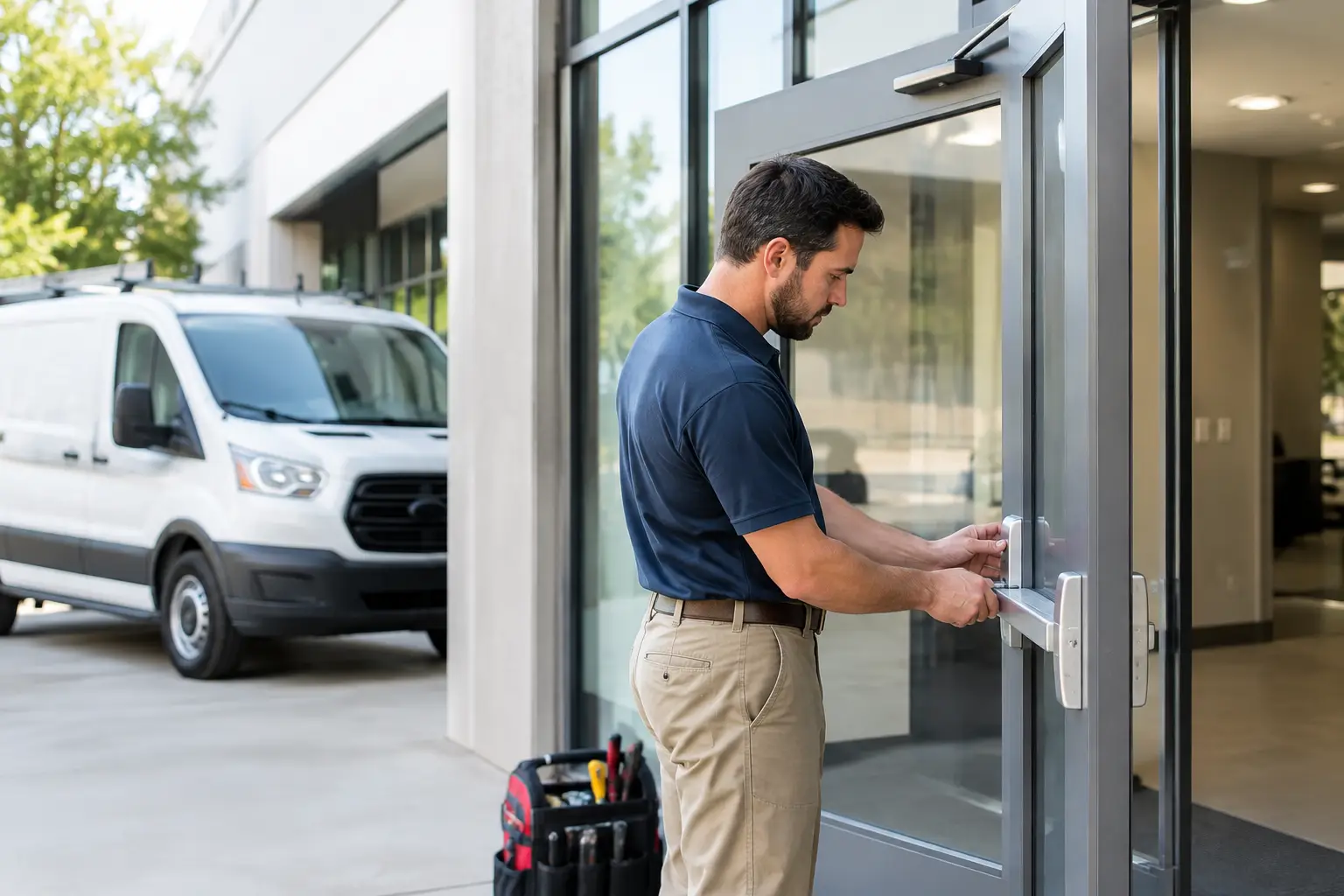
A fire exit that will not open first time is not a minor maintenance issue. In an emergency, people may be unfamiliar with the building, visibility may be poor and there is no time to find keys or work out a complicated lock. The right fire exit hardware lets occupants leave quickly while still helping to keep the premises secure when the door is closed.
For landlords, facilities managers and business owners, the challenge is usually finding the balance between secure access and straightforward escape. That balance is not achieved by fitting the strongest lock available. It comes from choosing suitable hardware for the door, the building and the people who use it.
Why fire exit hardware needs careful selection
A fire exit door is part of a complete safety system. The door leaf, frame, hinges, closer, locks, exit device and any access control all need to work together. Replacing one part without considering the rest can create a problem, particularly on a fire-rated door.
A door may need to resist the spread of fire and smoke, close fully after use, remain secure from the outside and still release immediately from inside. If a closer is too powerful, a child or older person may struggle to open the door. If it is too weak or poorly adjusted, the door may not close into the frame. If an additional lock has been fitted for security, it can turn a safe escape route into an obstruction.
In most non-domestic premises in England and Wales, the responsible person must make sure escape routes can be used safely. Your fire risk assessment should guide the type of exit arrangement required. A competent locksmith can help with the practical door and hardware side, but they cannot replace a proper fire risk assessment where one is needed.
Choosing fire exit hardware for the people using the door
The key question is not simply whether a door is marked Fire Exit. Ask who may need to use it and how familiar they are with the building.
Panic bars for public areas
Panic exit devices, commonly known as push bars or panic bars, are generally used where members of the public may need to escape. Think shops, schools, halls, public-facing offices and venues. A horizontal bar runs across the door, allowing someone to release it with a simple push, even in a crowd.
These devices are designed for situations where people may panic or have no prior knowledge of the exit. A small push pad can be perfectly suitable in some workplaces, but it is not always the right choice for a door used by visitors or the public.
Emergency exit devices for trained users
Emergency exit hardware, such as a push pad or lever-operated device, can suit a workplace where the people using the door are familiar with the escape route and know how the device works. This might include a staff-only office, stock room or managed industrial unit.
The distinction matters. Do not choose a small push pad only because it looks neater or costs less. The door’s users, occupancy levels and the findings of the fire risk assessment should determine the device.
Lever handles, locks and external access
Some fire doors use a lever handle on the escape side, with a lock, cylinder or access control on the outside. This can work well where the internal handle always gives immediate, single-action release. It must not leave someone searching for a key, code or fob to get out.
External security still matters, especially for rear exits and commercial premises with valuable stock. The solution may be an outside access device, a suitable cylinder or a monitored alarm, rather than adding extra bolts to the inside of the door. Any arrangement needs to preserve quick escape at all times.
The door closer is just as important as the exit device
It is easy to focus on the bar or lock, but a fire door that is wedged open or fails to latch cannot do its job. A correctly specified and adjusted closer helps the door return to the frame and engage the latch after someone passes through.
Closers are not one-size-fits-all. The weight and width of the door, the location, wind pressure and accessibility all affect the right setting. A heavy external door may need more closing force, while an overly heavy action can cause daily frustration and encourage people to prop it open.
Hinges, intumescent seals, latches and keep plates also deserve attention. A loose hinge, worn latch or misaligned frame can stop a door closing properly, even when the closer itself appears to be working. On a fire-rated door, replacement parts should be suitable for that door type and fitted without damaging its fire performance.
Be cautious with magnetic locks and access control
Magnetic locks are often fitted to communal entrances, offices and controlled areas because they provide tidy access control. On a fire exit, however, they need careful design. The lock must release appropriately when the fire alarm operates, and occupants need a reliable means of leaving without relying on the access-control system.
Poorly planned additions are a common source of risk. A keypad, intercom, electric strike or maglock may have been installed for security after the original door was fitted, without anyone considering the escape route. Do not assume that a green break-glass unit on the wall makes every arrangement acceptable. The full system must be suitable, maintained and tested.
If a door is connected to alarm or access-control equipment, involve the relevant fire alarm or access-control specialist as well as the person working on the lock. One trade should not unknowingly disable another system.
Common problems that need sorting promptly
Many exit-door faults develop gradually. Staff get used to lifting the handle, pulling the door hard or giving it a shoulder to make it shut. Those are warning signs, not normal behaviour.
A sticking multipoint mechanism, loose panic bar, damaged push pad or failed closer should be dealt with quickly. So should a door that catches on the threshold, does not latch fully or opens too easily from outside. Temporary fixes such as tape, wedges, chains and extra surface bolts can introduce serious problems and should not be used as a substitute for a proper repair.
Weather can also affect external exits. Timber doors swell, metal doors can move, and uPVC doors may go out of alignment. In Berkshire and the Thames Valley, rear service doors and exposed side exits often take the worst of the rain and wind. A local repair before the mechanism fails completely is usually less disruptive than an emergency replacement.
Simple checks between professional inspections
Staff should not need technical training to spot an obvious problem. A regular visual and functional check can identify issues before they become urgent. Check that:
- the escape route and door are clear of stock, furniture and rubbish;
- the exit device opens the door easily from the inside;
- the door closes fully and the latch engages without being forced;
- no key-operated lock, chain, bolt or other obstruction has been added on the escape side; and
- signs, emergency lighting and any relevant alarm release arrangements remain visible and undamaged.
Record defects and make sure someone is responsible for arranging repairs. The frequency of formal checks will depend on the premises, how busy the door is and the fire risk assessment. A high-traffic shop exit needs more attention than a rarely used staff door, but neither should be ignored.
Repairs, replacements and changes of use
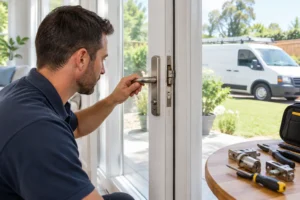
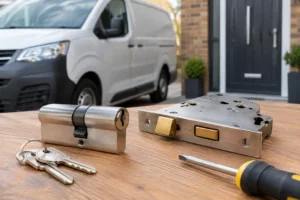
Sometimes a straightforward adjustment is all that is needed. A locksmith may be able to realign a door, replace a worn keep, service an exit device or fit a compatible closer. Where hardware is badly worn, obsolete or unsuitable for the building’s use, replacement is the safer option.
A change in occupancy is a good time to review the door. A staff-only unit becoming a customer-facing space, for example, may need different exit hardware. The same applies when a building is subdivided, a new access-control system is added or a landlord changes the use of a communal area.
Lock Solutions can assess faulty locks, closers and exit hardware on commercial doors, explain the practical options in plain English and carry out suitable repairs or replacements. For urgent faults, do not leave a compromised escape route until the next planned maintenance visit.
A fire exit should be easy to use on an ordinary day, not only in an emergency. If staff hesitate, the door sticks or the hardware has been altered over time, arrange a professional check before a small fault becomes the moment somebody cannot get out.