A patio door that sticks for a few seconds can become a patio door that will not lock at all. Because the mechanism is hidden inside the frame, many homeowners only notice a problem when the handle suddenly will not lift, the key turns without securing the door, or they are locked out of their own garden. Patio door locks deserve attention at the first sign of resistance, not after the door has failed.
Sliding and French-style patio doors are a popular route between house and garden, which also makes them a key part of your home security. The good news is that many faults can be repaired before a full replacement is needed. The right answer depends on the type of door, the condition of the mechanism and whether the lock still offers the level of protection your property needs.
How patio door locks usually work
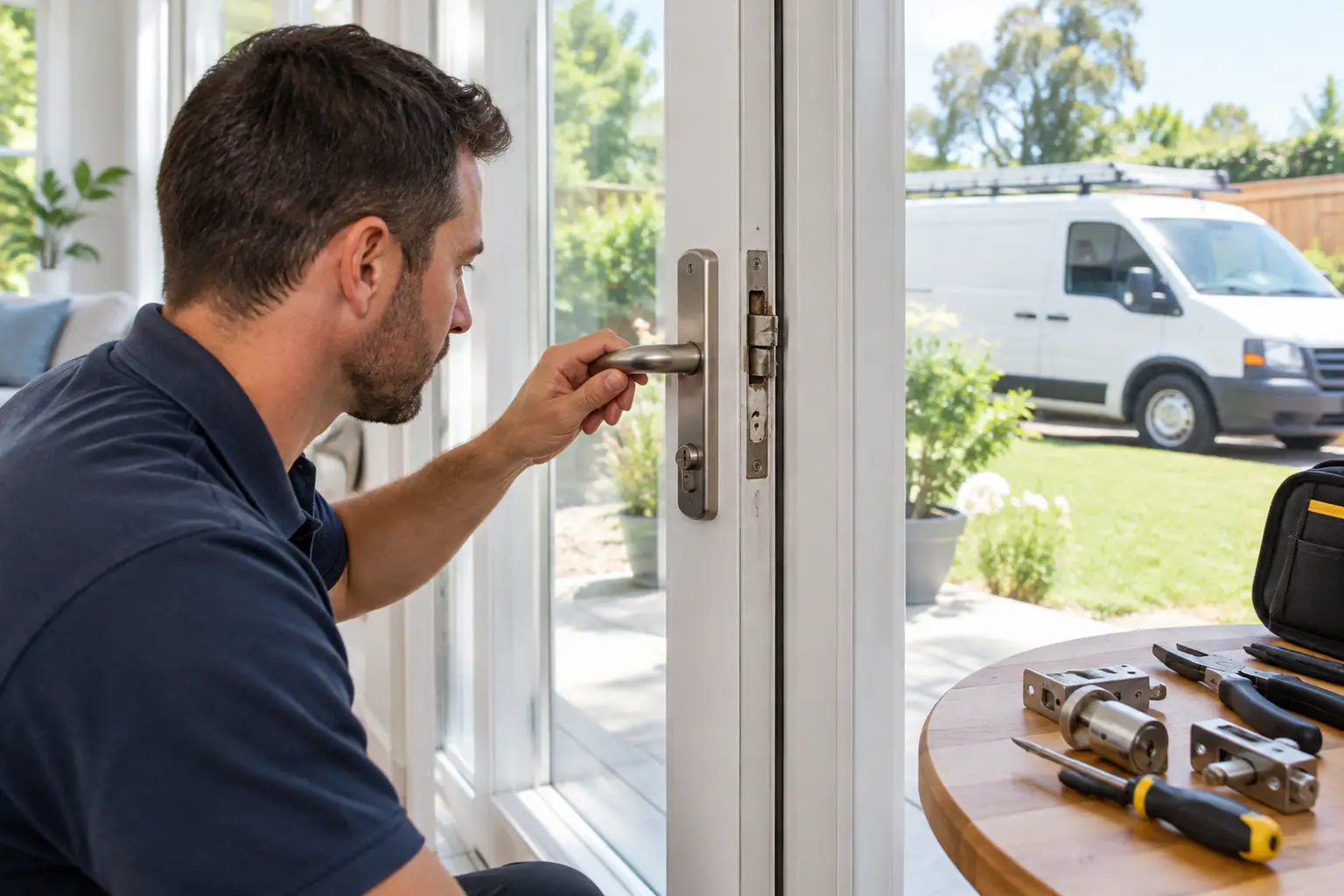
Not all patio doors lock in the same way. A sliding uPVC or aluminium door may use a hook lock, bolts or a multi-point mechanism operated by the handle and cylinder. When the handle is lifted, locking points engage with keeps on the frame. A key then locks the handle in position.
French doors commonly use a multi-point locking strip on the main opening door, with shoot bolts or a slave-door mechanism on the second door. Older timber doors may have a mortice lock, surface-mounted bolts or a more traditional handle and key arrangement.
This matters because the visible handle is not always the failed part. A loose or stiff handle can point to a worn gearbox, broken spring cassette, damaged cylinder, poor alignment or a mechanism that has been strained over time. Replacing a handle without diagnosing the cause can leave you with the same problem a few days later.
Warning signs your patio door locks need repair
A lock rarely fails without giving some warning. If you spot any of the following problems, avoid forcing the handle or key. Extra pressure can turn a straightforward repair into a damaged mechanism or a snapped key.
- The handle needs lifting hard before the key will turn.
- The key is stiff, catches, spins freely or needs wiggling to work.
- The door has dropped and rubs against the frame or threshold.
- You can lock the door only when it is open, not when it is shut.
- The handle is floppy, loose, difficult to move or will not return to position.
- The lock engages, but the door still feels loose in the frame.
- You have lost keys, moved into the property or cannot account for every copy.
A patio door that only locks when you pull it towards you is often an alignment issue. Hinges on French doors can settle, while sliding door rollers can wear or require adjustment. The mechanism may still be sound, but continuing to force it will put unnecessary load on the locking points.
If the key is the problem, the cylinder may be worn or damaged. That can often be changed without replacing the whole multi-point lock, provided the rest of the mechanism works properly. It is a more proportionate repair and restores control over who has access to the property.
Security issues that should not wait
A door that cannot be locked securely needs prompt attention, particularly if it opens onto an accessible garden, patio or side passage. Do not rely on a piece of wood in the track, a chair against the door or a temporary padlock as a long-term fix. Those measures may limit movement, but they do not properly secure the door or resolve the underlying fault.
Call a locksmith quickly if the cylinder is protruding from the handle, the lock has been tampered with, the door has been forced, or the handle will not operate after an attempted break-in. The same applies if a key has snapped inside the cylinder or you are locked in or out with the door partly open.
Where a patio door uses a euro cylinder, a locksmith can assess whether the existing cylinder is appropriate for the door and security risk. Upgrading to a recognised anti-snap cylinder can be sensible on suitable doors, especially where an older cylinder projects beyond the handle. It is not a cure for a failing gearbox or poor door alignment, though. Good security depends on the lock, handle, keeps, frame and installation working together.
Repair or replacement: what is the sensible choice?
Repair is often the best route when the door is in good order and the fault is limited to an adjustable alignment issue, worn rollers, a handle spring, cylinder or individual component. It keeps the work focused and can be less disruptive than changing every part of the locking system.
Replacement becomes more sensible when the internal mechanism has broken, parts are obsolete, several components are badly worn, or the lock no longer provides reliable security. A mechanism that has been forced repeatedly may have bent or damaged locking points even if it appears to work for now. In that situation, repairing one piece may only postpone another failure.
For landlords and property managers, replacement can also be the practical choice between tenancies if keys are unaccounted for or the lock has become unreliable. A fresh cylinder and properly operating patio door give incoming tenants a clear, secure start.
Be wary of choosing purely on price. A cheap cylinder or poorly fitted lock can cause trouble sooner and may not match the security standard expected for the property. Equally, the most expensive option is not automatically necessary. A good locksmith should explain what has failed, what can be retained and what the realistic options are before work begins.
Simple habits that help locks last longer
Patio door locks work best when the door closes cleanly. Before lifting the handle, make sure the door is fully shut and not being held out of line by a rug, swollen seal, debris in the track or an obstruction around the frame. Sliding doors should move freely rather than needing a sharp shove at the end of their travel.
Keep the lower track clear of grit, leaves and pet hair, particularly after windy weather or gardening. Use a soft brush or vacuum, then wipe it clean. Avoid spraying thick oil or general-purpose lubricant into the lock and mechanism. It attracts dirt and can make a stiff lock worse over time. A locksmith can advise on a suitable lock lubricant where needed.
Do not use the handle to pull a stiff sliding door into place. Close the door by its pull handle or edge first, then operate the locking handle gently. If the key starts to resist, stop there. Forcing it risks breaking the key in the cylinder, which is inconvenient at any time and especially unwelcome late at night.
When to call a local locksmith
A professional inspection is worthwhile when a patio door is hard to lock, even if it still works. Catching the problem early can avoid an emergency lockout and help protect the door mechanism from further damage. It also gives you a clear answer on whether adjustment, repair or replacement is required.
For homeowners and businesses across Reading, Berkshire and the Thames Valley, Lock Solutions provides practical help with uPVC door and window lock repairs, replacement locks and emergency access. You can speak directly to a local locksmith, with no callout charge and 24-hour support when a failed patio lock cannot wait.
If your door is currently unsecured, keep the area supervised where possible and arrange help straight away. If it is only beginning to stick, do not ignore it until the next season. A small adjustment today can save you from discovering that the patio door will not lock just as you are leaving the house.