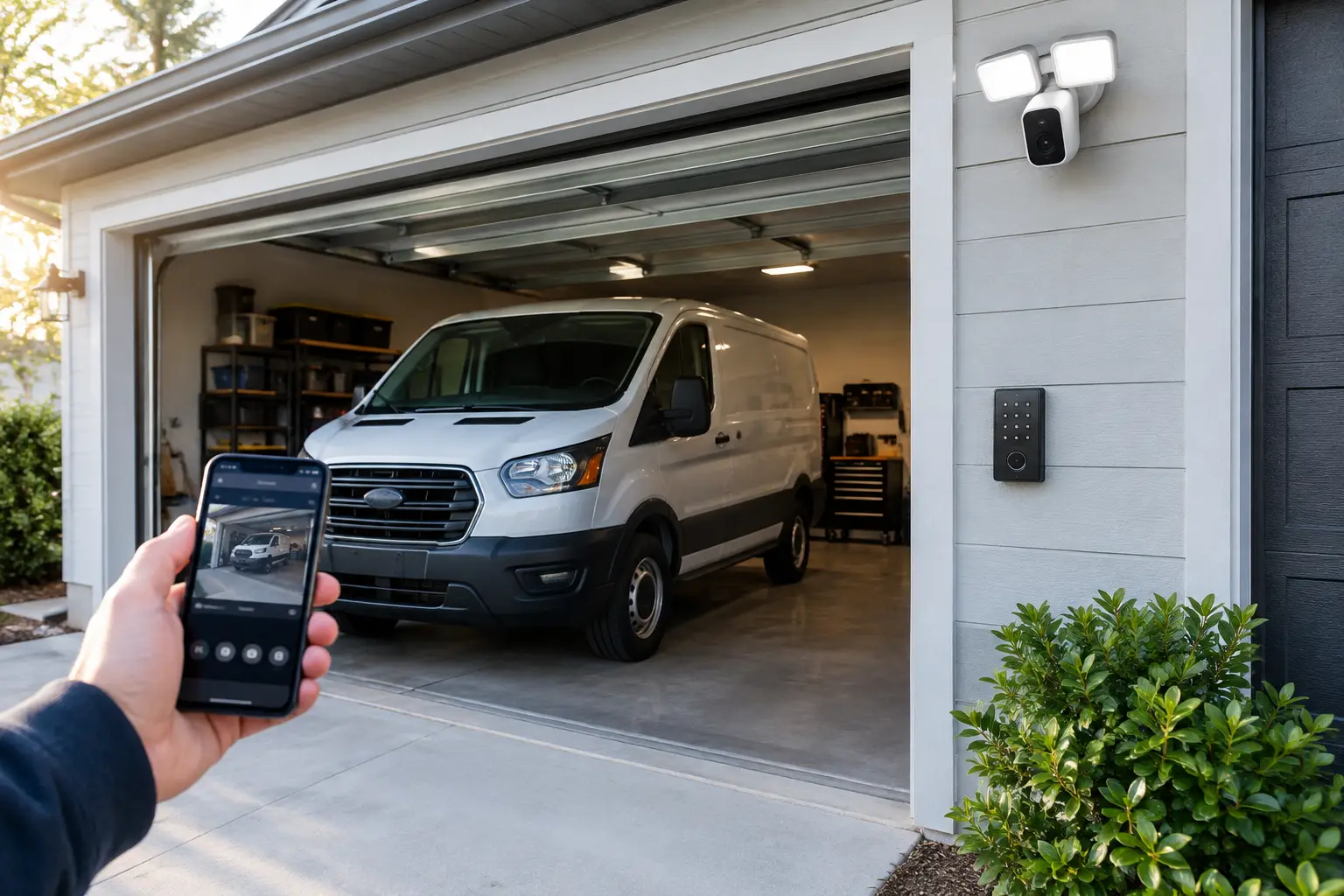
A garage is often the easiest way into a property without looking like an obvious break-in point. It may hold a car, bikes, power tools and garden equipment, but it can also give access to the house through an internal door. The top garage security upgrades focus on stopping forced entry, making suspicious activity visible and preventing a quick theft from becoming an expensive one.
For many homes, the best starting point is not a complicated alarm system. It is checking the door, lock and frame that are already there. A worn lock or loose side door can undermine every other security measure you add.
Start with the garage door and its locking points
The main garage door needs to be secure when it is closed, not merely difficult to open from the outside. Up-and-over doors can be vulnerable if the original handle lock is old, damaged or easily bypassed. Roller shutters have different weak points, particularly around the bottom rail, guides and manual override system.
A quality garage door defender, fitted to the ground in front of an up-and-over door, adds a visible physical barrier. It is especially worthwhile where valuable bikes, tools or a classic vehicle are kept inside. The trade-off is convenience: you need to unlock and remove it whenever you use the garage. For a garage used only for storage, that is usually a small inconvenience for a worthwhile increase in protection.
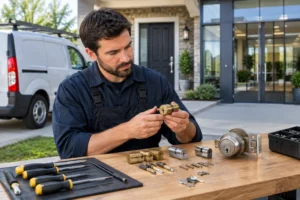
Where the door has side locking points, make sure both sides engage properly. A door that only catches on one side can often be twisted or lifted enough to create access. If keys have been lost, moved between previous owners or lent out widely, replacing the lock is sensible even if it still works.
Do not overlook the condition of the frame, hinges and fixings. Strong locks fitted to rotten timber, thin metal or loose bolts are not a complete solution. A locksmith or garage door specialist can identify whether the weak point is the lock itself or the structure holding it.
Secure the side door like an external front door
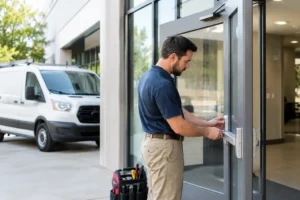
Many garages have a timber, composite or uPVC side door, and this is frequently the most practical entry point for an intruder. It deserves the same level of attention as any other external door.
For a timber side door, a properly fitted five-lever mortice deadlock and reinforced hinge bolts can make a substantial difference. The lock should be fitted neatly into a sound door and frame, with a strong keep plate secured using long screws. If the door opens outwards, hinge bolts are particularly useful because they help prevent the door being lifted away if hinges are attacked.
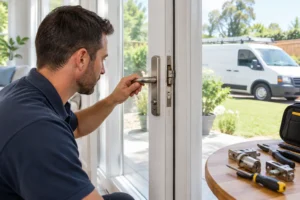
For a uPVC side door, check whether the handle feels loose, the key is difficult to turn or the door needs lifting before it will lock. These are often signs of a failing mechanism or poorly aligned door, rather than something to ignore until it fails completely. A suitable high-security cylinder can reduce the risk of common cylinder attacks, but it must be matched to the door and fitted to the correct length. A cylinder that protrudes unnecessarily can give an intruder more to grip.
The door between the garage and house matters just as much. Treat it as an external door, particularly if the garage door is older or used frequently. Keep it locked, even while you are at home, and avoid leaving house keys on hooks or shelves inside the garage.
Top garage security upgrades for tools and bikes
A secure garage shell is the first layer. The next is making individual valuables difficult to remove. This is often where homeowners get the best value, because a thief who gets inside should still face a serious delay.
Use a ground anchor or wall anchor for bikes, motorcycles and larger garden machinery. The anchor needs to be fixed into solid concrete or masonry with appropriate security fixings. A heavy chain is only as useful as the anchor it is attached to, so avoid fastening it to lightweight shelving, a radiator pipe or a timber joist.
Lockable metal cabinets work well for power tools and smaller equipment. They do not need to be expensive, but they should be firmly fixed to the wall or floor where possible. Keep battery chargers and removable batteries locked away too. They are easy to carry, valuable to replace and can make a tool set more attractive to steal.
It is also worth marking valuable items with a visible postcode or security marking system, then keeping a simple record of serial numbers and photographs. This will not prevent a break-in, but it can help with police reports, insurance claims and identifying recovered property.
Add light, alarms and cameras where they will help
Security lighting is one of the simplest garage upgrades. A motion-activated light near the side door, driveway or rear access route can discourage someone who wants to work unnoticed. Position it so it lights the approach, rather than shining directly into a neighbour’s bedroom or across the road.
An alarm is most useful when it is matched to the way the garage is used. A basic standalone garage alarm with a loud internal siren can be enough for a detached garage used for storage. If the garage is attached to the home, linking it to a monitored or household alarm system may provide better coverage. Door contacts, vibration sensors and internal movement detectors all have a place, but they need careful placement to avoid false alarms from pets, loose doors or stored items shifting in cold weather.
Cameras can provide reassurance and useful evidence, particularly at the front of a property where there is a clear view of the driveway. They are not a replacement for locks and physical security. A camera may record an incident, but a properly secured side door can stop it happening in the first place. Make sure any camera is positioned lawfully and consider neighbouring privacy before fitting one.
Remove the easy opportunities
Most garage security is practical rather than glamorous. Do not leave the garage remote control in a car parked on the drive. If somebody gets into the vehicle, they may have immediate access to the garage as well. Keep spare keys out of the garage, including keys for the house, shed and vehicles.
Close and lock the garage whenever it is unattended, even if you are only inside the house for a few minutes. An open garage gives someone a clear view of what is available and can allow a quick grab without any force being used.
If you are going away, avoid making the property look empty. Ask somebody you trust to collect post where needed, and do not leave ladders, wheelie bins or garden furniture positioned where they could help someone reach a window or garage roof.
Choose upgrades based on the real risk
There is no single best setup for every garage. A detached garage at the end of a shared access lane has different risks from an attached garage in a busy Reading street. A homeowner storing a few garden tools may need a sound side-door lock and lighting. Someone keeping expensive trade tools, e-bikes or a vehicle may need layered protection: a stronger main door, upgraded lock, ground anchors, alarm and secure storage inside.
Start by identifying the easiest route in. Check whether the lock works smoothly, whether the door can be lifted or forced, and whether valuables can be removed quickly once inside. Deal with those weaknesses before spending money on extras.
If a lock has failed, a key has gone missing or a uPVC garage door will no longer lock correctly, do not wait for it to become an emergency. Lock Solutions can assess the fault, explain the practical options in plain English and help secure the property without a callout charge. A garage should be useful space, not the weak point in your home security.