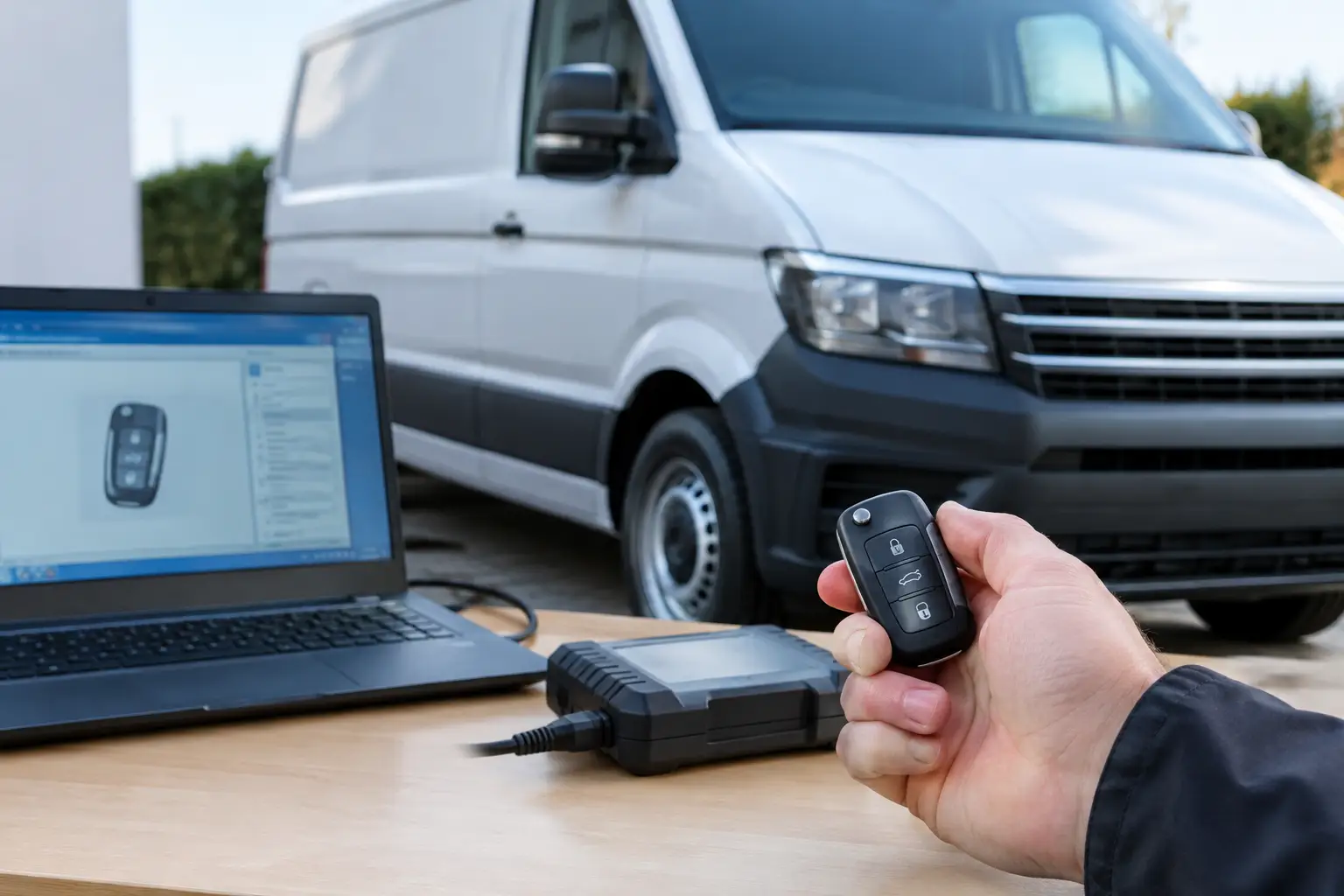
A car key can look perfectly normal and still leave you stranded. The blade may turn in the ignition, or the button may flash, yet the engine will not start because the vehicle no longer recognises it. When we programme car keys, we are matching the key’s electronic identity to the car’s security system – not simply cutting a new piece of metal.
For drivers in Reading, Berkshire and the surrounding area, that distinction matters. A lost, damaged or faulty key is often an urgent problem, but the right solution depends on the vehicle, the type of key and whether you still have a working spare.
What it means to programme car keys
Most modern vehicles use an immobiliser. Inside the key, fob or keyless entry device is a transponder chip that communicates with the car. When the car detects the correct coded signal, it permits the engine to start. If it does not, the immobiliser remains active.
Programming a key adds that transponder or remote fob to the vehicle’s system. On some cars, the remote locking buttons and the engine-start function are programmed together. On others, they are separate jobs. That is why a key can sometimes unlock the doors but fail to start the vehicle, or start the engine while the remote buttons do nothing.
Older vehicles may only need a basic transponder key. Newer cars can use proximity fobs, push-button start systems, encrypted chips and security gateways. These offer better theft protection, but they can make replacement more involved.
A replacement key also needs to be physically correct. If your vehicle uses a traditional ignition barrel, the blade must be cut accurately before it will turn the lock. With keyless systems, an emergency blade may still be needed to open the door if the fob battery goes flat.
When a car key needs programming
The most obvious situation is losing a key. If you have one key left, arranging a spare before it becomes an emergency is usually the sensible option. It gives you a backup and can make the job quicker than starting with no working keys at all.
Programming may also be needed after a key has been damaged by water, crushed in a door, dropped repeatedly or put through the washing machine. A worn case or broken button does not always mean the electronics have failed, but it is worth checking before assuming a whole new key is required.
Other common reasons include a flat or incorrectly fitted fob battery, a remote that has lost synchronisation, or a previous replacement key that was never programmed properly. If the car has been bought second-hand, it may also be wise to consider removing missing or unreturned keys from its memory. A key that has been erased should no longer start the vehicle, even if someone later finds it.
Can you programme car keys yourself?
Some owners can carry out a limited remote re-synchronisation at home. Certain vehicles have a sequence involving the ignition, central-locking button or remote buttons. The instructions must match the exact make, model and year, as trying a random online method can waste time and occasionally create further issues.
However, remote synchronisation is not the same as immobiliser programming. Most modern transponder keys need diagnostic equipment that communicates with the vehicle, along with the correct security data. A key bought online may be the wrong frequency, use an incompatible chip or arrive as a blank shell with no electronics inside.
Buying the cheapest fob can therefore become a false economy. It may look identical to your original key but still be impossible to programme to your car. Quality matters too. A poorly made case, weak buttons or badly fitted battery can cause another failure not long after the replacement.
There are situations where a main dealer is the right route, particularly for very new models, vehicles with tightly controlled security systems, or keys that require manufacturer-only access. A good auto locksmith will be straight with you about this rather than promising a solution that cannot be delivered.
What an auto locksmith needs before starting
A legitimate key replacement should always begin with proof that you are entitled to the vehicle. Have your driving licence or another photo ID ready, along with the V5C registration document where possible. If it is a company car, lease vehicle or van, the paperwork may need to show your authority to arrange the work.
It also helps to provide the registration number, make, model and year of the car when you call. Mention whether the vehicle has a turn-key ignition, a push-button start, a remote fob or a key card. Tell the locksmith exactly what happens when you try to use it: no lights, no central locking, an immobiliser warning, a key-not-detected message, or an engine that turns over but will not start.
Those details help identify whether the problem is likely to be the key, the battery, the vehicle battery, the ignition, the door lock or another electrical fault. Not every no-start problem is a programming problem.
If all car keys are lost
When every key is missing, the process is more involved but it is still often possible to create and programme a replacement at the vehicle. The locksmith may need to gain non-destructive entry, establish the correct key profile, cut a blade where required and programme a compatible key to the immobiliser.
This can take longer than adding a spare because there is no working key to copy or test against. Some makes and models have additional security procedures, and a vehicle in an awkward location may affect what can be done on site. Clear information at the start avoids surprises.
What happens during the programming process
First, the vehicle and existing key are assessed. A proper diagnosis checks whether the original key is transmitting, whether the fob battery has enough power, and whether the vehicle is reporting a fault that points elsewhere.
If a replacement is needed, the locksmith selects a compatible key or fob and cuts the mechanical blade if your vehicle has one. Diagnostic equipment is then connected to the vehicle so the new transponder can be introduced to the immobiliser system. The key is tested for starting, locking and unlocking functions before the job is finished.
Where a key has been stolen, lost in a public place or is believed to be in the hands of someone who should not have it, ask about removing it from the car’s memory. That extra step can make a real difference to security. Simply changing the physical blade or getting a new fob does not automatically stop an old programmed key from starting the car.
What affects the cost and timescale?
There is no single price for car key programming because the work varies considerably. A basic spare for an older vehicle is different from replacing all keys for a late-model push-button car. The make and model, key type, availability of compatible parts, the need for blade cutting, the number of keys to be programmed and the vehicle’s security system all affect the job.
Urgency and location can matter too. If you are locked out in a supermarket car park, at home before work or at the roadside, the aim is to restore safe access as quickly as possible. But the quickest answer is not always a full replacement key. A loose battery contact, worn fob case or lost synchronisation may be repairable.
Lock Solutions takes the practical approach: identify the fault first, explain what is needed and only recommend replacement where it is the sensible option. For urgent auto locksmith help, you can speak directly to a local locksmith rather than a national call centre, with no callout charge for work that needs attending to.
Avoiding the next car-key emergency
Once you have a working replacement, make a spare a priority. Keep it somewhere secure at home, not hidden inside the vehicle and not attached to the same key ring as your daily key. If your fob starts working intermittently, replace the battery promptly and keep it dry. A small crack in the casing can let moisture reach the circuit board.
Most importantly, do not wait until the only key has failed or disappeared. Sorting a spare while the car is accessible and one key still works gives you more options, less stress and a much better chance of getting back on the road without disrupting your day.