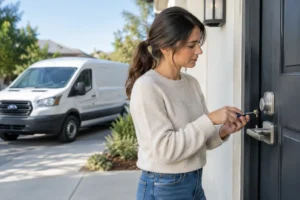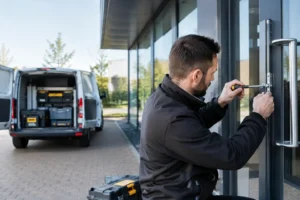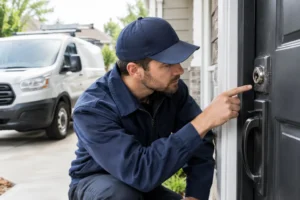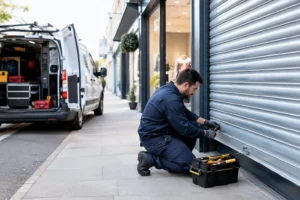
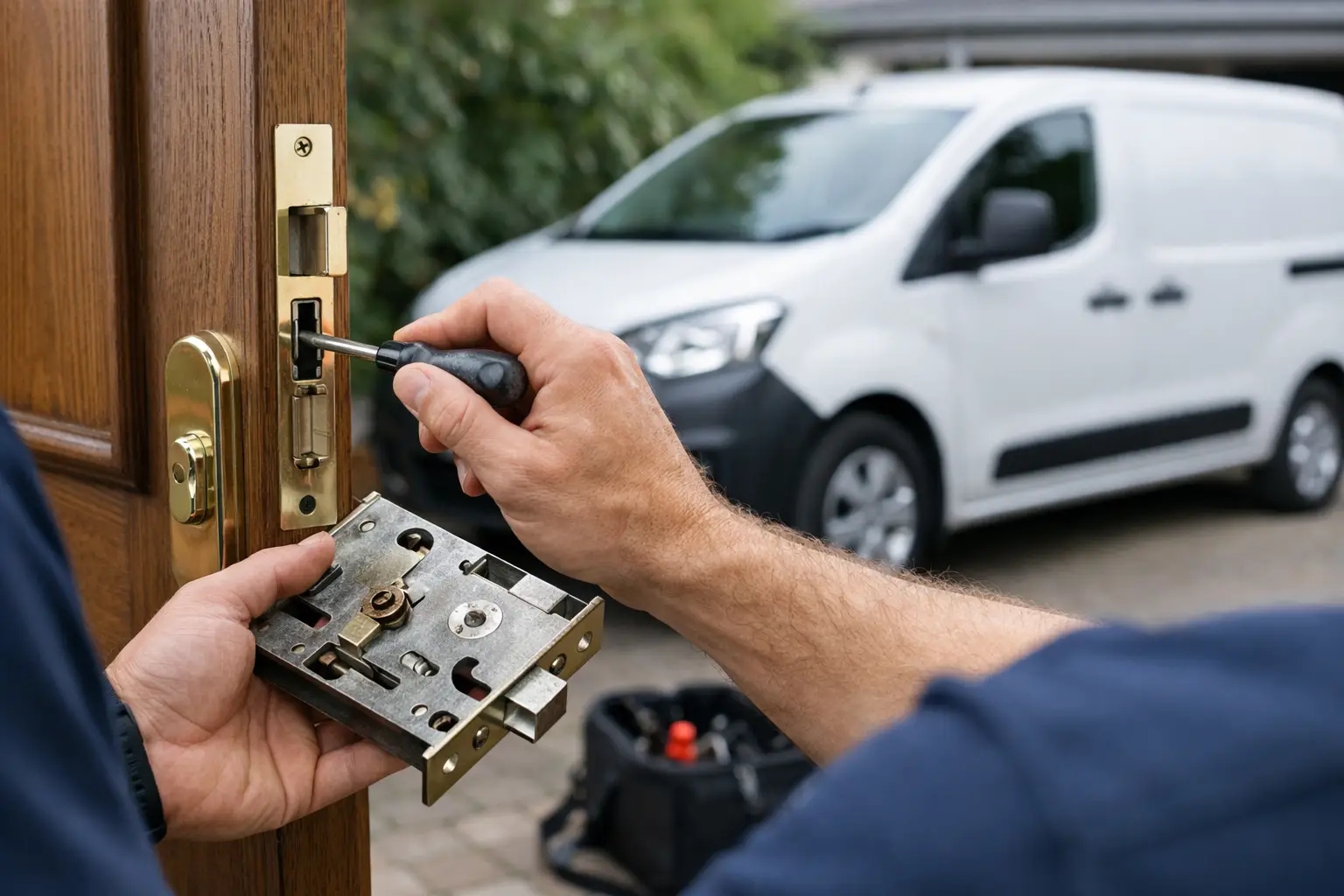
A front door can look perfectly sound while the mortice lock inside it is becoming difficult to turn, loose in the door, or no longer holding securely. A mortice lock replacement service is the sensible next step when a lock has failed, keys have gone missing, or you need to bring an older door up to a better security standard. The priority is not simply fitting a new lock. It is making sure the replacement suits the door, frame, insurance requirements and the way the property is used.
For homeowners, landlords and business owners, a faulty mortice lock can quickly become an access problem or a security concern. If the key will not turn, the latch does not catch properly, or the door has been forced, do not keep forcing it. A local locksmith can assess what has gone wrong and explain whether a repair is safe or a replacement is the better value option.
What is a mortice lock?
A mortice lock is fitted into a pocket, or mortice, cut into the edge of a timber door. Unlike a night latch, which is mounted on the surface of the door, most of the mechanism sits inside the door itself. You will usually see the keyhole and a faceplate on the door edge, with a keep fitted to the frame.
Many external wooden doors have a five-lever mortice deadlock or sashlock. A deadlock is operated by a key and provides a bolt only. A sashlock combines a key-operated deadbolt with a handle-operated latch, so it can be used with door furniture such as a lever handle. The right type depends on the existing door arrangement – and changing from one type to another may involve more joinery work.
A good replacement is not just about the number of levers or the appearance of the key. The lock case must be the correct size, the backset needs to line up with the handle and keyhole, and the bolt must enter the frame cleanly. A lock that is poorly matched or badly fitted can make a solid door less secure, not more.
When a mortice lock replacement service makes sense
Some issues can be repaired. Others mean the internal mechanism has reached the end of its useful life. The difference is not always obvious from outside, which is why it helps to have the lock examined before choosing a new one.
Replacement is commonly recommended when the lock has been damaged during a break-in or attempted forced entry. Even if the key still works, a distorted case, loose bolt or damaged keep can affect how well the door resists pressure. It is also worth replacing the lock after keys are lost or stolen, particularly where the keys could be linked to the address.
Age matters too. Older locks can become worn internally, and spare keys may be difficult to source or no longer offer the level of security an insurer expects. If you have moved into a property and do not know who may still hold a key, replacing external door locks gives you a clear starting point.
Look out for warning signs such as these:
- The key sticks, spins, needs jiggling or is difficult to remove.
- The bolt does not fully throw into the frame, or needs the door lifting to lock.
- The handle is drooping, loose or fails to retract the latch properly.
- The lock has been forced, the faceplate is bent, or the door edge is split.
- The lock is not suitable for the security level required by your insurer.
A stiff lock is not always a failed lock. Seasonal movement in a timber door, a swollen frame, misaligned hinges or a loose keep can stop the bolt travelling freely. In those cases, an adjustment or repair may be enough. Replacing a lock before checking the alignment can leave the same problem behind.
Choosing the right replacement lock
For many homes, a British Standard BS 3621 five-lever mortice deadlock is a sensible choice for a final exit door where a key is used from both sides. This standard is widely recognised by insurers, but policy requirements vary. Check your own policy wording, especially if you are renewing cover or making changes after a claim.
Not every door needs exactly the same lock. A back door used as a main exit may need the same standard as the front door. A door between a house and an attached garage may call for a different arrangement. For a rental property, landlords need to think about day-to-day reliability as well as security and key control. For a shop, office or communal building, the need to leave safely in an emergency may influence the type of lock and hardware selected.
A locksmith will also consider the door itself. A thin or damaged timber door may need repair before a larger or stronger lock can be fitted. A narrow stile limits the case size that can be installed safely. Where the existing lock is obsolete, it may be possible to fit a modern equivalent, though this can require careful alteration to the mortice and adjustments to the strike plate.
Recognised makes such as Yale, Chubb and Union offer dependable options, but brand name alone is not the full answer. Correct fitting, a secure frame and a properly aligned keep matter just as much.
Deadlock or sashlock?
A deadlock is often used where the door has a separate latch or night latch. A sashlock is usually the practical choice where handles operate the latch and a key operates the deadbolt. Replacing like for like is often the cleanest route, but it depends on the door furniture, the condition of the existing cut-out and how the door is used.
There is also a practical trade-off with thumbturns and internal locking arrangements. They can make leaving easier in some situations, but the right choice must take account of the door location, glazing nearby, security needs and fire escape arrangements. It is worth discussing rather than guessing.
What to expect from a professional replacement
A proper mortice lock replacement service begins with identifying the lock type and finding out why it is being replaced. If the door is closed and the lock has failed, non-destructive entry is normally the first aim. Once access has been restored, the locksmith can inspect the lock body, cylinder where fitted, handles, hinges, keep and door frame.
The old lock is removed carefully and the new one is matched to the door as closely as possible. The locksmith will ensure the bolt throws fully, the latch retracts properly and the key works smoothly from both sides. They should also check that the door closes without needing to be pushed, lifted or slammed.
If the lock has been attacked, the work may include securing damaged timber, replacing the keep or reinforcing the affected area before fitting the new lock. A new lock cannot compensate for a loose frame or split door edge. This is one reason a site assessment is more useful than ordering a lock based on a photograph alone.
You should be given a straightforward explanation of the work completed, the lock fitted and any further repairs that are advisable. Keep the keys in a safe place and test every key before the locksmith leaves. If different people need access, arrange the right number of keys from the outset rather than relying on poor-quality copies later.
Emergency and planned lock changes
A failed mortice lock at night, after a burglary or when you cannot secure the property is an emergency. Call straight away rather than leaving a door unsecured or trying to force the mechanism with tools. For urgent jobs across Reading, Berkshire and the Thames Valley, Lock Solutions provides 24-hour help, no callout charge and aims to attend within an hour.
Planned replacement is ideal when you have just moved home, are changing tenants, are preparing a property for sale, or have noticed a lock becoming unreliable. It gives you time to check insurance requirements and choose suitable hardware without the pressure of a lockout. Either way, direct advice from an experienced locksmith is preferable to a vague quote from a call centre that has not seen the door.
A small problem is easier to fix early
If your mortice lock is becoming stiff, do not wait for the day it refuses to open or lock. Avoid spraying general-purpose oil into the keyway, as it can attract dirt and make some mechanisms worse over time. Keep the door and frame aligned, use the correct key, and get unusual movement checked before the lock fails completely.
A secure door should close easily, lock positively and give you confidence when you leave the property. If yours does not, arrange an assessment and deal with the cause while it is still a manageable repair.