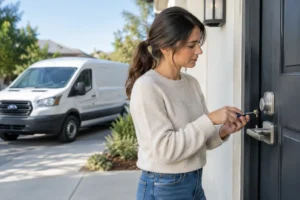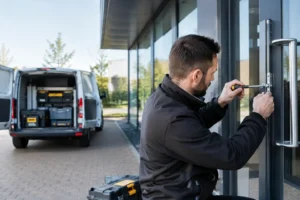
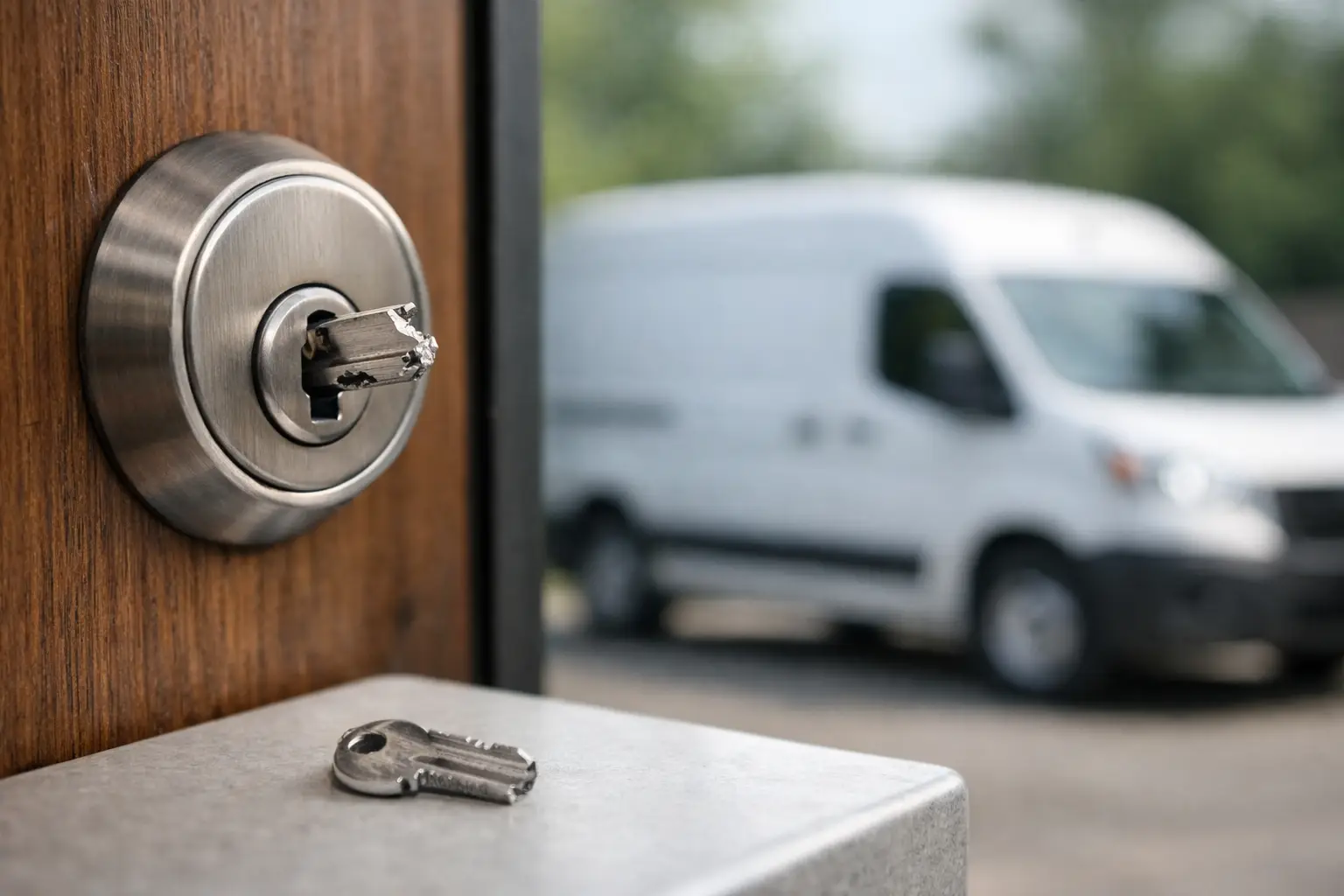
A snapped key in lock is one of those problems that can turn a normal morning, school run or late return home into a stressful stop. The key point is simple: do not force the lock, push at the broken piece, or keep trying to turn the remaining part of the key. A calm approach can prevent a straightforward key extraction becoming a damaged cylinder, a failed door mechanism or a full lock replacement.
First, stop using the lock
If the key has broken while you were turning it, leave the lock exactly where it is. Do not insert another key behind the broken piece and do not use a screwdriver, pin, knife or wire to poke inside. These attempts often push the fragment deeper into the cylinder, scratch the internal pins or snap off inside the lock themselves.
Take a moment to check whether any part of the key is sticking out. If a good section is clearly proud of the keyway and can be held without twisting, it may be possible to remove it carefully with narrow pliers or tweezers. Pull straight out, gently and steadily. The moment it does not move freely, stop. Pulling harder can distort the key fragment or damage the lock.
If the door is open, avoid closing it until the problem is sorted. You may still have access to your property, but the lock is not reliable and the door may not secure properly. If the door is shut and you are outside, calling a locksmith promptly is normally the safest route.
Why keys snap in locks
Keys rarely break for no reason. Often, the break is the warning sign of a lock or door that has been getting harder to use for some time. A worn key can weaken around the narrow section near the shoulder, particularly when it is used every day. Cheap copies can also be less durable than a correctly cut replacement.
The lock itself may be stiff, dirty, worn or beginning to fail. On a uPVC or composite door, the issue may not be the cylinder at all. A misaligned door, worn hinges or a failing multipoint locking mechanism can put resistance on the key. If you have noticed that you need to lift the handle firmly, push the door into the frame, or jiggle the key before it turns, do not ignore it. Those are common signs that a small repair could prevent a lockout.
Cold weather can make an already reluctant lock feel worse, while a door that expands or shifts slightly with changes in temperature may no longer line up cleanly. A key can also snap when somebody uses it as a handle to pull the door shut. Keys are made to turn a lock, not take the strain of the door.
Can you remove a snapped key yourself?
It depends on where the fragment has broken and the condition of the lock. If the broken end is visible and the key has not been turned, a careful straight pull with suitable tweezers may work. This is the only sensible DIY attempt for most people.
Avoid adhesive, including superglue. It can run into the cylinder and bond internal parts together, turning a simple extraction into a replacement job. Household lubricants are also a poor fix. Oil-based sprays can attract grit and leave a sticky residue inside the mechanism. If you have a proper dry lock lubricant and the key is still protruding, a small amount may help, but it will not solve a worn or misaligned lock.
A key extractor tool can work in experienced hands, but it is not usually a worthwhile purchase in an emergency. The tool must slide alongside the fragment and catch it without driving it deeper. If the key has snapped flush with the face of the lock, or it broke after being turned, leave it to a locksmith. The aim is to remove the piece cleanly while preserving the lock wherever that is safe and practical.
What a locksmith will check
A professional locksmith will not simply pull the broken key out and leave. First, they will assess whether the cylinder can be opened and whether the fragment can be extracted without damage. In many cases, a specialist extraction tool allows the key to be removed and the lock to remain usable.
Once access has been restored, the cause needs checking. The locksmith may inspect the cylinder for wear, test the key operation and assess the alignment of the door. For a uPVC door, they will also check the handle, keeps, hinges and multipoint mechanism. Replacing a cylinder when the door is out of alignment may only mask the problem for a short time.
There are occasions when replacement is the right answer. If the lock is badly worn, damaged by an attempted extraction, or no longer provides suitable security, fitting a new quality cylinder gives a clean start. If the broken key was your only key, new keys can be cut once the lock is working again. For landlords and business owners, a replacement may also make sense if there is any doubt over who holds copies of the previous key.
The right choice should be explained clearly. A good locksmith will tell you whether a repair is sensible or whether replacement is necessary, rather than treating every snapped key as an automatic new-lock job.
If a snapped key leaves you locked out
Do not try to force a window, remove door panels or climb through an upstairs opening. Aside from the risk of injury, these methods can cause expensive damage and may leave your property insecure. If somebody is inside, ask them to avoid turning the lock or trying to push the key out from the other side, as this can jam the fragment.
If there is an immediate welfare concern, such as a child alone inside, a vulnerable person requiring assistance, or a cooker left on, explain that clearly when you call. In a genuine danger to life situation, contact the emergency services as well.
For a standard lockout, have the property address ready and, if possible, take a clear photograph of the lock and broken key. It can help the locksmith understand what they are attending, although it is not essential. You should also expect to confirm that you have authority to enter the property once access is gained.
For homeowners, tenants, landlords and businesses across Reading, Berkshire and the Thames Valley, a local emergency locksmith can usually deal with the problem on site. Lock Solutions provides 24-hour support, with no callout charge and a target of attending emergency jobs within an hour. You speak directly with a local locksmith, rather than being passed through a national call centre.
How to reduce the chance of it happening again
After the immediate problem is fixed, look at the warning signs rather than carrying on as before. Replace keys that are visibly bent, worn, cracked or rough around the edges. Use properly cut copies rather than repeatedly copying an already worn key. Keep one spare key somewhere secure or with a trusted person, but do not hide it under a mat, plant pot or obvious garden ornament.
Pay attention to resistance. A key should turn without excessive force. If it catches, try lifting or pulling the handle slightly only where your door normally requires it. Do not keep adding pressure to the key. A door that needs force to lock deserves an inspection, especially if it is uPVC, composite or fitted with a multipoint mechanism.
Regular maintenance can help too. Keep the door and frame clean, check for signs of movement, and arrange a repair when handles become loose or locking points begin to stick. Small faults tend to be cheaper and less disruptive to deal with before a key breaks or the mechanism fails completely.
Common questions about a snapped key in a lock
Will a broken key damage the lock?
Not always. If the fragment is removed carefully and the lock was otherwise in good order, it may continue working normally. Damage becomes more likely when the key is forced, pushed deeper with another object, or glued during a DIY attempt. The underlying reason the key snapped may also mean the lock or door needs attention.
Can I use my spare key after the broken piece is removed?
Usually, yes, provided the lock has not been damaged and the spare key is properly cut. Before relying on it, have the lock checked for stiffness and make sure the door locks smoothly. If the original snapped through wear, discard any matching worn copies.
Does a snapped key mean I need a new lock?
No. Key extraction and a lock check may be all that is needed. Replacement is sensible if the cylinder is worn, the mechanism is faulty, security has been compromised, or removing the key safely is not possible. The condition of the lock and door determines the answer.
A broken key is frustrating, but it does not need to become a bigger security problem. Leave the fragment alone if it will not come out easily, keep the door open where you can, and get experienced help before a quick fix causes lasting damage.