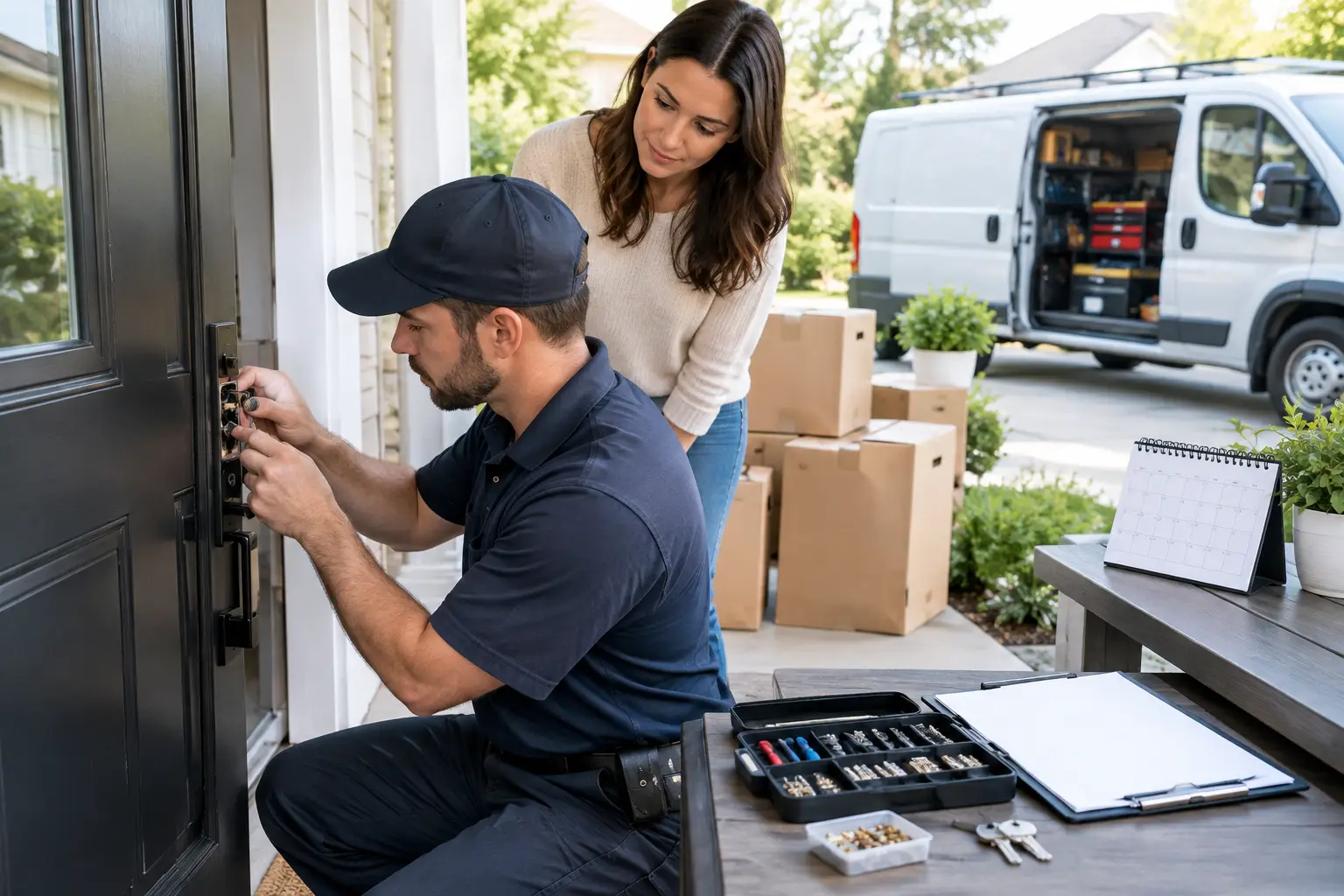
A set of keys can look completely ordinary, yet you may have no real idea who else has copies. The previous owner may have given one to a neighbour. A former tenant may have kept one. A builder, cleaner or dog walker may still have access long after their work ended. That is why asking when should locks be rekeyed is less about waiting for a burglary and more about taking control of who can enter your property.
Rekeying changes the internal workings of a compatible lock so that the old key no longer works. You keep the existing lock hardware where it is suitable, but receive a new set of keys. It can be a sensible, cost-effective way to restore control of access – although it is not always the right answer. Some locks are worn, damaged or below the security standard your door needs, and replacement will be the safer route.
When should locks be rekeyed after moving home?
As soon as possible after completing a house purchase is the straightforward answer. Even if the seller hands over every key they know about, they cannot guarantee that no copies have been made over the years. Estate agents, relatives, previous occupants, tradespeople and neighbours may all have had legitimate access at some point.
Rekeying or replacing the relevant locks before you fully settle in means you start with a known set of keys. It is a small job that removes a nagging uncertainty, particularly if the property has changed hands several times or has been vacant for a while.
The same principle applies to a newly rented home, although tenants should check their tenancy agreement and speak to the landlord or managing agent first. Landlords remain responsible for meeting their legal and safety obligations, and unauthorised changes can create problems at the end of a tenancy. A good arrangement is to agree in writing who will arrange the work, who holds spare keys and how access will be managed for repairs.
Lost, stolen or unreturned keys
A lost key does not automatically mean the lock has to be changed. If you dropped a clearly unidentifiable key on a busy pavement far from home, the practical risk may be low. If the key was lost with your driving licence, paperwork showing your address, or a keyring that identifies the property, treat it as urgent.
The same goes for stolen handbags, vehicle keys taken during a break-in, or keys that have gone missing from an office. In those circumstances, rekeying a suitable lock prevents the missing key from being used later. Do not rely on the fact that nothing has happened yet. Someone with both an address and a working key does not need to force entry.
If a key has simply been borrowed and not returned – perhaps after a relationship ends, a lodger moves out, or a contractor finishes work – changing the keying is usually the cleanest solution. It avoids difficult conversations about whether copies were made and gives everyone a clear boundary.
Rekey locks between tenancies and staff changes
For landlords and property managers, access control can become messy quickly. Tenants may have been issued several keys, cut additional copies, or passed keys to family members. Rekeying between tenancies provides a fresh start for the incoming occupier and is a sensible part of preparing a rental property.
It is equally useful in commercial premises. When an employee with key access leaves, especially if the departure is unexpected or on poor terms, the business should review which doors they could access. A small office may only need one lock rekeyed. A shop, school, warehouse or managed building may need a wider key plan reviewed so that old keys no longer open stockrooms, plant rooms, offices or external gates.
For a business with a master-key system, avoid making ad hoc changes without advice. One replacement or rekeyed cylinder can affect how the wider system operates. The aim is to remove unwanted access without leaving managers unable to open the doors they need.
After a break-in or attempted break-in
Following a burglary, rekeying can be appropriate if keys were taken and the lock itself remains in good working order. However, an attempted forced entry often calls for more than a new key. A damaged cylinder, loose handle, bent multipoint mechanism or split door frame needs to be assessed and repaired properly.
This is where replacement can be the better choice. If the existing cylinder is vulnerable to common forms of attack, badly worn, or not suited to the door, fitting a higher-security replacement gives you more than the benefit of a different key. A locksmith should look at the whole door, including the keeps, hinges, handles and locking points, rather than focusing on the key alone.
Do not put off temporary security while waiting for an insurer or landlord to respond. If your property cannot be locked securely, arrange urgent help. A local locksmith can secure the door, explain what has failed and advise whether the final repair should be a rekey, a replacement or work to the door mechanism.
When rekeying is not the right solution
Rekeying only makes sense when the existing lock is compatible, sound and suitable for the job. It will not fix a key that sticks because the cylinder is failing, a mortice lock with worn internal parts, or a uPVC door that will not lift and lock due to a faulty gearbox or alignment issue.
Many modern UK doors use euro cylinders. Depending on the cylinder type, it may be more practical to replace the cylinder than rekey it. This can still be a quick, targeted job, without replacing the full handle set or multipoint locking strip. Traditional mortice locks and certain commercial locks may also have different rekeying options, so the correct approach depends on what is fitted.
Replacement is normally advised when:
- the lock is damaged, unreliable or difficult to operate;
- the key has snapped and internal parts may be affected;
- the lock offers poor protection for the door and location;
- you want a restricted key system or one key to operate several doors; or
- the lock has been forced, drilled or otherwise compromised.
A lock that is becoming stiff should not be ignored just because it still opens. Forcing the key can leave you locked out or unable to secure the property at the worst possible moment. Early attention is usually simpler and less stressful than an emergency repair late at night.
Rekeying versus replacing: the practical difference
The decision comes down to security, condition and cost. Rekeying can be an efficient option when the lock is good quality, working correctly and you simply need to cancel old keys. Replacing a cylinder or complete lock costs more in materials, but may deliver a meaningful improvement in protection, reliability or key control.
There is also a convenience factor. If you have separate keys for the front door, back door, garage and side gate, a locksmith may be able to set compatible locks to work from one key. That is not possible with every lock type, and it should never be achieved by compromising security, but it can make everyday access much easier for a household or small business.
Ask for a clear explanation before work begins. You should know whether the proposal is to rekey the existing lock, change a cylinder, replace a complete lock or repair a faulty mechanism, and why that option has been recommended. The right locksmith will explain it in plain English rather than pressuring you into the most expensive job.
How quickly should you act?
If keys have been stolen with identifying information, a former keyholder is a concern, or a break-in has affected your door, act the same day. For a recent house purchase or planned tenancy change, arrange the work before moving in or handing over keys where possible.
For less urgent situations, such as wanting to reduce the number of keys in circulation or update a tired lock, book it before the issue becomes an emergency. Lock Solutions provides direct, local locksmith support across Reading, Berkshire and the Thames Valley, with no callout charge and 24-hour help when access or security cannot wait.
You do not need to know the exact type of lock before calling. Explain what has happened, whether the door is secure and whether any keys are missing. A professional can assess the lock and help you make the sensible choice: rekey it where that is enough, or replace it where your security genuinely needs more.