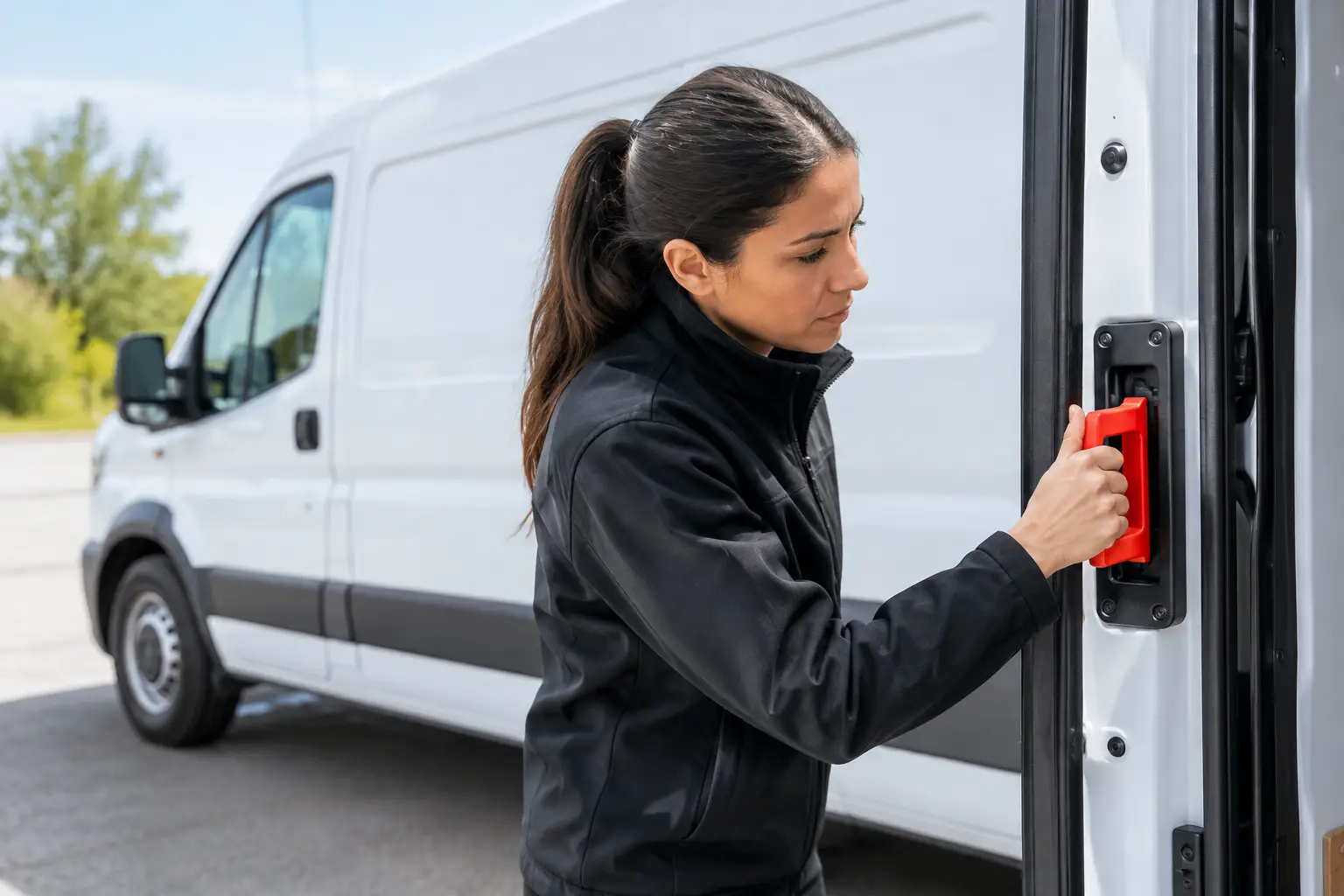
A door that will not open can turn from an inconvenience into an emergency very quickly. Whether someone is locked inside, a fire door will not release, a uPVC mechanism has failed or you cannot gain access to your home, an emergency door release needs a calm response. The priority is always people first, then safe access, then securing the door properly once the immediate problem is over.
Trying to force a lock, pry a door open or remove parts of the handle can cause more damage and may leave the property insecure. In many cases, a local locksmith can identify the fault, release the door with the least destructive method available and explain whether a repair or replacement is needed.
When an emergency door release is genuinely urgent
Not every stuck door requires an immediate callout, but some situations should not wait. If a person is trapped inside a room, flat, office or commercial unit and there is any medical risk, distress or danger, call 999 first. The fire and rescue service is there for life-threatening circumstances, not routine lockouts, so be clear about what has happened and whether anyone is at risk.
A door may also need urgent attention when it prevents a safe exit. This can include a fire exit that will not open, an external door that has jammed with someone inside, or a communal entrance that has failed in a way that affects residents’ safety. Commercial premises have particular responsibilities here. Emergency escape routes must work as intended, and any failed panic hardware, push bar or emergency exit device should be taken seriously.
There is another kind of urgency too: security. If a front door will not lock after it has been opened, a key has snapped in the cylinder, or a faulty multipoint lock has left your home exposed, it is sensible to arrange help straight away. A temporary workaround may feel tempting, but an unlocked external door is not a secure solution overnight.
First checks before attempting a door release
Take a moment to establish what type of door and lock you are dealing with. A wooden door with a standard night latch behaves very differently from a composite or uPVC door with a multipoint locking system. On many uPVC and composite doors, the handle must lift fully before the key can turn. If the door has dropped slightly, gentle pressure or lifting at the handle side while operating the key can sometimes reveal whether alignment is part of the problem.
Do not repeatedly force the key. If it will not turn, stop before it snaps. Likewise, do not lean heavily on a handle that feels loose or jammed. A failed gearbox, worn spindle or broken internal spring can make the mechanism worse if it is forced.
If the door is an internal bathroom or bedroom door with an emergency-release slot on the outside, use the correct release tool where available. These locks are designed for privacy rather than high security and often have a simple external override. However, if someone inside is unwell, has fallen or is unable to respond, treat it as a medical emergency rather than spending time on the lock.
For electrically controlled doors, check whether there is a power failure, a released fuse or an access-control issue. Do not interfere with wiring or force magnetic locks. In a business setting, the responsible person should know where the emergency override is located and whether it has been activated correctly.
Emergency door release on fire and escape doors
Fire doors and emergency exits should never be wedged open, altered casually or fitted with unsuitable locks. Their job is to protect escape routes and slow the spread of fire, so a fault can create a serious safety issue as well as a compliance problem.
Panic bars, push pads and emergency exit hardware should release the door in the direction of escape without needing a key. If a device sticks, catches or fails to retract the latch, keep the exit clear and arrange a prompt inspection. Where there is an immediate risk to occupants, follow the building’s emergency procedures and contact the emergency services if necessary.
It is worth remembering that security and escape must work together. A rear commercial door, for example, may need to resist unauthorised entry from outside while allowing anyone inside to leave immediately. Fitting the wrong lock or making an improvised repair can compromise one side of that balance.
Common causes of a door that will not open
The cause is not always obvious from the outside. On uPVC, composite and patio doors, multipoint locking mechanisms can fail because internal parts wear over time. A gearbox may break, hooks or rollers may not retract, or the door may become misaligned through movement, worn hinges or changes in temperature.
With timber doors, swollen wood, a sticking latch, a damaged rim cylinder or a failed mortice lock can all prevent normal operation. Keys that are bent, badly copied or worn down can also cause trouble. A key that works only after several attempts is giving you an early warning, not a problem to ignore.
Commercial doors bring additional possibilities, including faulty access-control systems, damaged closers, failed panic hardware and misaligned aluminium door frames. These jobs often need a careful diagnosis because simply getting the door open is only part of the work. The door must then close, latch, lock and release safely afterwards.
Why forcing the door is usually the expensive option
When you are locked out or trapped by a failed mechanism, it is understandable to want the door open immediately. But forcing it can turn a repairable problem into a replacement job. A damaged frame, cracked double-glazed panel, bent hinge or split door edge can cost considerably more than dealing with the original lock fault.
There are occasions where destructive entry is unavoidable, particularly when a lock has completely failed and there is no safe non-destructive route. A professional locksmith should explain this before proceeding wherever circumstances allow. The aim is to choose the method that restores access while causing the least damage to the door and security hardware.
If you are on the outside, avoid using improvised tools through letterboxes, glazing or gaps around the frame. Aside from the risk of injury and damage, these methods can be unsafe and may not be lawful if you do not have clear authority to enter the property. Landlords and managing agents should also make sure they have the right permissions before arranging access to an occupied home.
After the emergency release: repair, replace or secure?
Once the door is open, do not assume the job is finished. Test whether it closes properly, locks from both sides and, where relevant, releases freely from inside. If the fault is with an external door, assess whether the property can be left secure before you go out or go to bed.
A repair is often the sensible choice where the cylinder, gearbox, handle or alignment can be corrected without compromising security. Replacement becomes more likely when the mechanism is badly worn, the lock has been damaged during a break-in, keys are missing, or the existing hardware no longer provides suitable protection.
For rental properties, changing or rekeying locks after lost keys or a tenancy change may be more practical than waiting for a future problem. For businesses, a review of who holds keys and whether emergency exits are checked routinely can prevent a repeat incident. Small warning signs, such as a stiff handle or a key that catches, are far cheaper to address before a door fails completely.
Local help when access cannot wait
If you need an emergency door release in Reading, Berkshire or the surrounding Thames Valley area, give a clear description when you call: whether anyone is trapped, the type of door, whether it is locked or jammed, and whether the property is currently secure. That helps the locksmith arrive prepared for the likely fault.
Lock Solutions provides 24-hour local locksmith support with no callout charge, and Wayne aims to attend emergency jobs within an hour. You will get a straightforward explanation of the issue and the available options, rather than pressure to replace parts that can be repaired.
A failed door is stressful enough. Keep people safe, avoid forcing the mechanism, and get the right help early so the door can be opened and secured with as little disruption as possible.