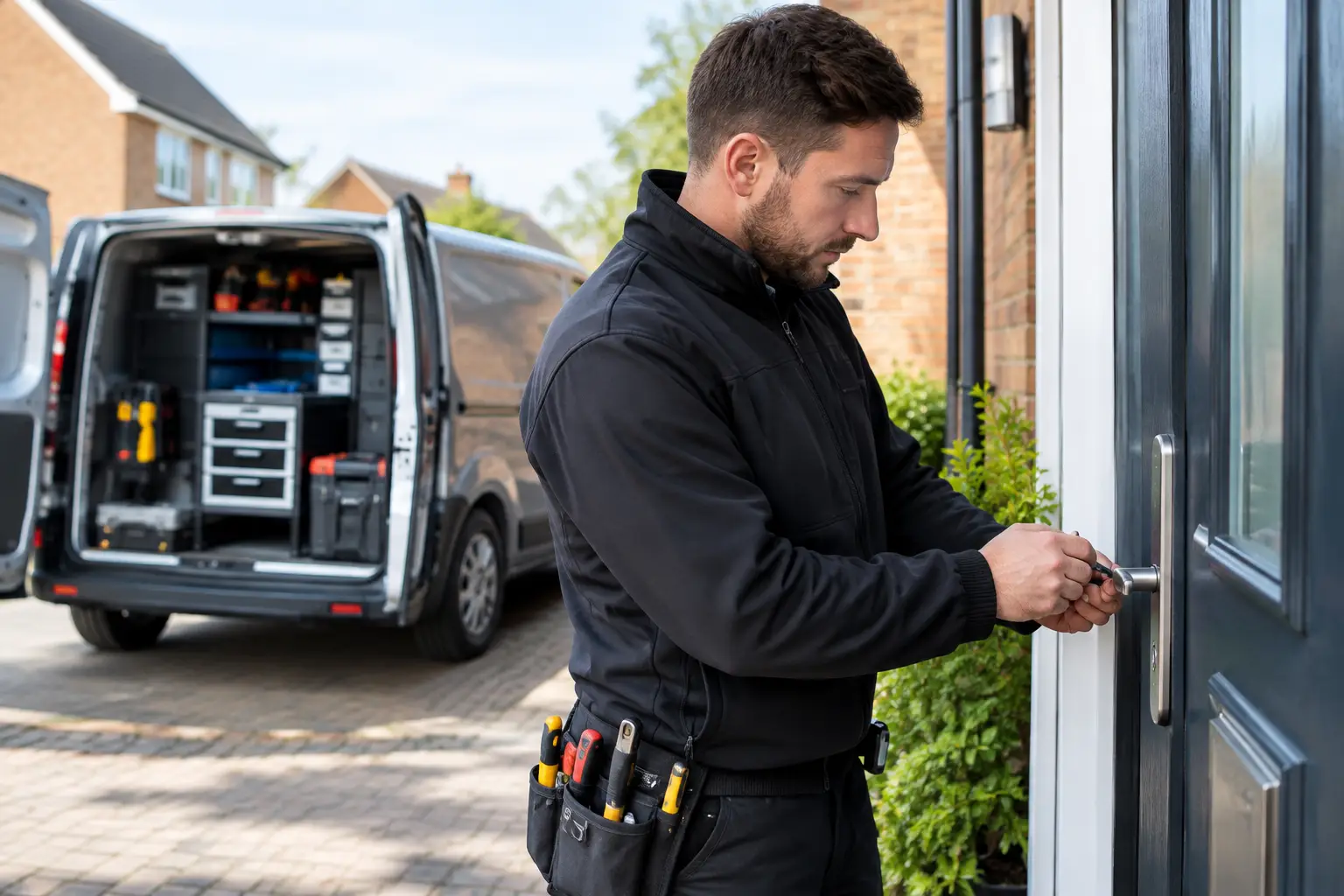
Being locked out on a wet evening, finding a key snapped in the cylinder, or discovering that a uPVC door will not lock properly is stressful enough. Locksmith costs should not add another nasty surprise. The final price depends on the fault, the lock fitted and the time needed to put things right, but a good local locksmith should explain the likely work clearly before getting started.
For most jobs, the question is not simply, “What is the hourly rate?” It is whether the door can be opened without damage, whether the existing lock can be repaired, and whether replacement parts are needed to leave the property secure. Here is what affects the bill and what you should expect from a straightforward, professional service.
What locksmith costs usually cover
A locksmith’s charge generally reflects more than the minutes spent at your door. It covers the specialist skills needed to diagnose the fault, attend with the right tools, gain entry with the least disruption possible, and fit or repair hardware safely. Mobile locksmiths also carry a range of common locks, cylinders, handles and repair parts so that many issues can be resolved in one visit.
A simple gain-entry job where the door has merely shut behind you may require less work than a failed mechanism or a high-security lock replacement. Equally, an apparently small issue can reveal a worn gearbox, damaged cylinder or misaligned door that needs attention before the lock will operate reliably again.
The most useful question to ask is whether the quoted figure includes labour, parts, VAT if applicable, and any additional work that might be required. You should know what you are agreeing to, rather than being left to interpret a vague starting price.
The main factors that change locksmith costs
The type of job
Non-destructive entry is often the aim when you are locked out and the lock is working correctly. A skilled locksmith will assess the door first and use the least invasive suitable method. If a lock has failed internally or keys have been lost and security is a concern, the job may involve opening the door and replacing the cylinder or lock afterwards.
Repairs vary too. A loose handle or a door that has moved out of alignment may be a relatively contained repair. A broken multipoint locking mechanism inside a uPVC or composite door is more involved because the gearbox and related parts must be identified, sourced and fitted correctly.
The lock and security level
Not every replacement lock costs the same. Basic cylinders, standard mortice locks and higher-security anti-snap cylinders all have different prices. The right option depends on the door, the existing fitting, your insurer’s requirements and the level of protection you want.
For example, a front door may benefit from a recognised British Standard lock or a suitable high-security cylinder, while an internal office door may need a simpler solution. Paying for the most expensive lock is not always necessary, but fitting the wrong type can be false economy. A locksmith should explain the options in plain English, including the practical difference between them.
Time of day and urgency
Emergency work at night, on a weekend or during a bank holiday can cost more because it requires immediate out-of-hours attendance. That does not mean an emergency customer should accept unclear pricing. Ask whether there is a callout charge, what the attendance charge covers and whether the price changes once work begins.
At Lock Solutions, there is no callout charge. Customers speak directly to a local locksmith and pay for the work needed, not simply for someone turning up. For an urgent lockout or security problem across Reading, Berkshire and nearby areas, that clarity matters when you need help quickly.
Parts, keys and follow-up work
The cost of replacement hardware is separate from the time needed to fit it. A new cylinder may come with several keys, while additional key cutting will add to the total. Restricted or security keys can cost more because they are designed to be copied only through authorised channels.
If a door has been forced, the repair may extend beyond the lock itself. Damaged handles, keeps, door frames or glazing can all affect what is required to make the property secure again. A temporary securing repair may be appropriate where a specialist part is needed, followed by a return visit to complete the work.
Repair or replacement: which is better value?
Replacement is not automatically the answer. If a lock is sound but the door is catching, adjustment may restore smooth operation without changing the lock at all. A worn uPVC gearbox can sometimes be repaired or replaced while retaining other serviceable components.
There are times when replacement makes more sense. Lost or stolen keys, a cylinder that has become unreliable, a lock that no longer meets your security needs, or visible damage after an attempted break-in are all good reasons to consider a new lock. Landlords may also choose to change locks between tenancies so previous keyholders cannot gain access.
The sensible approach is to ask for the condition of the existing lock to be explained. If it can be repaired safely, that may be the lower-cost route. If it is near the end of its working life, replacing it once may cost less than arranging repeated repairs and risking another lockout.
How to avoid an unexpected locksmith bill
When you are under pressure, it is easy to search quickly and call the first number that appears. Before authorising work, take a moment to ask a few direct questions. Is there a callout fee? Is the quoted price an estimate or a fixed price for the stated work? What parts might be extra? Will the locksmith contact you before doing anything that increases the cost?
Be wary of unrealistically cheap advertised prices that do not explain what is included. A very low figure may cover only an initial visit, with labour, VAT, locks and emergency surcharges added afterwards. A proper estimate may not be possible until the locksmith has seen a failed lock, but you should still receive a clear explanation before work proceeds.
It also helps to describe the situation accurately when you call. Say whether you are locked outside, whether the key turns, whether it has snapped, what type of door you have, and whether the door is currently secure. A photograph can be useful for planned work, especially for unusual handles or older locks. The more detail provided, the more realistic the initial guidance is likely to be.
Locksmith costs for landlords and businesses
For landlords, a fast repair can prevent a small problem becoming a complaint, a void-period delay or a security risk. It is worth keeping details of the locks fitted at each property, including the number of keys issued and any restricted key systems. This makes future replacement and key management easier.
Businesses often have extra considerations. A failed shutter lock, office door, fire-exit hardware or master-keyed system may affect staff access and daily trading. The cheapest immediate fix is not always the best choice if it leaves the premises inconvenient to manage or does not match existing security arrangements. Planned maintenance and prompt repairs can reduce emergency disruption over time.
When you need help now
If you are locked out, do not force the handle, drill the lock yourself or try to climb through a window. Those attempts can turn a straightforward entry job into a damaged door, broken glass or an avoidable repair. If the door will not lock, secure the property as best you can, stay safe and call for professional advice.
A fair locksmith service is about more than a low headline figure. It is about arriving when promised, explaining what has failed, offering a sensible repair or replacement, and leaving you with a door that works and a property that feels secure again. When you call, ask for clarity first – it is the simplest way to make a difficult moment feel more manageable.