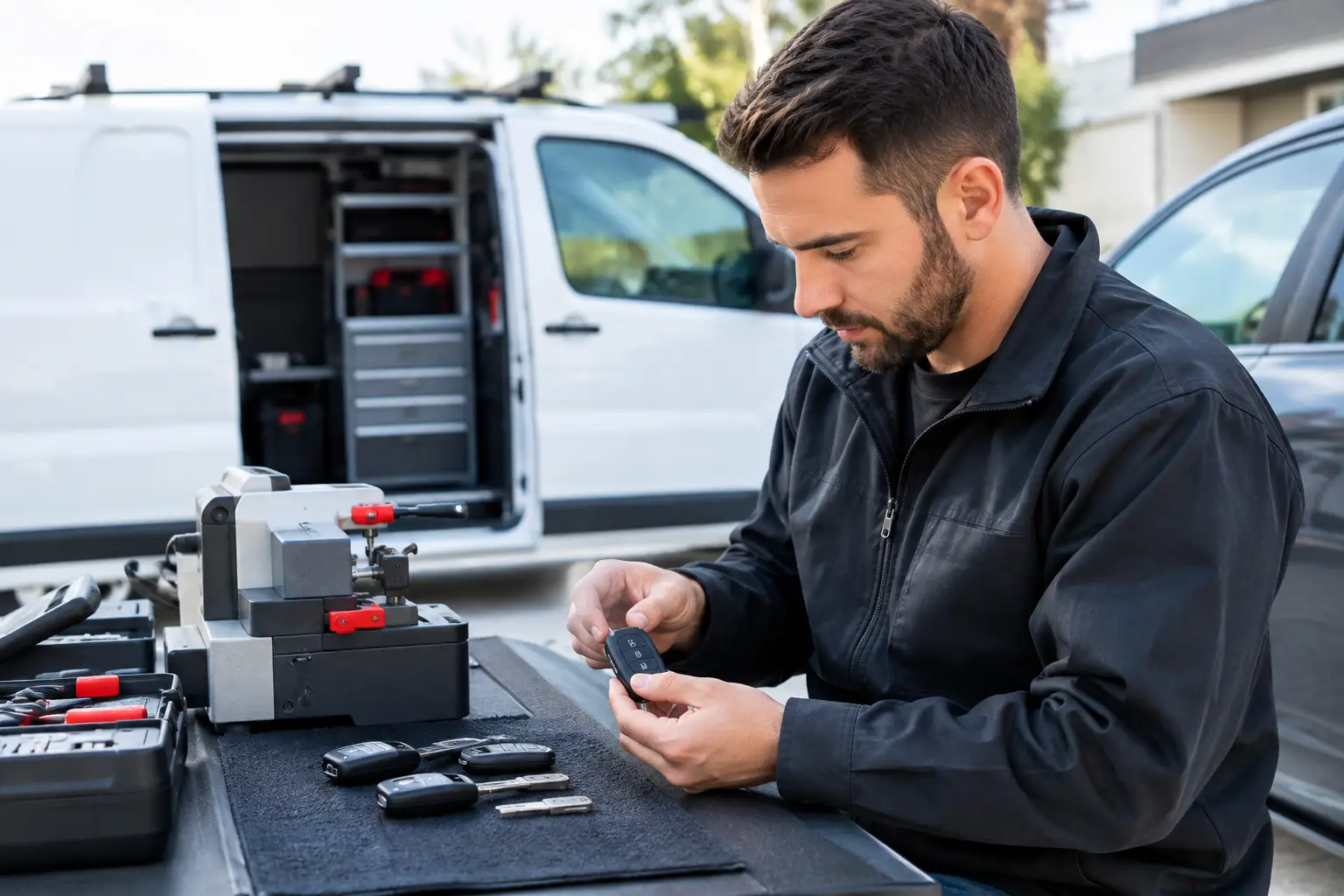
A missing car key can turn an ordinary morning into a real problem fast. You may be outside your home in Reading, stuck in a work car park, or facing a school run with no way to start the car. So, can locksmiths make car keys? In many cases, yes. A properly equipped auto locksmith can cut and programme replacement keys for a wide range of vehicles, often where the vehicle is parked.
The right solution depends on the age, make and security system of your car. A basic metal key is very different from a modern remote fob, keyless entry card or smart key. That is why an experienced locksmith will ask a few questions before promising a fix – and why proof that you own the vehicle is always part of the job.
Can locksmiths make car keys for any vehicle?
Auto locksmiths can make keys for many cars, vans and light commercial vehicles, including vehicles with transponder chips and remote central locking. They use specialist key-cutting equipment, diagnostic tools and programming equipment to produce a working replacement rather than simply copying the shape of an old key.
However, not every vehicle can be dealt with in exactly the same way. Some makes and models require dealer-only information, specific security codes or a particular type of key that must be ordered in. Very new vehicles, prestige models and certain keyless systems can be more restricted than older cars.
That does not automatically mean the dealership is your only option. It means the locksmith needs to check the registration, vehicle details and type of key first. A straightforward, honest answer is better than sending you down the wrong route or charging for work that cannot be completed.
The type of key makes a difference
Older vehicles may use a simple mechanical key. If you still have a working key, cutting a spare is usually quick and uncomplicated. If all keys are lost, the locksmith may be able to cut a new key from the lock or from vehicle key data, depending on the car.
Most cars built over the last couple of decades use a transponder key. Inside the key head is a small chip that communicates with the immobiliser. Even if the blade turns in the ignition, the vehicle will not start until that chip has been programmed correctly.
Remote keys add central locking buttons, while proximity or keyless-entry systems can involve a more expensive electronic fob. These keys often need both programming and synchronising to ensure the car starts, locks and unlocks as it should.
What an auto locksmith can usually help with
A mobile auto locksmith is not only there when every key has disappeared. They can often help with a damaged key, a snapped blade, a remote that has stopped working, or a spare key that has never been properly programmed.
Where a key has been lost, the locksmith may be able to create and programme a new one at the vehicle. Where an existing key is faulty, testing can establish whether the issue is the battery, buttons, transponder chip, key blade, vehicle lock or the car itself. That diagnosis matters. Replacing a key will not cure a fault in the ignition barrel, door lock or immobiliser system.
Common auto locksmith work includes:
- Cutting a spare key before the only working key is lost or damaged
- Replacing lost or stolen car keys
- Programming transponder keys, remote fobs and many keyless systems
- Removing a snapped key from a door or ignition lock
- Repairing or replacing damaged key cases, buttons and blades
- Opening a locked vehicle without unnecessary damage where the circumstances allow
A spare key is often the least stressful option. It costs less and takes less time to arrange than an all-keys-lost situation, particularly for cars with electronic security systems.
What information will a locksmith need?
A legitimate locksmith will need to establish that you have the right to request a replacement key. This protects you, other vehicle owners and the locksmith.
Have your vehicle registration, make, model and approximate year ready when you call. If possible, provide the vehicle identification number, commonly called the VIN. The locksmith may also ask whether you have any working keys and whether the car uses an ignition key, remote key or push-button start.
You should expect to show photographic identification and evidence that you own or are authorised to use the vehicle. Your V5C logbook can help, though it is not always practical if it is locked inside the car. Insurance documents, a lease agreement or company authorisation may be suitable in some situations. The key point is that the details should reasonably connect you to the vehicle.
If you are driving a company car, lease vehicle or fleet van, speak to the owner, fleet manager or leasing company if needed. A good locksmith will explain what is required rather than leaving you guessing at the roadside.
Is a locksmith cheaper than a main dealer?
Often, yes – particularly when you need help at the vehicle. A dealer may require the car to be recovered to its premises, then order a key and book it in for programming. That can add cost and leave you without transport for days.
A mobile locksmith can frequently come to your home, workplace or roadside location and complete the cutting and programming there. For a lost key emergency, avoiding recovery is a major benefit.
Still, price should not be the only consideration. The final cost depends on the key type, the vehicle’s security system, whether every key is lost, and whether parts need ordering. A basic spare key may be relatively modest, while a modern keyless fob for a high-specification vehicle can be considerably more expensive.
Ask what is included before work starts. You should know whether the quoted price covers the key, cutting, programming, callout and VAT where applicable. At Lock Solutions, the aim is to give clear advice and charge for the work completed, not simply for turning up.
Can a locksmith make a car key without the original?
In many cases, yes. Losing every key is inconvenient, but it is not unusual. The locksmith may retrieve key information through approved systems, decode a lock, or use specialist equipment to programme a new key to the vehicle.
This work is generally more involved than copying an existing key. There can be extra programming steps, and any missing keys may need to be removed from the vehicle’s memory where possible. Removing lost keys is sensible if you think they may have been stolen along with documents that identify your car.
There are limits. Some vehicles need a security code from the manufacturer, and others require dealer involvement. If that applies, a professional locksmith should say so plainly and advise on the most practical next step.
Avoid making the problem worse
When a key is stuck, snapped or failing to turn, resist the urge to force it. A damaged key can break inside the ignition or door lock, turning a manageable key problem into a repair to the lock mechanism as well.
If your remote stops working, try the spare key if you have one. A flat fob battery is common, but not every fault is a battery issue. If the car starts but the buttons do not operate the central locking, the remote may need repair or re-synchronising. If the key turns but the engine will not start, the transponder or immobiliser may be involved.
Keep your remaining key safe while arranging help. Do not leave it in the vehicle, hand it to an unknown recovery driver, or post clear photographs of it online. Modern car keys carry more security value than they appear to.
When to call for help
Call an auto locksmith as soon as you know you have lost a key, especially if it is your only one. The earlier you provide the vehicle details, the easier it is to check key availability and the likely solution.
For drivers across Berkshire and the Thames Valley, a local locksmith can be particularly useful when the car cannot be moved. Direct contact means you can explain exactly what has happened, where the vehicle is and what key you had, rather than working through a call centre.
If you have one working key, do not wait for it to fail before arranging a spare. A replacement made while the original is available is usually simpler, quicker and far less disruptive than being stranded with no key at all.