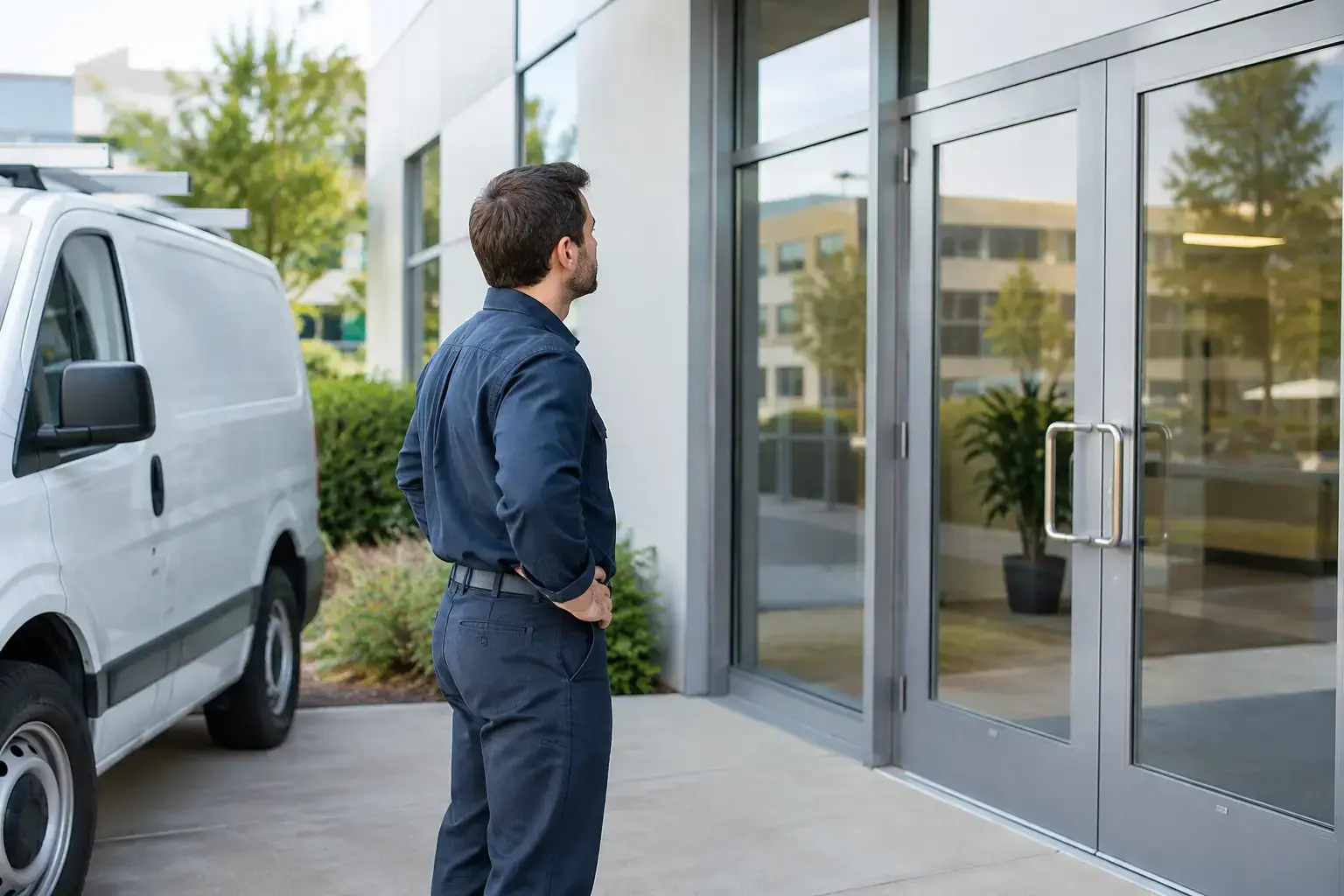
The first ten minutes after an office lockout can feel much longer. Staff may be waiting outside, a client meeting may be due to start, and essential equipment or paperwork may be behind a locked door. This office lockout example shows how a sensible, security-conscious response can get a business moving again without creating a bigger problem.
Picture a small office in Reading on a Monday morning. The first employee arrives, puts their key in the main door and finds it will turn only part way. The door was locked normally on Friday, but the key will no longer operate the cylinder. A second key does the same thing. With several colleagues arriving, the temptation is to force the handle or look for another way in. Neither is a good idea.
The right response is to keep people safe, protect the premises and call a local locksmith who can assess the fault properly.
Office Lockout Example: A Failed Lock, Not Lost Keys
In this example, the keys are present, but the lock has failed. That distinction matters. A lockout is not always caused by someone leaving keys at home. On commercial doors, common causes include a worn euro cylinder, a damaged mortice lock, a failed multipoint mechanism on an aluminium or uPVC door, or a key that has worn down over years of daily use.
The employee should first stop trying to force the key. Repeated pressure can snap it inside the lock, damage the keyway or turn a repairable problem into a replacement job. They should also avoid putting oil, glue, graphite or household products into the cylinder. The wrong lubricant can attract dirt or interfere with the lock’s internal parts.
Instead, the person responsible for the building should check whether there is an authorised spare key held by a director, facilities manager, landlord or nearby keyholder. If no legitimate spare is available, the next step is to arrange professional help. A locksmith can identify whether the issue lies with the key, cylinder, latch, handle or the full locking mechanism.
For a business, this is about more than regaining access. An exterior door that will not open may also be a door that cannot be secured correctly later in the day. That needs checking before anyone leaves the premises.
What to Do While You Wait for a Locksmith
A calm approach keeps a lockout from disrupting the whole working day. Let staff know where to wait, particularly if it is cold, raining or the building is on a busy high street or business park. If there is a safe, authorised alternative entrance, such as a reception managed by the landlord, use it only with permission.
If the office handles customer data, stock, cash or controlled equipment, do not leave an external door propped open after access has been restored. It may seem helpful while colleagues arrive, but it creates an avoidable security risk. Make a note of who has entered and ensure the door is properly locked once the immediate problem has been dealt with.
It also helps to have the right information ready for the locksmith. Explain whether the key is lost, snapped, turning freely or stuck; whether anyone is locked inside; and what type of door is involved. A photograph can sometimes help describe the lock, but never delay an emergency call simply to take one.
Where the office is part of a larger managed building, notify the building manager or security team. They may need to know why staff are gathered outside, and they can confirm any site procedures. However, building management should not be treated as a substitute for a locksmith when the office door itself has failed.
When an Office Lockout Is More Urgent
Most lockouts are inconvenient. Some need immediate attention. A call should be treated as urgent when a member of staff is locked in, the only safe exit cannot be used, the premises have been left insecure, or an alarm system cannot be set because the door will not lock.
It is also worth acting quickly if the lost key could identify the business address. A key on a labelled fob, in a bag containing company paperwork, or lost after a break-in attempt may justify changing the cylinder rather than simply gaining entry. The best option depends on the door, the lock type and the risk involved.
How a Locksmith Approaches the Problem
A professional locksmith starts by confirming that the caller is authorised to access the office. This is a sensible safeguard for everyone involved. They will then examine the lock and door rather than assuming a replacement is needed.
In many cases, entry can be gained without unnecessary damage. The method depends on the lock fitted, its condition and whether it has failed in a way that prevents normal operation. Once access is restored, the underlying fault should be addressed. Simply opening the door is not enough if the mechanism is likely to jam again at closing time.
For example, a worn cylinder may need replacing, while a stiff uPVC or composite door may require adjustment and a repair to the multipoint mechanism. A mortice lock on an older timber office door may have an internal fault that needs repairing or replacing. If a key has snapped, the broken section must be removed and the cylinder inspected for damage.
There is a trade-off between the quickest temporary fix and the right long-term repair. Replacing a cylinder may restore access promptly, but if the door is misaligned and placing pressure on the lock, the same trouble can return. A good locksmith should explain what has failed, what work is needed now and whether there is any preventative work worth considering.
Reducing the Chances of Another Lockout
No office can eliminate every access problem, but a few straightforward arrangements make a real difference. Keep authorised spare keys in a controlled location, with clear records of who holds them. For larger teams, avoid giving out copies without tracking them. Missing keys are easier to deal with when you know exactly what they open and who last had them.
Review door hardware when it starts showing warning signs. A key that needs jiggling, a handle that feels loose, a door that needs pushing or lifting to lock, or a cylinder that becomes difficult in cold weather should not be ignored. These are often early signs of wear, poor alignment or a developing mechanism fault.
It is also sensible to agree an access plan for the first and last person in the office. This might include who holds spare keys, who can authorise a locksmith, how staff contact the landlord, and where people should wait if the building cannot be opened. The plan does not need to be complicated. It just needs to be known before a wet Monday morning exposes the gap.
For businesses with frequent staff turnover, a key audit may be more useful than repeatedly cutting extra copies. If several keys have not been returned, replacing a cylinder can be the clearer and safer choice. The cost has to be weighed against the security of the premises, equipment and confidential information.
Choosing Help During a Commercial Lockout
When you are standing outside an office, it is easy to call the first national advert you see. Before agreeing to work, ask who is attending, whether there is a callout charge, and what will happen if the lock needs replacing. Clear answers matter, especially when the person arranging access is accountable to a landlord, employer or client.
A local locksmith can usually offer a more direct route from call to attendance. Lock Solutions is family-run, offers 24-hour emergency support with no callout charge, and aims to attend emergency jobs within an hour across Reading, Berkshire and surrounding areas. You speak to a locksmith who can discuss the issue plainly, rather than a distant call centre passing on limited details.
An office lockout does not have to turn into a day-long disruption or a security compromise. Keep the door and staff safe, avoid forcing the lock, and get a professional diagnosis of the cause. If your business cannot get in or cannot secure the premises, contact Lock Solutions and get the right help on the way.