A key snapping in the lock is rarely as sudden as it feels. In most cases, the key breakage causes have been developing for weeks or months: a stiff mechanism, a worn key blade, a misaligned door or a little too much force at the wrong moment. Understanding the warning signs can help you avoid a stressful lockout, damaged door and an unnecessary security problem.
The most common key breakage causes
Keys are made to cope with everyday use, but they are not indestructible. A front door key may be turned several times a day, carried loose with other keys, exposed to rain and cold, and used in a lock that has not been serviced for years. Eventually, something gives.
A worn or weakened key
Metal keys gradually wear down. The ridges on the blade become rounded, the shaft can bend slightly, and small cracks may form around the point where the blade meets the bow – the part you hold. This is especially common with older copies of copies, where each new key has been cut from a key that was already worn.
A worn key might still open the door, but it may need wiggling, lifting or extra pressure before it turns. That is the point to stop relying on it. Forcing a weakened key through a reluctant lock is one of the most common ways for it to snap.
If one key is showing wear, check the others. A cleanly cut replacement from an original key is usually a straightforward preventative fix. If every key is sticking, however, the lock itself is more likely to be the issue.
A stiff, dirty or failing lock
A key should turn with controlled, steady pressure. If it suddenly feels gritty, catches halfway or needs force to move, do not assume the key is at fault. Dust, corrosion, worn internal parts and old lubricant can all stop the pins or mechanism moving freely.
External doors are particularly vulnerable. Moisture and dirt enter the keyway over time, while winter weather can make an already tired lock feel much worse. On uPVC doors, the cylinder may be working against a failing multipoint mechanism or a door that has dropped out of alignment. The key is then being asked to do more work than it should.
Avoid pouring household oil, cooking oil or thick grease into the lock. These can attract more dirt and leave the mechanism worse over time. A locksmith can assess whether the cylinder needs cleaning, repairing or replacing, and whether the door needs adjustment too.
Door misalignment and pressure on the lock
If you have to pull, push, lift or shoulder the door to turn the key, there is a good chance the door and frame are no longer aligned properly. Changes in temperature, wear to hinges, movement in the building and swelling in timber doors can all affect how the latch, bolts and keeps meet.
The lock may operate normally with the door open but bind when it is shut. That is a useful clue. Repeatedly turning a key against this resistance places twisting pressure on the blade. Eventually, the key can shear inside the cylinder.
This problem is common with uPVC and composite doors, particularly where the handle has become hard to lift before locking. It may be possible to secure the door for the moment, but it should not be ignored. An adjustment or mechanism repair is generally far less disruptive than dealing with a snapped key and a door that will not open.
Excess force and the wrong turning technique
Most snapped keys break because force was applied after the key had already warned that something was wrong. It is easy to do when you are late for work, unloading shopping or trying to get inside on a wet evening. A key that will not turn can tempt anyone to give it one harder twist.
Try a gentler approach first. Make sure the key is fully inserted and not upside down, take pressure off the handle, and move the door slightly towards or away from the frame while turning the key carefully. Do not twist the bow of the key with pliers or another key for leverage. That often leaves the broken section firmly lodged inside the lock.
If the key does not turn with normal pressure, stop. The cost of a prompt repair is usually preferable to a broken key, possible lock damage and being locked out altogether.
Low-quality copies and damaged key rings
Not all replacement keys are cut to the same standard. A poorly cut copy can be fractionally inaccurate, which makes it catch on the internal pins. It may work intermittently at first, then become increasingly difficult to use. Repeated use wears both the key and the lock.
Heavy key rings can also create a problem, particularly in ignition barrels and locks that are used while the key is hanging down. The weight itself does not usually snap a key, but it can contribute to bending and fatigue over a long period. Keys that have been bent back into shape should be replaced rather than trusted as spares.
For high-use communal doors, offices and rental properties, keep a record of who holds keys and arrange replacements from a reliable original where possible. It helps prevent a succession of poor copies being passed around.
Why keys break in car ignitions and door locks
The basic key breakage causes are similar, but the setting matters. A house key normally fails because the cylinder or door is resisting it. A car key can break through a worn ignition barrel, a damaged blade or pressure caused by turning the steering wheel lock at the same time.
With a vehicle, do not force the key if the steering lock is engaged. Gently move the steering wheel left and right while applying light turning pressure to the key. If it still will not move, stop before the blade breaks. Modern vehicle keys may also contain transponders or electronics, so a snapped key can be more complicated than simply cutting another metal blade.
For residential locks, the key may break when locking up as well as when entering. If the key turns normally from inside but struggles from outside, or vice versa, that detail can help identify whether the cylinder, handle, alignment or multipoint mechanism is at fault.
What to do when a key snaps in the lock
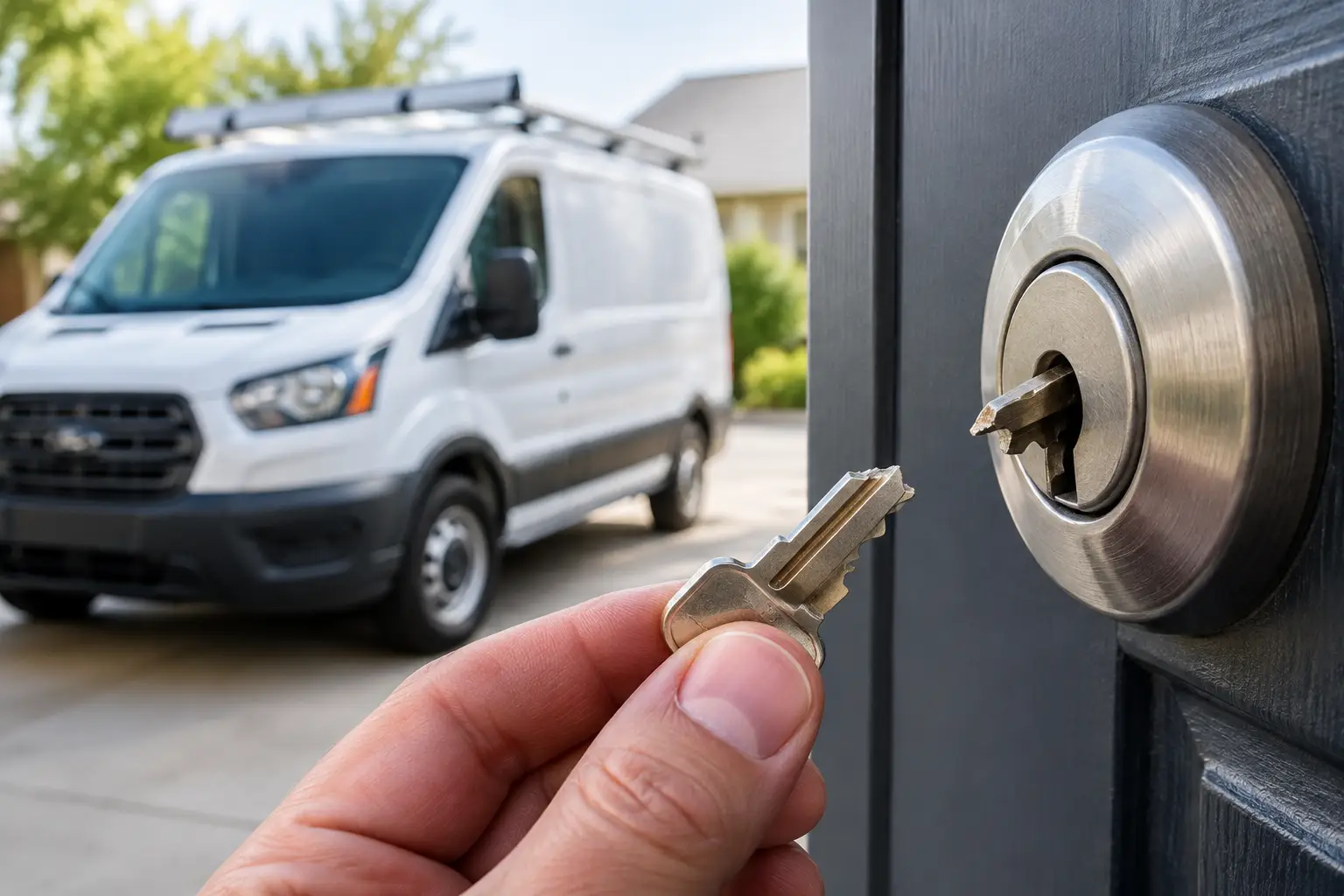
First, stay calm and resist the urge to poke around the keyway. If part of the key is protruding and can be gripped without pushing it further in, it may be possible to remove it carefully. Do not use glue, magnets, screwdrivers, hair grips or improvised hooks. Glue can damage the lock internally, and probing tools often push the broken piece beyond reach.
If you are locked out, leave the lock alone and call a locksmith. A professional can remove the broken key, inspect why it happened and make sure the lock has not been damaged by the break. Where possible, the aim is to restore access without causing unnecessary damage to the door or surrounding hardware.
If the door is open when the key breaks, do not keep using the lock until it has been checked. You may still be able to shut the door, but there is a risk it will not unlock again. Secure the property as best you can and arrange a repair promptly.
Small warning signs worth acting on
A key rarely fails without giving some indication first. Look out for a key that has visible bends, cracks or worn teeth; a lock that only works after several attempts; a handle that must be lifted with unusual effort; or a door that needs to be pushed into position before it will lock. These are maintenance issues, not quirks to put up with.
For landlords and property managers, a report that a tenant has to “jiggle” the key should be treated as an early repair request. The same applies to commercial premises, where a failed lock can delay opening, affect staff access or leave a building insecure at the end of the day.
Lock Solutions can assess broken keys, stiff cylinders, uPVC door mechanisms and alignment faults across Reading, Berkshire and the Thames Valley. There is no callout charge, and for an urgent lockout or failed lock, direct local help is available 24 hours a day.
If your key is starting to stick, do not wait for it to snap on the wrong side of the door. A quick check while you still have access can save a much more difficult problem later.