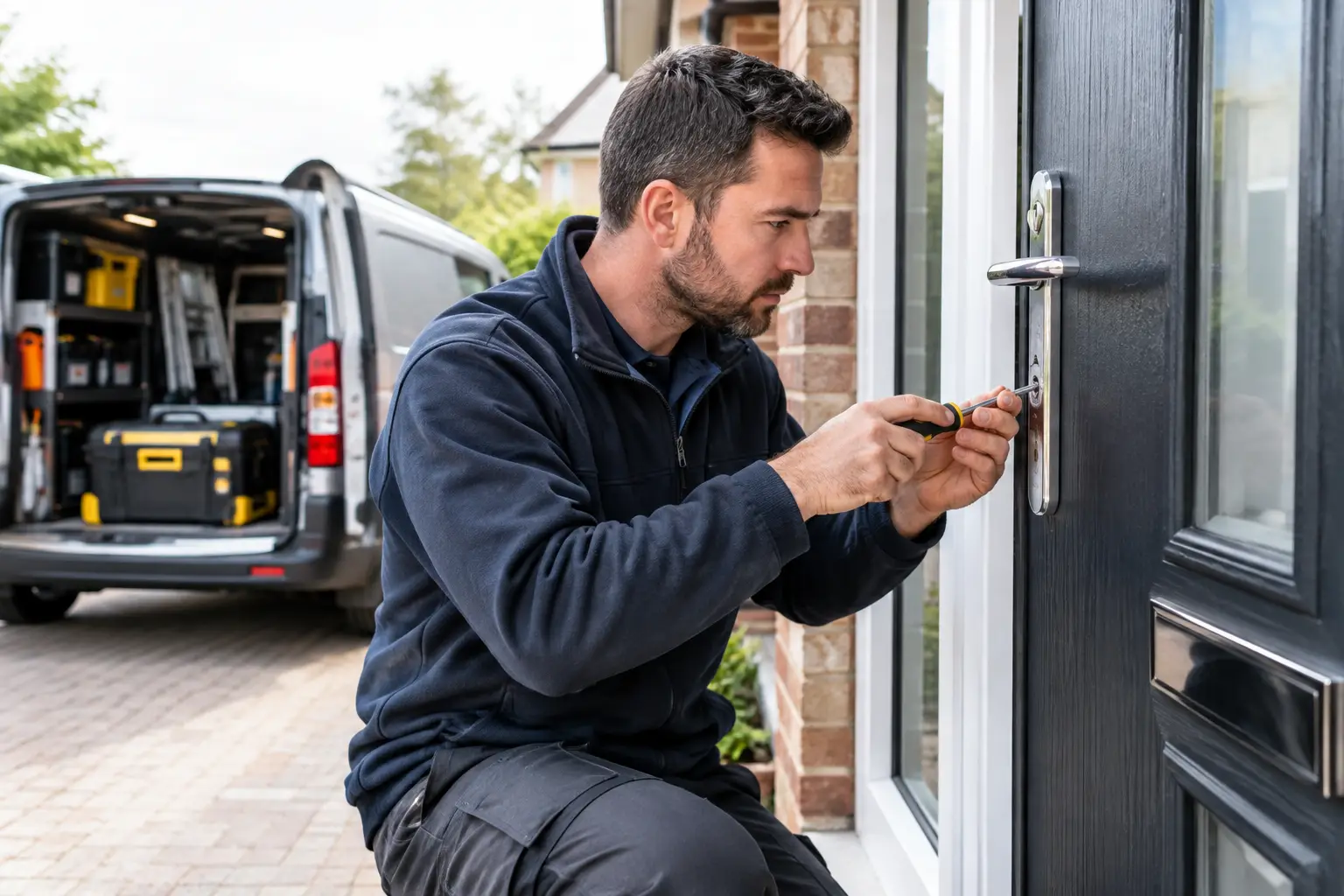
A composite door that will not lock properly can turn a normal trip out into a stressful security problem. Composite door locks are designed to give strong everyday protection, but they still rely on several moving parts working together. When the key will not turn, the handle has gone floppy or the door only locks with a hard lift, it is worth dealing with the fault promptly rather than hoping it settles down.
How composite door locks work
Most composite doors use a multi-point locking system. Lifting the handle moves a series of hooks, rollers, bolts or mushroom cams into keeps in the door frame. Turning the key then locks the mechanism in place through the euro cylinder.
This gives more protection than a simple single latch, but it also means a fault may come from more than one place. The cylinder may be worn or damaged, the handles may be loose, the gearbox inside the strip may have failed, or the door may be slightly out of alignment with its frame. A good locksmith will check the whole arrangement before recommending a repair.
The key point is that a stiff lock is not always a failed lock. If the key turns smoothly while the door is open but becomes difficult once it is shut, alignment is often the issue. If it is stiff or catches in both positions, the cylinder or internal mechanism deserves closer attention.
Common composite door lock problems
Wear is a normal part of owning an external door. Keys, handles and locking points are used repeatedly through the year, often in wet, cold and changing conditions. A lock can also be affected by a door dropping very slightly over time, especially where hinges need adjustment.
One common problem is a key that will only turn after lifting the handle with unusual force. This may mean the locking points are not lining up cleanly with the frame keeps. Forcing the handle can eventually damage the gearbox, turning a straightforward adjustment into a more costly repair.
A loose handle is another warning sign. Sometimes the fix is as simple as securing the handle furniture, but a handle that moves freely without engaging the mechanism can point to a broken spindle or an internal fault. If you can lift the handle but it will not stay up, do not keep trying to lock it repeatedly.
A snapped key needs care too. The visible part may be easy to remove, but pushing a broken piece further into the cylinder can make access harder and may damage the lock. Avoid using glue, pliers or improvised tools. They often turn a recoverable key into a cylinder replacement.
The most urgent fault is a door that will not lock at all, or one that is locked but will not open. This can happen when a multi-point mechanism fails with the door shut. It needs a locksmith who can gain entry without causing unnecessary damage, diagnose the failed part and secure the property properly afterwards.
Why the weather can expose a hidden problem
Composite doors are far more stable than many older timber doors, but every door and frame can move slightly as temperatures change. A small alignment issue may only show up on a cold morning or after prolonged wet weather.
If the lock becomes difficult at particular times of year, that does not mean it should be ignored. The door may need adjusting before strain causes a lock case or cylinder to fail. A locksmith can identify whether the problem lies with the hinges, frame keeps, handles or locking strip.
Repair or replace composite door locks?
Repair is often the sensible choice when the door itself is in good order and the fault is confined to one component. A worn cylinder, damaged handle, tired spring cassette or failed gearbox can frequently be replaced without changing the full door. This is usually quicker and less disruptive than people expect.
Replacement becomes more appropriate when a lock has suffered forced damage, repeatedly sticks despite adjustment, uses an outdated cylinder, or no longer gives the level of security you want. If keys have been lost or stolen, changing the cylinder is usually the practical step, particularly if they could be connected to your address.
There is no value in replacing parts that are still serviceable. Equally, fitting a new cylinder without correcting poor alignment can leave the new part under the same strain. The right answer depends on the condition of the complete door, not just the first symptom you notice.
For rental properties, landlords should take a failed or unreliable external lock seriously. Tenants need to be able to leave safely as well as secure the property when they go out. Property managers may also benefit from considering keyed-alike cylinders where appropriate, so authorised keys can be managed more simply across a small portfolio. That arrangement is not right for every building, but it can be useful where access needs are clear and controlled.
Choosing a more secure replacement cylinder
The cylinder is the part where the key goes, and it is often the most worthwhile component to upgrade. Older euro cylinders can be vulnerable to methods of attack that modern security cylinders are designed to resist, including snapping. A properly fitted anti-snap cylinder helps limit what happens if an intruder attacks the exposed outer section.
Look for recognised security standards rather than choosing purely on price or appearance. A locksmith can advise on suitable British Standard or TS 007 rated options, together with compatible security handles where needed. The cylinder must also be measured correctly. One that protrudes too far from the handle may create an avoidable weakness, while one that is too short can sit awkwardly and affect operation.
Security is not only about the cylinder. Strong handles, correctly aligned locking points, secure hinges and a sound frame all matter. A high-specification cylinder cannot compensate for a door that does not close into the frame correctly.
Should you change locks after moving home?
It is usually sensible. Even if the previous owner hands over several keys, you cannot know how many copies may still exist or who has had access in the past. Replacing the cylinder means the old keys no longer work and can often be completed without replacing the whole multi-point mechanism.
This is also a useful time to consider whether you need one key for the front and back doors, restricted key duplication or a security upgrade. The best option depends on your property and how many people need regular access.
Looking after your door lock
A little care can prevent unnecessary wear. Keep the key clean and use it gently rather than twisting it under pressure. Do not hang heavy key rings from the key while it is in the cylinder, and avoid oiling the lock with general-purpose lubricants that can attract dirt over time.
If the handle needs force, do not continue forcing it day after day. Check whether the door is catching or whether the locking points appear misaligned. Cleaning debris from the threshold and frame can help, but adjustments and internal lock repairs are best left to a professional.
Avoid slamming the door whenever possible. Repeated impact can affect the alignment of the door and frame, particularly where there is already a minor hinge or keep issue. It is a small habit, but it helps the mechanism work as intended.
When to call a locksmith
Call for help straight away if you are locked out, the door cannot be secured, the key has snapped, or the handle and lock have failed with the door shut. These are not jobs to put off, especially overnight or when a property will be empty.
For less urgent symptoms, arranging an inspection early can prevent a lockout later. Lock Solutions provides 24-hour help across Reading, Berkshire and the Thames Valley, with no callout charge and a clear explanation of the work needed before it is carried out.
If your composite door is becoming harder to lock, deal with it while it is still a repairable annoyance rather than waiting for the moment it becomes a security emergency.