A front door can look perfectly secure while the lock behind the handle is doing far less than you expect. Understanding single point versus multipoint locking helps you spot the difference, make sensible repair decisions and know when a worn mechanism needs proper attention rather than another turn of the key.
For most homes in Reading, Berkshire and the Thames Valley, the answer is not simply that one type is good and the other is bad. The right lock depends on the door itself, its condition, how it is used and whether the whole assembly is fitted and working correctly. A quality lock is only as effective as the door, frame, hinges and fitting around it.
What is single point locking?
A single point lock secures the door at one main place, usually around the middle of the door where the key cylinder, latch or deadbolt sits. Traditional timber front doors often use this arrangement, with a mortice sashlock, deadlock, night latch or rim cylinder providing the main security point.
When you lock it, the bolt enters a keep fitted to the frame. It is straightforward, proven and still suitable for many doors. A properly specified British Standard mortice lock on a solid, well-fitted timber door can offer very good security.
Single point locking also has practical advantages. There are fewer moving parts, so there is less internal mechanism to go wrong. Repairs and replacements can be simpler, especially where a lock case or cylinder can be changed without altering the door. For a side door, internal door or older timber door, it may be the most appropriate option.
Its limitation is exactly what the name suggests: the door is held at one point. If the door or frame has movement, warping or weakness elsewhere, that single bolt cannot control the full height of the door. Extra security can be added with separate bolts, a security chain or hinge bolts, but these are independent components rather than one linked locking system.
What is multipoint locking?
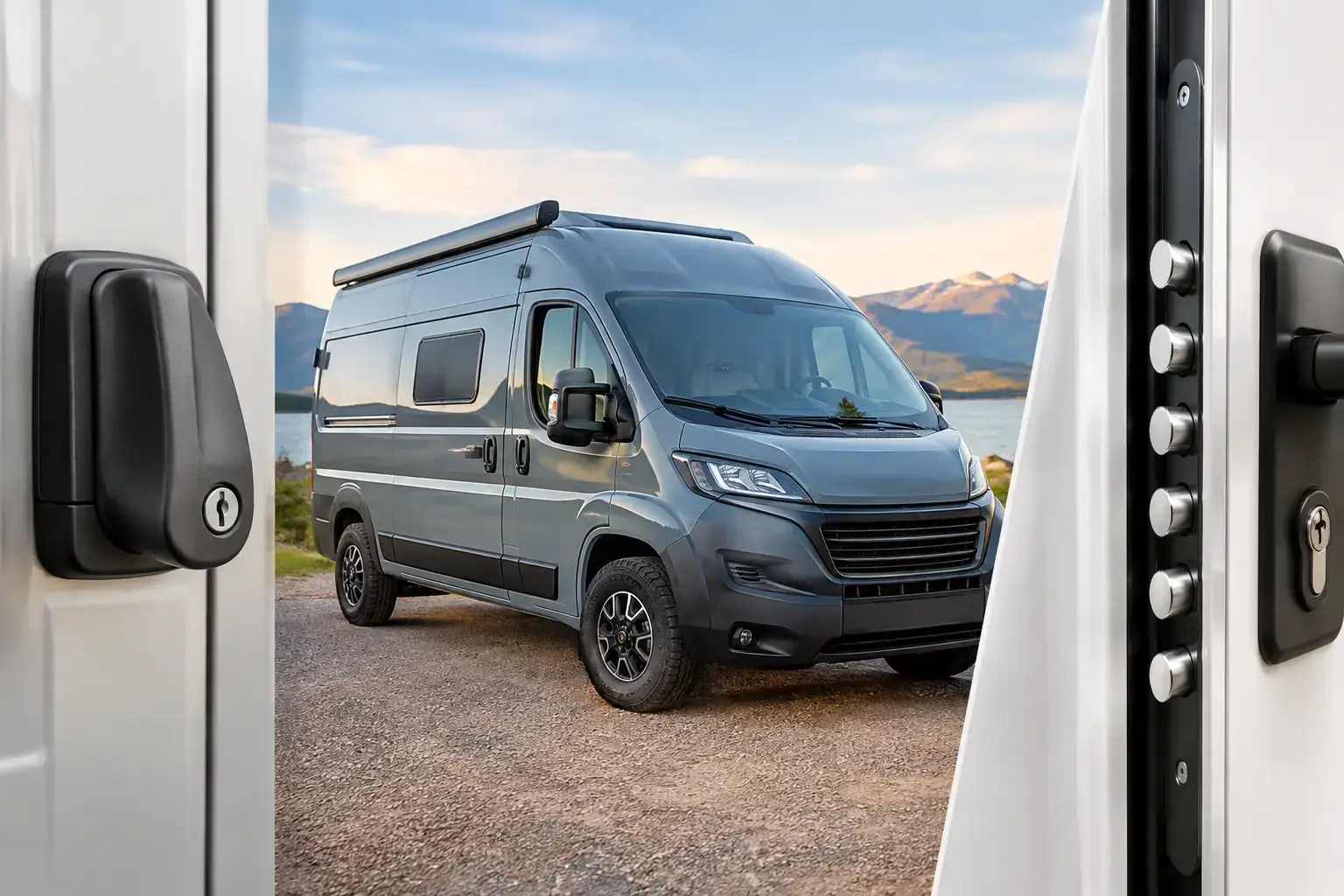
Multipoint locking is most commonly found on uPVC, composite and modern patio doors. When you lift the handle, a gearbox inside the door operates a long strip mechanism. This engages several locking points along the edge of the door, often including hooks, rollers, bolts, pins or mushroom cams.
The key then locks the cylinder and prevents the handle from being moved back down. Depending on the door, the locking points may engage at three, five or more positions. The aim is to pull the door evenly into the frame and make it much harder to force open at the top, bottom or centre.
This is why a multipoint lock is often a strong choice for an external uPVC or composite door. It spreads the holding force across the door height, helping the weather seals work properly as well as improving security. It can also make a tall or flexible door feel firmer when locked.
However, more locking points also mean more parts that need to stay aligned. A multipoint system does not necessarily offer better protection if the door has dropped, the keeps are loose, the gearbox is worn or the euro cylinder is poor quality. The full system needs to work together.
Single point versus multipoint locking: the security difference
The biggest difference is how each door resists force. A single point lock relies on a strong bolt and a sound section of frame around it. A multipoint lock holds the door in several places, reducing the chance of the door being prised away from the frame at a weak section.
That said, security is not a numbers game. Five weak locking points on a badly adjusted door are not automatically safer than one high-quality, correctly fitted lock on a solid timber door. The cylinder is particularly important on many uPVC and composite doors. If it projects too far from the handle, is damaged or lacks appropriate anti-snap protection, it can be the weak link regardless of how many hooks and bolts sit in the mechanism.
The condition of the door frame matters just as much. Timber that has deteriorated, loose keeps, tired hinges and gaps around the door can all reduce the benefit of the lock. On a multipoint door, excessive force may be needed to lift the handle if alignment is poor. Continuing to force it can damage the gearbox, turning a small adjustment into a lock failure.
For insurance purposes, requirements vary. Some policies specify particular standards or lock types for external doors, especially on older timber doors. It is worth checking the wording rather than assuming any locked door meets the requirement. If you are a landlord or property manager, keeping a record of lock upgrades and repairs is also sensible when maintaining a secure property.
When a multipoint lock needs attention
Most multipoint lock failures give warning signs before the door stops locking altogether. The handle may feel stiff, need lifting harder than usual or refuse to move when the door is shut. The key may turn with the door open but not when it is closed. You might also notice the door catching on the frame, draughts around the seals or a handle that droops.
Do not keep forcing the handle or key. If the door is still open, leave it open while you arrange a repair where it is safe to do so. Forcing a struggling mechanism can snap internal components or leave the door locked shut, which is particularly inconvenient if it is your main entrance.
The cause may be relatively simple. Doors can move slightly with age, temperature changes and regular use, so hinges or keeps may need adjustment. In other cases, the centre gearbox has worn out, a connecting strip has failed, or the cylinder is causing the problem. A locksmith should test the door, handle, cylinder and mechanism before deciding whether a repair is possible.
Replacing the entire multipoint strip is not always necessary. A compatible gearbox or centre case may be enough, but compatibility depends on measurements, backset, spindle position and the existing mechanism. This is one reason why a proper inspection is better than buying a part based only on how the door looks.
Choosing the right arrangement for your door
If you are replacing a lock on a traditional timber front door, a high-quality single point mortice lock or deadlock may be the correct choice. The priority is selecting the right standard, ensuring it suits the door thickness and fitting it neatly into sound timber. Where extra protection is needed, a locksmith may recommend complementary security measures rather than trying to force a multipoint product onto a door not designed for it.
If you have a uPVC or composite door, retaining and maintaining its multipoint system is usually the sensible route. Focus on smooth operation, correct alignment and a suitable security cylinder. A door should lock without excessive pressure, and the handle should not need to be slammed, lifted repeatedly or held in position while the key turns.
For commercial premises, the choice can be more varied. A rear service door, shop entrance, office aluminium door and fire-rated door all have different requirements. Access control, emergency escape rules, traffic levels and insurance conditions may matter as much as resistance to attack. A lock upgrade should never compromise safe escape from the building.
A quick check you can make at home
With the door open, operate the handle gently and watch whether all locking points move freely. Then close the door and see whether it locks without needing to pull, push or lift the door excessively. Do not dismantle the mechanism or apply thick oil inside the gearbox. That can attract dirt and make diagnosis harder.
Look at the cylinder from outside too. It should sit sensibly within the handle rather than sticking out prominently. Check that the handle is secure and that screws, keeps and hinges do not appear loose. These small checks can identify a developing problem before you are locked out or unable to secure the property overnight.
If a door is difficult to lock, has been damaged, or will not secure properly, acting early is usually cheaper and less stressful than waiting for complete failure. Lock Solutions can assess single point and multipoint door locks, explain the fault in plain English and carry out the repair or replacement needed to get your door secure again.
A lock should feel boringly reliable: the key turns, the handle works and the door closes securely without a struggle. If yours does not, treat that as a useful warning rather than something to put off until tomorrow.