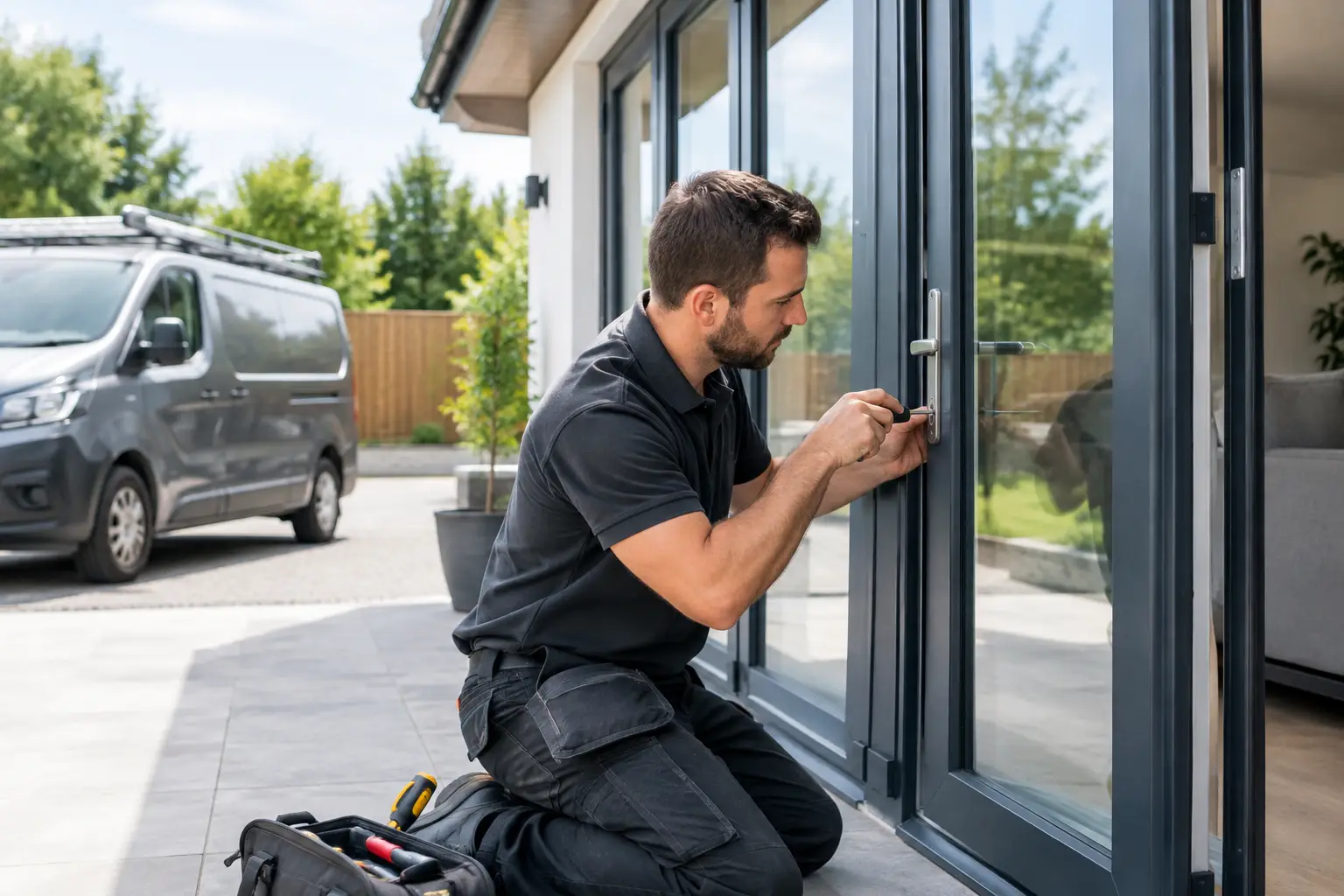
Bifold doors are made to bring light into a room, but their wide glass panels and folding sections can make homeowners understandably cautious. Knowing how to secure bifold doors starts with recognising that the lock is only one part of the job. The frame, track, hinges, glass and day-to-day locking routine all need to work together.
A well-fitted, properly maintained bifold door can be a very secure rear entrance. Problems tend to arise when the door is not closing squarely, the handle is not being fully locked, or a small fault has been left to develop. A stiff door today can become a door that will not lock tomorrow.
How to secure bifold doors: start with the lock
Most modern bifold doors use a multipoint locking system. When you lift the handle, locking points engage into the frame at several positions, often with hooks, bolts or rollers. Turning the key then secures the handle and prevents those points from being released.
The crucial point is to use the lock as intended every time you leave the property or go to bed. Simply pulling the doors shut is not the same as locking them. Lift the handle fully, turn the key, and check that the handle will not move back down. If the key turns but the handle can still be pushed down, or if it takes force to lift it, do not ignore it.
Many bifold doors have a euro cylinder in the main access door. If the cylinder projects noticeably beyond the handle or door furniture, it may be more vulnerable to attack. A correctly sized, high-security anti-snap cylinder can improve protection, particularly on doors where the cylinder is accessible from outside. The right cylinder depends on the door system and handle, so it is worth having it measured rather than choosing one by appearance alone.
Do not force a stiff key or handle. Forcing a multipoint lock can damage the gearbox inside the door, turning a straightforward alignment repair into a larger job.
Check that the doors close and align properly
Bifold doors need to sit correctly in their track for the locking points to meet their keeps in the frame. Settlement, frequent use, loose fittings and worn rollers can all affect alignment over time. You may first notice a gap around one panel, a handle that needs a hard lift, or doors that catch before they close.
A door that has dropped slightly may still appear locked, but its hooks or bolts might not be engaging as deeply as they should. This can affect security as well as weather resistance. Look along the edges when the doors are closed. The gaps should be even, and the lead door should pull firmly into the frame without needing a shove or a lift.
Basic cleaning helps. Keep the bottom track free from grit, leaves and small stones, particularly after autumn or building work. Dirt in a track can prevent smooth operation and place unnecessary strain on rollers and locking components. Use a soft brush or vacuum rather than flooding the track with water.
Adjustment is not always a simple DIY task. Different aluminium, timber and uPVC systems have different mechanisms, and incorrect adjustment can make the doors bind or affect the glazed panels. If the doors have become difficult to operate, arrange an inspection before the lock fails completely.
Pay attention to hinges, rollers and the folding side
The primary lock may be on the lead door, but every folding panel must remain securely connected to the frame and the next panel. Bifold doors use hinges, carriers and rollers that are designed to work together. If a hinge is loose, a roller has excessive movement, or one panel sits lower than the others, the whole set may not lock as designed.
From inside the property, inspect visible screws and fixings occasionally. Do not overtighten or remove anything that supports the weight of the door, but look out for obvious movement, missing screws or damaged covers. On externally exposed doors, make sure hinge fixings are not accessible or removable from outside. Quality bifold systems generally include security hinges, interlocking profiles or concealed fixings for this reason.
If you can lift a closed panel significantly, hear scraping during operation, or notice that the doors no longer fold neatly, stop treating it as a cosmetic issue. Have the mechanism checked. Security is compromised when a door is no longer properly seated in its frame.
Make the glass part of the security plan
Large panes of glass are often the feature people worry about most. Modern external bifold doors should use toughened safety glass, and many higher-specification systems use laminated glass for additional resistance. Laminated glass holds together when broken, making it harder and noisier to create an opening.
Before making changes, check the markings in the corner of the glass and any paperwork from the installer. Replacing glass is a specialist job because the units must be the correct size, weight and specification for the door system. Adding ordinary window film without advice can also affect warranties or how sealed units perform in heat.
Blinds and curtains are useful for privacy, especially if the doors reveal laptops, car keys or other valuables. They are not a physical security measure, but they reduce the temptation created by an easy view into the house. Avoid leaving keys in sight or on a nearby table where they could be reached through a broken panel.
Improve the area around the doors
Security around bifold doors is not all hardware. A clear, well-lit garden makes it harder for someone to work unseen. Motion-sensitive lighting can be a sensible deterrent where the doors open onto a dark patio or side return. Trim back dense shrubs that create cover close to the property, while keeping sightlines from the house and neighbouring homes where possible.
A visible alarm system or camera can also support the physical security of the doors. Neither replaces a good lock, but both can discourage opportunistic attempts and provide useful evidence after an incident. Position equipment carefully so it covers the approach without pointing directly into neighbours’ private spaces.
For ground-floor doors, think about access from above as well. A flat roof, garden structure or bin that gives easy access to an upstairs window may shift the weak point elsewhere. Good home security works best when each entrance is considered together.
Do not overlook key control
Bifold door keys are often shared casually because the doors lead to gardens, patios and home offices. Keep track of who has them. If you have recently moved house, changed tenants, completed building work or lost a set of keys, changing or rekeying the cylinder is usually sensible.
Avoid hiding a spare key under a pot or garden ornament near the doors. It is one of the first places an intruder will look. A properly managed key safe may be appropriate for a landlord, holiday let or carer access, but it should be professionally fitted in a discreet location and used with a strong code policy.
If your bifold doors form part of an escape route, be careful about adding internal keyed bolts or other devices that could delay exit in a fire. Security alterations must not make the property unsafe for occupants. A locksmith can advise on options that protect the door while maintaining practical emergency egress.
When a repair is better than a replacement
A faulty bifold door does not automatically need replacing. In many cases, the issue is a worn cylinder, failed multipoint gearbox, misaligned keeps, damaged handles or a door that needs adjustment. Repairing the specific fault can restore both operation and security at a lower cost than replacing the full door set.
Replacement may be the better choice where the frame is damaged, the door system is obsolete with unavailable parts, or the existing installation was poor from the outset. It depends on the age of the doors, the condition of the glazing and whether the locking system can still be brought up to a suitable standard.
If the doors will not lock, have been forced, or have a snapped key in the cylinder, secure the property promptly. Do not leave the doors shut but unlocked overnight in the hope that the problem will settle. For homeowners and businesses in Reading, Berkshire and the surrounding area, Lock Solutions can assess the fault, explain the practical options and help get the entrance secure again.
A bifold door should close easily, lock firmly and give you no reason to think twice before leaving the house. If yours needs force, catches on the track or no longer feels secure, deal with the small warning sign now rather than waiting for it to become an urgent callout.