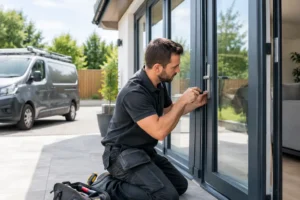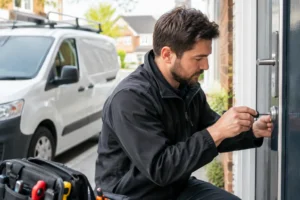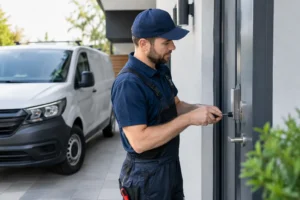
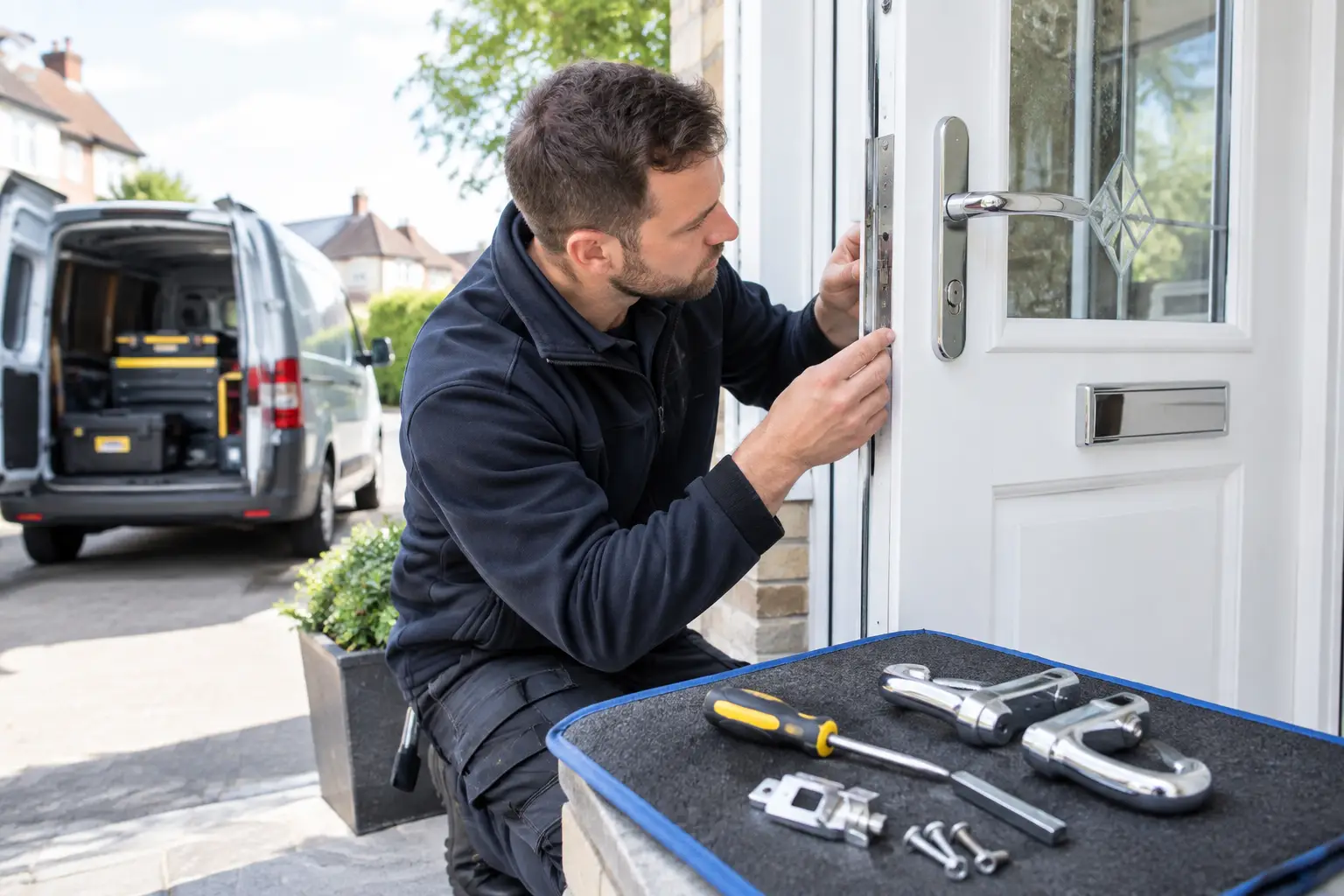
A uPVC door handle that suddenly feels loose, sticks halfway down or will not lift properly can turn a normal trip outside into a frustrating security problem. uPVC door handle replacement is sometimes the answer, but the handle is not always the part that has failed. On most uPVC doors, it works alongside a spindle, euro cylinder and multi-point locking mechanism, so getting the diagnosis right matters.
The good news is that many faults can be repaired without replacing the whole door. The sensible first step is to stop forcing the handle. Continued pressure can damage the internal gearbox or leave you locked out, turning a straightforward repair into a more involved job.
Signs your uPVC door handle needs attention
A handle rarely fails without giving some warning. You may notice that it has become wobbly, that the lever does not return to its normal horizontal position, or that it needs more effort than usual to lift before locking. Sometimes the handle is visibly cracked, corroded or loose around the backplate.
If the handle moves freely but the door will not lock, the issue may be inside the multi-point mechanism rather than with the handle itself. If the key turns but the handle will not operate, the cylinder, cam or gearbox could be at fault. Equally, a door that only locks when it is pushed, pulled or lifted in a particular direction may be out of alignment. Replacing the handle alone in these situations will not fix the underlying problem.
A handle that has snapped completely, or a lever that has dropped and will not lift the locking points, needs prompt attention. Do not leave a compromised door overnight if it cannot be locked securely. This is particularly important for rental properties, ground-floor flats, shops and offices where a faulty door affects both access and insurance requirements.
uPVC door handle replacement or repair?
The right option depends on what has worn, broken or moved out of line. A damaged lever, worn spring cassette or split backplate can often mean a straightforward handle replacement. Modern replacement handles are available in several finishes, including white, black, chrome and brass-effect, so there is usually no need to settle for a poor visual match.
However, handles are often blamed for faults caused by the locking mechanism. A uPVC door uses a long strip of locking points around the edge of the door. When you lift the handle, the spindle operates the gearbox, which throws hooks, rollers, bolts or mushrooms into the frame. If the gearbox has failed, fitting new handles may make the door look better but it will still not lock properly.
Door alignment is another common cause. Over time, hinges can settle, weather seals can compress and the door can move slightly in the frame. The locking points then rub against their keeps, making the handle hard to lift. A locksmith can check this quickly and adjust the door where appropriate before unnecessary parts are fitted.
There is also a security consideration. If the euro cylinder is worn, difficult to turn or an older basic type, replacing it with a suitable anti-snap cylinder can be worthwhile while the handles are off. The best approach is based on the condition of the door and the level of security needed, rather than replacing parts simply because they are accessible.
What has to match on a replacement handle
uPVC door furniture is not one-size-fits-all. The new handle must fit the door and work correctly with the cylinder and locking mechanism. Although many doors use a common lever/lever style, the measurements and fixing positions vary.
The key measurement is usually the PZ distance: the gap from the centre of the handle spindle to the centre of the keyhole. It is commonly 92mm on modern uPVC doors, but other sizes exist. The distance between the screw holes, the length of the spindle, the overall backplate size and whether the handle is for the inside or outside of the door also matter.
External handles need to protect the cylinder without obstructing the key. Some security handles are designed to work with specific cylinder types and may have reinforced backplates or cylinder guards. Choosing a handle only because it looks similar is a common reason for a failed DIY installation.
Before ordering parts, measure carefully with the door open. Take clear photographs of both sides of the handle, including the fixing screws, keyhole and locking edge. If the door is shut and the handle will not operate, do not dismantle it in a rush. The screws may only be accessible from inside, and removing the wrong part can make it harder to gain entry without damage.
Can you replace a uPVC handle yourself?
If the door is open, the mechanism works normally and you have accurately matched the replacement, changing a broken handle can be a manageable job. It usually involves removing the two fixing screws, taking out the old handles and spindle, positioning the new set, then tightening the screws without overtightening them. Test the handle and key several times with the door open before closing it.
That said, this is not the moment to force a stiff handle into position or tighten screws until the backplate bends. A handle that binds after fitting may indicate the wrong spindle length, poor alignment or a fault in the lock. It is also easy to fit a low-quality handle that feels fine initially but wears quickly under the repeated lifting action of a multi-point lock.
For a landlord or property manager, a professional repair can save repeat visits and avoid a tenant being left unable to secure the property. For homeowners, it provides reassurance that the lock, door alignment and cylinder have all been checked rather than just the visible hardware.
When to call a locksmith straight away
Call for help if you are locked out, the door is locked shut with the handle down, the key has snapped, or the handle has failed while the door is unsecured. These faults can worsen quickly, especially if the door has been difficult to lock for several days.
A local locksmith can identify whether the handle, cylinder, gearbox or alignment is responsible and explain the work before it is carried out. This matters because the cost and time involved are very different for a replacement handle compared with a failed multi-point mechanism. A clear diagnosis helps you decide whether a repair is sensible or whether a replacement part offers better value.
Lock Solutions provides 24-hour locksmith support across Reading, Berkshire and surrounding areas, with no callout charge. When a uPVC door problem cannot wait, direct contact with an experienced local locksmith means you are speaking to the person focused on getting the door open and secure again, not a national call centre.
Looking after handles and multi-point locks
A little attention can extend the life of a uPVC door lock. Keep the handle and keyway clean, and avoid using heavy oil or household sprays inside the cylinder, as they can collect dirt. A locksmith-approved lock lubricant is a better choice where lubrication is required.
More importantly, pay attention to changes in how the door closes. If you need to lift the handle harder than before, or the key is increasingly difficult to turn, arrange an inspection before it fails completely. Slamming the door or lifting the handle aggressively will not realign it and can put extra strain on the gearbox.
During cold or wet weather, uPVC can expand and contract slightly, which may make an existing alignment issue more noticeable. That does not necessarily mean the entire door is defective. A targeted adjustment or lock repair may be all that is needed.
A working handle should feel firm, return smoothly and allow the door to lock without a struggle. If yours does not, deal with it while the door can still be opened normally. A timely repair is usually less disruptive than discovering the problem when you are trying to get home late at night or secure the property before leaving.