A modern uPVC or composite door can look secure, yet its weakest point may be the small cylinder where the key goes. If that cylinder projects too far from the handle or is an older basic model, it may be vulnerable to a forced-entry method known as lock snapping. Anti-snap locks are designed to deal with that specific risk, helping to keep the door locked even if an intruder attacks the outside section of the cylinder.
For homeowners, landlords and business owners, the question is rarely whether security matters. It is whether the current lock gives sensible protection for the door, the property and the area. The answer depends on the type of cylinder fitted, how it has been installed and whether it meets a recognised security standard.
What are anti-snap locks?
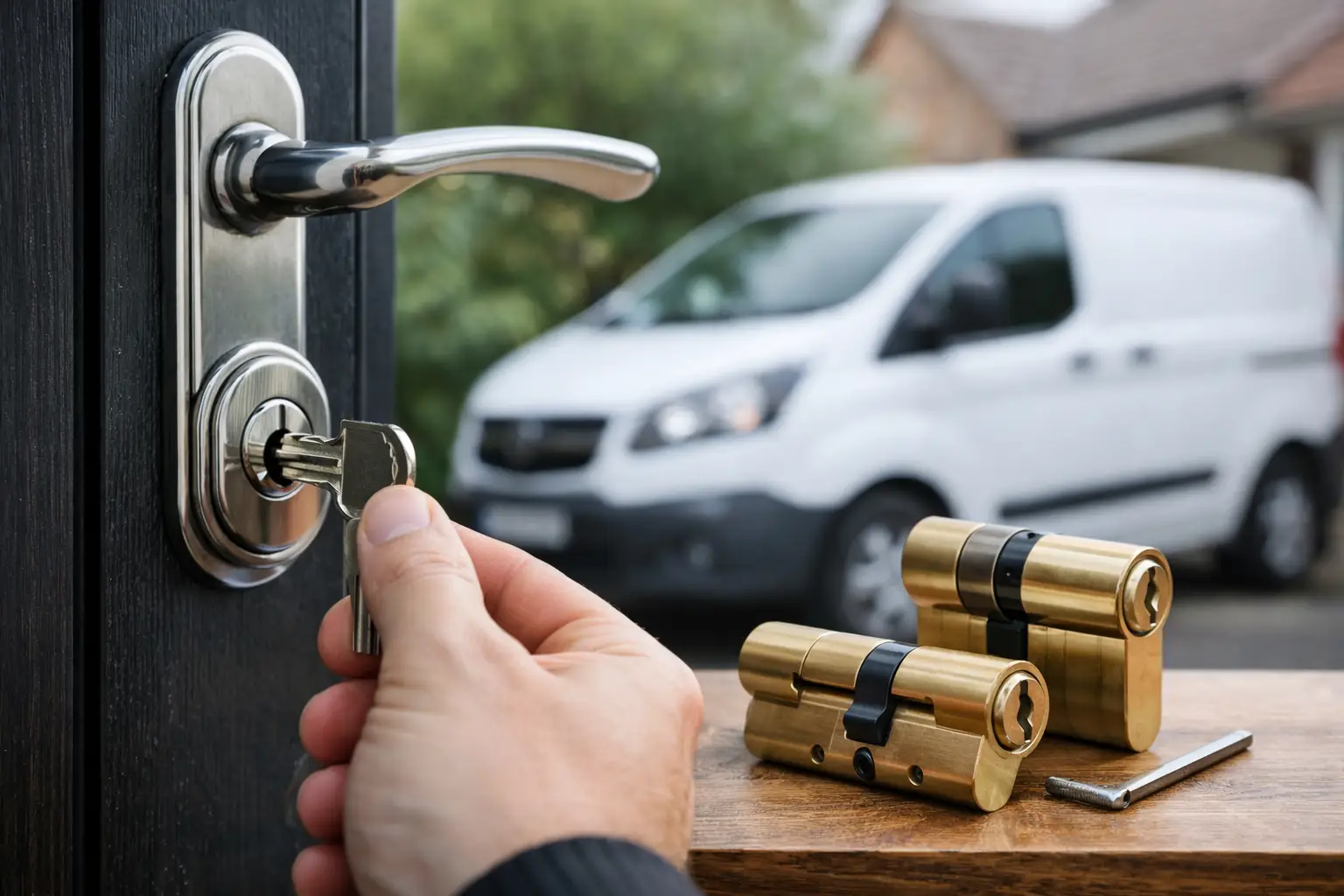
Anti-snap locks are usually high-security euro cylinder locks. Euro cylinders are common on uPVC, composite and aluminium doors, particularly where the door has a multi-point locking mechanism. When you lift the handle, hooks, rollers or bolts engage around the frame; turning the key in the cylinder then locks the mechanism in place.
On a standard cylinder, an attacker may try to grip and break the visible outer section. If the cylinder breaks at the wrong point, the internal locking parts can potentially be reached and manipulated. This is called cylinder snapping or lock snapping.
An anti-snap cylinder has a deliberate weak point built into its design. If it is attacked, the outer portion is intended to break away first, while the protected centre section remains in place and the locking mechanism stays secured. It does not make a door impossible to attack, but it removes a known weakness and makes forced entry much harder and more time-consuming.
Why cylinder snapping is a concern
This type of attack is quick, noisy and does not require someone to smash a window. It has historically been associated with doors fitted with poorly protected euro cylinders, especially older uPVC doors. A burglar looks for an easy opportunity, and an exposed or low-grade cylinder can provide one.
The risk is not limited to one style of property. Detached houses, ground-floor flats, rental homes, offices and shops can all have euro cylinders fitted. A rear or side door is often overlooked because it is less visible from the road, but it can be the most appealing access point for someone trying not to be seen.
That said, security should be assessed as a whole. A high-security cylinder is worthwhile, but it cannot compensate for a loose frame, worn multi-point mechanism, weak letterbox security or keys left within sight of a door. The right approach is to identify the most practical improvement rather than simply replacing parts that are still doing their job.
Signs your door may need an anti-snap lock upgrade
A quick visual check can reveal a lot. Look at the cylinder from the outside with the door shut. It should sit close to flush with the handle or security escutcheon. If it sticks out noticeably, it may be easier to grip and attack. This does not automatically mean the lock is unsafe, but it is worth having the size and fitting checked.
Older cylinders without a visible security rating are also worth reviewing. Many basic cylinders are still perfectly functional for day-to-day locking, but functionality is not the same as resistance to forced entry. If you have recently moved in, lost keys, changed tenants or cannot be certain who has copies of the keys, replacing the cylinder is usually sensible regardless of its age.
You may also need attention if the key is becoming difficult to turn, the handle has to be lifted with unusual force, or the lock feels loose. Those symptoms can come from a worn cylinder, a misaligned door or a failing multi-point mechanism. Fitting a new cylinder without correcting an alignment problem can mean the new lock wears prematurely.
A lock that sticks is not always a lock problem
uPVC and composite doors can move slightly over time due to use, temperature changes and settling. If the hooks or bolts are not lining up with the keeps in the frame, pressure transfers through the key and cylinder. Forcing the key can snap it or damage the lock.
A locksmith should check the complete door before recommending replacement. In some cases, an adjustment or repair to the mechanism is the better value option. In others, the cylinder is worn or outdated and should be changed at the same visit.
Look for recognised security standards
Not every lock described as high security offers the same level of protection. When choosing an anti-snap cylinder, ask about recognised British security standards rather than relying on packaging language alone.
The most commonly discussed benchmark for euro cylinders is the TS 007 rating. A three-star cylinder provides a higher level of attack resistance than a basic cylinder. Some doors achieve the equivalent level through a combination of a one-star cylinder and a two-star security handle. The best choice depends on the door furniture already fitted and whether the handle itself offers meaningful protection around the cylinder.
You may also see cylinders tested to British Standard TS 007 and sold with additional features such as anti-drill, anti-pick and anti-bump protection. These features address different methods of attack. They are useful, but they are not a substitute for correct fitting. An excellent cylinder in the wrong length can be left exposed, reducing the benefit of the upgrade.
For a rental property, a properly fitted high-security cylinder can be a straightforward way to improve security between tenancies. For a home or business premises, it is often a sensible upgrade after a break-in, attempted burglary or lost set of keys. Insurers may have their own requirements, so check your policy if you are making changes specifically to meet cover conditions.
Fitting matters as much as the lock
Euro cylinders come in many lengths. The measurement must match the thickness of the door, handle backplates and any security escutcheons. A cylinder that is too short can be awkward to use; one that is too long can protrude outside the handle and become more vulnerable.
The door should also lock smoothly before the cylinder is fitted. On most multi-point doors, lift the handle fully first, then turn the key to secure it. If the key only turns when you pull, push or lift the door in a particular way, the door or mechanism needs adjustment.
It can be tempting to buy a cylinder online and fit it yourself, as replacement is often mechanically simple. However, measuring mistakes are common, and a lock that does not sit correctly can undermine the security you intended to improve. For doors that are stiff, damaged, poorly aligned or fitted with unfamiliar hardware, professional fitting is the safer option.
When replacement is the right choice
An anti-snap upgrade is particularly worth considering when you have an older euro cylinder, an external uPVC or composite door, or a cylinder that visibly protrudes. It is also a practical step after keys have gone missing or when a tenant has moved out.
Replacement may not be the only answer. A timber door with a rim cylinder, mortice lock or night latch requires a different assessment. Likewise, a door with a failed gearbox or damaged multi-point strip may need a mechanism repair before any new cylinder can work reliably. Security products should suit the actual door, not just the latest phrase on a box.
If you are unsure what is fitted, do not wait until the key breaks or the door will not lock. A local locksmith can identify the cylinder type, check the door alignment and explain whether a repair, a correctly sized replacement or a higher-security anti-snap option makes the most sense.
For properties across Reading, Berkshire and the Thames Valley, Lock Solutions can assess the condition of your door and fit suitable security hardware without confusing jargon. If a lock is damaged, exposed or simply overdue for an upgrade, getting it checked now is far less stressful than dealing with it after a break-in or late-night lockout.