A lost key is inconvenient. A key that has been copied, passed between staff or never returned after a tenancy ends is a security problem that can be difficult to see. That is where access control Wokingham property owners can rely on makes a real difference. Rather than handing out more keys each time somebody needs entry, you decide exactly who can access a building, a shared entrance or a restricted area – and when.
For a small office, block of flats, shop, workshop or managed property, access control does not have to mean a complicated system. The right setup should make everyday entry easier for the people who belong there while giving the person responsible for the property more control when circumstances change.
What access control can do for your property
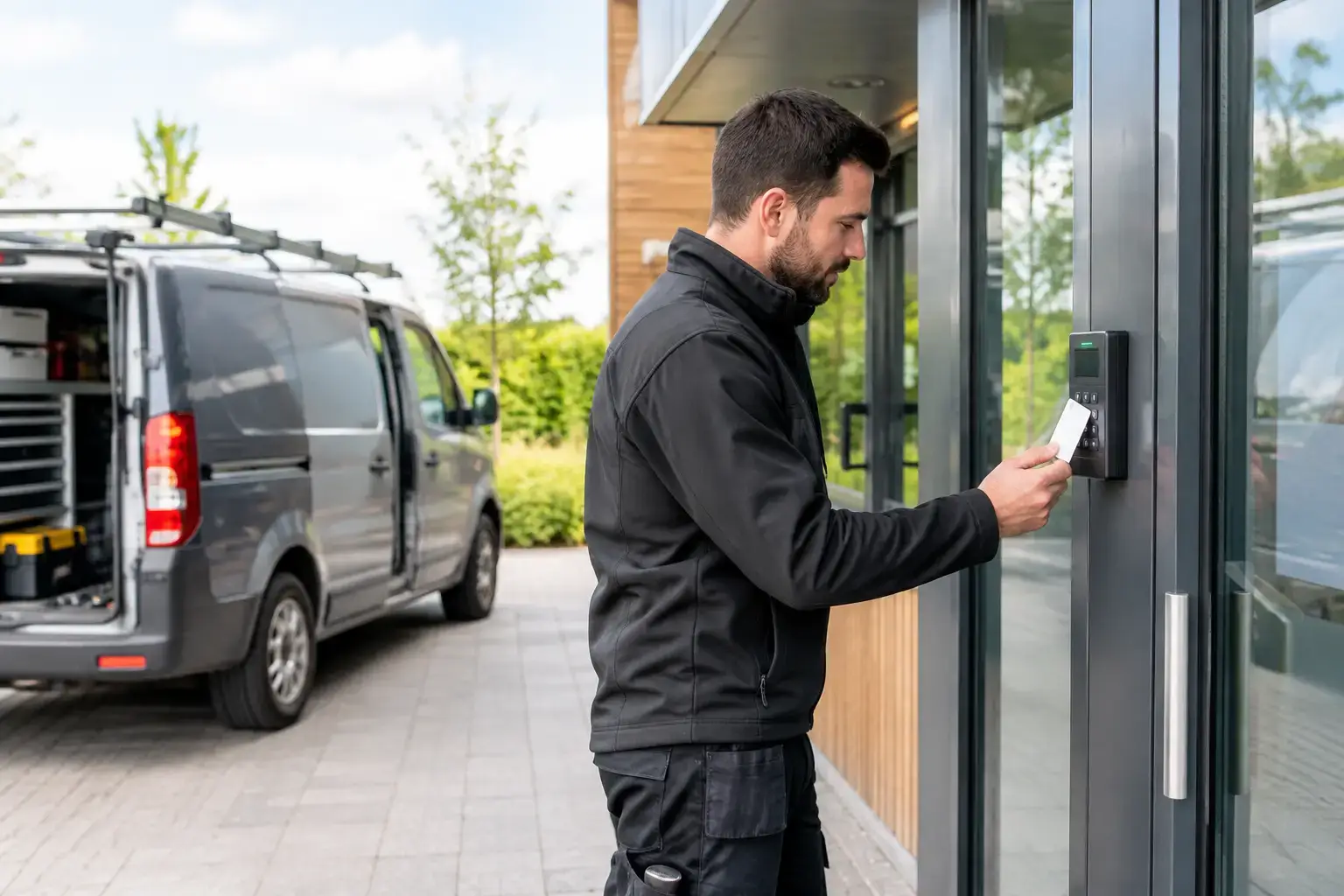
At its simplest, access control replaces or supports a traditional key with a keypad code, proximity fob, card reader, intercom or mobile credential. A user presents the right code or device, and the system releases the door. More advanced arrangements can keep a record of entry attempts, limit access at particular times and control several doors from one place.
The main benefit is not simply convenience. It is the ability to respond quickly. If an employee leaves, a tenant moves out or a fob goes missing, you can remove that person’s access without changing every lock or collecting every spare key. That can be particularly useful in premises with frequent staff changes, cleaners, contractors or several occupants.
Access control also helps separate areas that should not be open to everyone. A reception door may be available to staff during working hours, while a stock room, server cupboard, plant room or landlord storage area remains restricted. In shared residential buildings, it can reduce the number of physical keys in circulation and make communal entrances easier to manage.
Choosing access control in Wokingham
The best system depends on the door, the number of users and what you need to protect. There is no benefit in paying for detailed reporting and multi-site management if you only need a dependable way to control a single staff entrance. Equally, a basic keypad may not be enough where codes are likely to be shared between a large team.
Keypad entry
A keypad allows entry using a numerical code. It is often a sensible, cost-conscious choice for a staff room, side gate or small office where users need straightforward access without carrying a fob. Codes can be changed when somebody leaves, although that only works if the new code is given out carefully and not written where it can be seen.
The trade-off is accountability. If everyone uses the same code, you know that the code was used but not necessarily who used it. Individual codes can improve this, provided the system supports them and the codes are managed properly.
Fob and card systems
Fobs and cards are familiar, quick to use and well suited to offices, communal doors and sites with regular staff or authorised visitors. Each fob can be added or removed individually, so a lost fob does not automatically mean replacing the lock or reissuing access to everyone else.
They do need sensible administration. Keep a record of who has each fob, ask for it back when employment or a tenancy ends, and deactivate it immediately if it is lost. A fob system only remains useful when that simple housekeeping is kept up.
Intercom and video door entry
An intercom lets a visitor contact somebody inside before the door is released. Video entry adds a live image, which can be valuable for flats, offices, clinics and businesses receiving deliveries. It gives occupants a chance to check who is at the entrance rather than relying on a buzzer being answered in a hurry.
Video is not always necessary. For a low-traffic internal door, it may add cost without adding much practical value. At a main entrance where residents, customers or staff regularly receive unknown callers, it can offer worthwhile reassurance.
Timed and restricted access
Some systems can allow access only during defined hours. This is useful where contractors need early access, but should not be able to enter at night, or where different teams use a building at different times. You can also restrict certain doors to named people, such as managers or maintenance staff.
This approach needs planning before installation. Think about out-of-hours emergencies, holiday cover and anyone who may legitimately need access outside normal times. A system that is too restrictive can cause its own problems when a caretaker, tenant or keyholder needs to get in quickly.
Start with the door, not the gadget
An access control system is only as dependable as the door and locking hardware it works with. A worn uPVC mechanism, misaligned frame, loose closer or damaged electric release can create failures that look like an electronic fault but are actually mechanical.
Before fitting a new system, check that the door closes cleanly and locks correctly. Fire doors require particular care. Any work must preserve the door’s fire performance and allow safe escape from inside. Access should be controlled from the outside, but people must never be trapped inside by a system that has been poorly specified or fitted.
External gates and doors also need equipment suited to British weather. Rain, cold temperatures and regular use can affect poorly chosen readers, keypads and cabling. A cheaper unit may seem appealing at first, but frequent faults at a main entrance soon become frustrating for staff and residents alike.
Questions to ask before installation
A clear plan avoids paying for features you will not use or finding gaps once the system is live. Consider who needs access, whether they need it all day or only at certain times, and what should happen if there is a power cut. You should also decide who is responsible for adding and removing users.
For a rented property or block, agree the process with the landlord, managing agent and residents. For a business, make sure at least two trusted people understand the day-to-day administration. Relying on one person’s phone, email address or memory can be difficult when they are away or leave the business.
It is also worth considering visitors and deliveries. A locked main door is useful only if legitimate callers have a sensible way to contact somebody. An intercom, reception arrangement or clearly managed collection point may be more practical than regularly giving out temporary codes.
Do not forget the physical security
Electronic entry works best alongside sound physical security. The door, hinges, frame, closer and lock all matter. A weak side door can undermine an expensive front-door system, while a poorly adjusted door can put strain on electric locking equipment and cause repeated callouts.
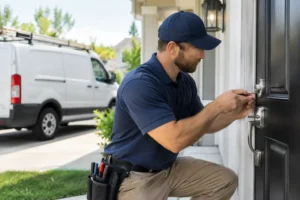
This is why a site assessment is useful before choosing equipment. A practical locksmith can identify whether a lock repair, door adjustment or upgraded cylinder should be dealt with first. In some cases, improving the existing lock and controlling key copies is enough. In others, regular staff changes or shared access make electronic control the more sensible long-term option.
When you need help quickly
A failed access system can stop a business opening, leave tenants unable to enter or prevent a property being secured at the end of the day. If the fault is urgent, avoid forcing the door or repeatedly pulling it against an electric release. That can turn a straightforward issue into a damaged door, lock or mechanism.
Lock Solutions provides local locksmith support across Wokingham and surrounding areas, including help with failed locks, damaged door mechanisms and commercial security concerns. There is no callout charge, and emergency work is handled with a one-hour attendance target where possible. You speak directly to a local locksmith, not a national call centre, so the problem can be discussed clearly before work begins.
Whether you are planning a better entry arrangement or dealing with a door that will not secure properly, start with the way people actually use the building. The most effective access control is the system your staff, tenants or family can use confidently – and the one you can manage without fuss when access needs to change.